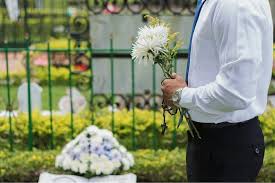
Types of Funeral Services: A Complete Religious & Cultural Guide for Singapore Families
| Why This Guide Matters |
| Every year, thousands of Singapore families face a difficult question: which funeral service fits their loved one’s faith and culture? |
| The wrong choice can cause lasting distress. Buddhist rites conducted for a Catholic. Taoist rituals misapplied for a Christian. |
| This guide breaks down the main types of funeral services in Singapore — Buddhist, Taoist, Christian, and Catholic — so you can make the right decision with confidence. |
What Are the Different Funeral Types in Singapore?
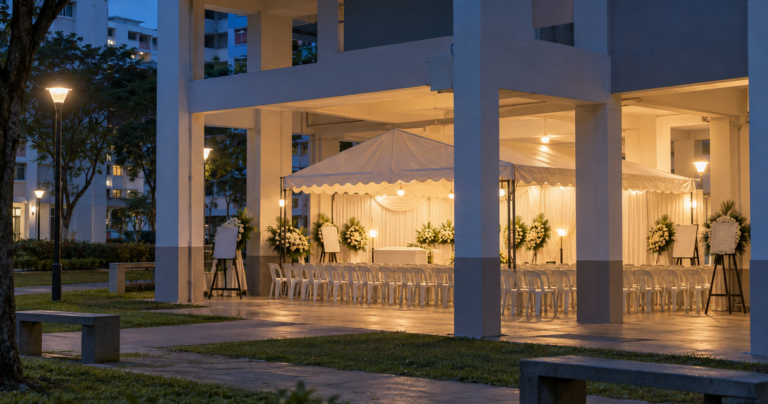
Singapore is one of the most religiously diverse cities in Asia. Walk through any HDB void deck and you may encounter incense and paper offerings for a Taoist send-off, or white lilies arranged for a Christian wake.
The main funeral types practiced here are:
- Buddhist funeral services
- Taoist funeral services
- Christian (Protestant) funeral services
- Catholic funeral services
- Hindu and Muslim funeral services (covered briefly)
- Civil (non-religious) funeral services
Choosing the correct service matters because each religion has specific rites, timelines, and rituals that honor the deceased. To understand the full funeral process in Singapore, it helps to first know which religious tradition applies.
Quick Comparison: Funeral Types at a Glance
| Religion | Wake Duration | Burial or Cremation | Key Ritual | Colour Theme |
| Buddhist | 3–5 days | Both (cremation preferred) | Chanting, prayers | White / Yellow |
| Taoist | 3–7 days | Both (burial traditional) | Offerings, paper burning | White / Red accents |
| Christian | 1–2 days | Both | Hymns, scripture reading | White / Floral |
| Catholic | 2–3 days | Both (burial preferred) | Rosary, Requiem Mass | White / Purple |
| Hindu | 1–3 days | Cremation | Fire rituals (last rites) | White |
| Muslim | Within 24 hrs | Burial only | Salat al-Janazah | White |
Buddhist Funeral Services in Singapore
Buddhism is the most widely practised religion in Singapore. Around 31% of residents identify as Buddhist, according to the Singapore Department of Statistics.
Core Beliefs Behind the Rituals
Buddhist funerals centre on the concept of rebirth and karma. The rites help the deceased’s consciousness transition to the next life. Family members perform acts of merit — chanting, offering food, burning incense — to ease this journey.
What Happens During a Buddhist Funeral
| Stage | What Happens |
| Day 1 — Preparation | Body is washed and dressed in clean clothes. Altar is set up with the Buddha image, incense, flowers, and fruit offerings. |
| Day 2–4 — Wake | Monks or nuns conduct daily chanting sessions (usually morning and evening). Family and friends pay respects. Vegetarian food is often served. |
| Final Day | Last chanting session before the hearse departs. Procession to crematorium or burial ground. |
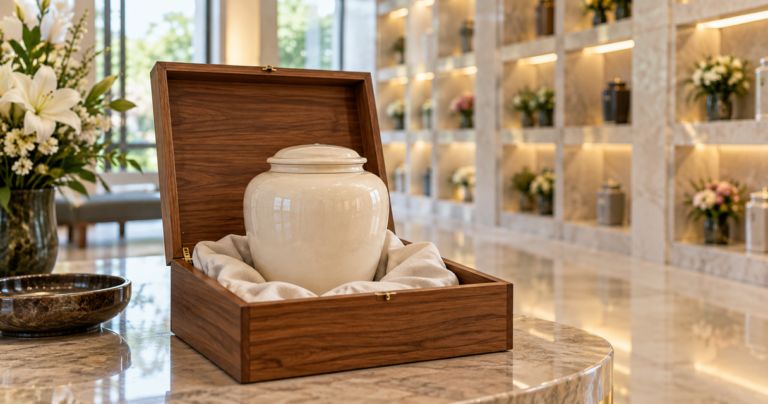
| After Cremation | Ashes are collected and placed in an urn. Many families choose a columbarium niche for permanent placement. |
Buddhist Funeral — Key Features
- Wake lasts 3 to 5 days
- Vegetarian food is customary at the wake
- Monks or lay readers chant sutras to guide the departed
- Paper offerings and incense are burned
- White or yellow is the dominant colour
- Loud music and alcohol are avoided
| Did You Know? |
| In Singapore, many Buddhist families opt for cremation. The ashes are then placed in a columbarium niche — a shelf-like space in a memorial hall or temple. |
| Learn more about how to choose a columbarium niche at nirvanasingapore.sg. |
If you are unsure whether to choose burial or cremation, read this guide on cremation vs burial in Singapore to understand the practical differences.
Taoist Funeral Services in Singapore
Taoism is deeply intertwined with Chinese folk religion in Singapore. Many Chinese Singaporeans who identify as Buddhist also observe Taoist practices — the two traditions often overlap.
Core Beliefs Behind the Rituals
Taoism teaches that the deceased enter the spirit world after death. Funeral rites ensure they are well-equipped for the afterlife and that their spirit does not linger to trouble the living. This explains the elaborate use of paper offerings — houses, cars, money — burned so the deceased can enjoy them in the next realm.
What Happens During a Taoist Funeral
| Stage | What Happens |
| Preparation | Geomancer or Taoist priest sets an auspicious date and time. Body is cleaned, dressed in burial clothes, and placed in the coffin. |
| Wake (3–7 days) | Taoist priests perform rituals — chanting, bell-ringing, sutra reading. Paper offerings are burned each evening. |
| Rituals on Final Night | Elaborate rites including the ‘crossing of the bridge’ ceremony to help the soul pass to the afterlife. A night-long ritual is common. |
| Funeral Procession | The coffin is carried in a procession. Mourners follow in sequence based on seniority. Loud cymbals and drums are used. |
| Burial or Cremation | Traditionally burial was preferred. Today, cremation is increasingly common due to Singapore’s land constraints. |
Buddhist vs Taoist Funeral: Key Differences
This is one of the most common questions Singapore families ask. Here is a clear breakdown:
| Feature | Buddhist | Taoist |
| Religious leader | Monk or nun | Taoist priest (道士, Daoshi) |
| Chanting style | Sanskrit or Mandarin sutras | Taoist scripture with instruments |
| Paper offerings | Simple (incense, fruit) | Elaborate (paper house, car, money) |
| Wake length | 3–5 days | 3–7 days (often longer) |
| Night rituals | Less common | Common — especially final night |
| Colour | White / Yellow | White with some red accents |
| Procession noise | Quiet | Drums and cymbals |
| Food served | Vegetarian preferred | No strict restriction |
| Important Note for Families |
| Many Singapore families describe themselves as ‘Buddhist-Taoist’. If you are unsure which tradition your family follows, speak with an elder or a funeral director who can help you identify the correct rites. |
| Mixing Buddhist and Taoist rituals can cause confusion and distress during an already difficult time. |
Christian (Protestant) Funeral Services in Singapore
Christianity is the second-largest religion in Singapore, with roughly 19% of the population identifying as Christian. Protestant denominations — Anglican, Methodist, Presbyterian, Baptist, and many independent evangelical churches — each have their own worship culture, but the general approach to funerals is similar.
Core Beliefs Behind the Rituals
Christians believe in the resurrection of the dead and eternal life. A funeral is not a sendoff into an unknown void — it is a homegoing, a celebration that the deceased has passed into God’s presence. This shapes the tone: grief is real, but so is hope.
What Happens During a Christian Funeral
| Stage | What Happens |
| Wake (1–2 days) | Body is dressed and placed in the coffin or casket. Flowers — often white lilies — surround the deceased. A cross or Bible may be placed nearby. |
| Prayer service | Friends and family gather for a short service. A pastor leads prayers, scripture reading, and hymns. Eulogies are delivered. |
| Funeral service | A formal church service or funeral chapel service. Hymns, scripture, sermon on resurrection and eternal life. |
| Committal | At the graveside or crematorium, a final prayer is said as the body is committed to burial or cremation. |
Christian Funeral — Key Features
- Wake is shorter — typically 1 to 2 days
- Led by a pastor or church elder
- Hymns and scripture are central
- No incense, paper offerings, or altar
- White flowers — lilies, chrysanthemums — are appropriate
- Tone is hopeful and reflective, not just mournful
- Burial and cremation are both accepted
| Visitor Etiquette at a Christian Wake |
| You do not need to bow or perform any ritual. Simply sign the condolence book, speak to the family, and sit quietly for the prayer session if you wish. |
| Avoid burning incense — this is not part of Christian practice and may cause offence. |
Catholic Funeral Services in Singapore
The Catholic Church in Singapore is a distinct community within Christianity. Catholic funerals follow a liturgical structure set by the Church and differ meaningfully from Protestant funerals. Understanding these differences helps you plan a proper service.
Core Beliefs Behind the Rituals
Catholics believe in the resurrection of the body and the soul’s journey through purgatory before reaching heaven. This is why prayers for the deceased — asking God to purify and receive the soul — are so central to Catholic funeral rites.
What Happens During a Catholic Funeral
| Stage | What Happens |
| Wake (2–3 nights) | Body is laid in an open or closed casket. A rosary service is held each evening. Priests, family, and friends pray the Hail Mary and other prayers together. |
| Rosary Night | The most important pre-funeral gathering. Led by a priest or lay leader. The full rosary is prayed for the repose of the soul. |
| Requiem Mass | A formal Mass celebrated at a Catholic church. Includes scripture readings, a homily, and the Eucharist. This is the central rite of a Catholic funeral. |
| Committal | Final prayers at the graveside or crematorium. The priest sprinkles holy water and incenses the coffin. |
Catholic vs Christian (Protestant) Funeral: Key Differences
| Feature | Catholic | Protestant |
| Central service | Requiem Mass at church | Funeral service at chapel or church |
| Rosary | Yes — central to the wake | No |
| Eucharist | Yes — during Mass | No (most denominations) |
| Priest required | Yes — priest celebrates Mass | Pastor or elder leads service |
| Incense used | Yes — during committal | No |
| Holy water | Yes | No |
| Prayers for the dead | Yes — integral to the rite | Rare in most Protestant traditions |
| Burial preference | Traditionally burial; cremation now permitted | Both accepted equally |
| Catholic & Cremation |
| The Catholic Church now permits cremation, but the ashes must be kept together — not scattered or divided. They should be placed in a sacred location such as a columbarium or cemetery. |
| Scattering ashes at sea or keeping them at home is discouraged under current Church guidelines. |
For a deeper look at how different faiths view cremation, read about religious views on cremation in Singapore.
Other Funeral Types in Singapore
Hindu Funeral Services
Hindu funerals in Singapore are typically conducted within 24 to 72 hours of death. Cremation is the norm, as it is believed to release the soul from the body. The body is prepared with oils and dressed in traditional clothing. The eldest son or a male relative lights the funeral pyre or initiates cremation. A priest leads prayers and mantras throughout.
- Duration: 1 to 3 days
- Cremation is religiously mandated
- White is the mourning colour
- Milk, flowers, and incense are used in rites
Muslim Funeral Services
Islamic funeral rites are among the most time-sensitive of any religion. The body must be buried as soon as possible — ideally within 24 hours of death. The body is washed (ghusl) and wrapped in white cloth (kafan). The Salat al-Janazah (funeral prayer) is performed. Burial only — cremation is forbidden in Islam.
- Duration: completed within 24 hours
- Burial only — no cremation
- Body is washed and wrapped in white
- Funeral prayer led by an imam
- Mourning period: 3 days for most, 4 months and 10 days for a widow
Civil (Non-Religious) Funeral Services
A growing number of Singapore families choose a civil funeral — a service without religious rites. This is common for families with mixed religious backgrounds, or for individuals who identified as non-religious.
- No religious leader or priest
- Eulogies, music, and personal tributes form the service
- Any burial or cremation option is available
- Often more personalised and flexible in structure
How to Choose the Right Funeral Service in Singapore
Choosing the right funeral type is not simply about preference. It should reflect the deceased’s faith, the family’s cultural expectations, and practical logistics.
Step 1: Confirm the Deceased’s Religion
Check the deceased’s NRIC, which lists their religion. If unclear, consult family members or community leaders. Do not assume — even within one family, members may follow different traditions.
Step 2: Contact a Funeral Director Early
A qualified funeral director can guide you on what each service entails. If you are unsure where to start, read about what to do when someone passes away in Singapore.
Step 3: Consider Budget
Funeral costs vary by religion and service level. Buddhist and Taoist funerals with priests and elaborate paper offerings tend to cost more than simple Christian services. Check the cost of funeral services in Singapore for current pricing guidance.
Step 4: Choose Burial or Cremation
Some religions recommend or require specific options. Once you have confirmed the religious requirement, explore your options for funeral packages in Singapore.
| Decision Checklist: Choosing a Funeral Service |
| [ ] Confirmed deceased’s religion from NRIC or family |
| [ ] Identified correct religious leader (monk, priest, pastor) |
| [ ] Decided on burial or cremation |
| [ ] Set a budget and compared packages |
| [ ] Booked the venue (HDB void deck, funeral parlour, or church) |
| [ ] Arranged for death certificate and legal documentation |
Burial vs Cremation: What Each Religion Recommends
| Religion | Burial | Cremation | Official Position |
| Buddhist | Permitted | Preferred | Both accepted; cremation common in Singapore |
| Taoist | Traditional preference | Now common | Both accepted; land scarcity drives cremation |
| Catholic | Traditionally preferred | Now permitted (post-1963) | Ashes must be kept intact in sacred place |
| Protestant | Accepted | Accepted | No doctrinal restriction on either |
| Hindu | Rare | Required | Cremation is mandated by Hindu tradition |
| Muslim | Required | Forbidden | Islamic law requires burial only |
Singapore’s land scarcity means burial land is limited. The government has introduced policies to manage this. Read about Singapore’s new burial policy and how Singapore handles limited burial land for more context.
Curious why more families are choosing cremation? This article on why cremation is increasing in Singapore gives a detailed breakdown.
Ritual Differences Across Funeral Types: A Detailed Look
Chanting and Prayers
Buddhist and Taoist funerals both feature extended chanting, but the language, instruments, and purpose differ. Buddhist monks chant in Pali or Sanskrit. Taoist priests chant in Hokkien or Mandarin and use drums, cymbals, and bells. Christian and Catholic services use spoken prayers and hymns sung by the congregation.
Paper Offerings
Paper offerings — joss paper, paper houses, cars, and clothing — are unique to Chinese religious funerals (Buddhist and especially Taoist). They are burned so the deceased can use these items in the afterlife. Christian and Catholic funerals do not use paper offerings.
Food and Offerings on the Altar
Buddhist and Taoist altars typically include fruit, cooked food, and incense. The food is placed as an offering for the deceased’s spirit. Christian and Catholic services do not place food offerings at the altar.
The Role of the Religious Leader
| Religion | Who Leads the Service? |
| Buddhist | Monk or nun from a temple, or a lay chanting group |
| Taoist | Taoist priest (Daoshi) — often engaged via a funeral home |
| Christian | Pastor, elder, or lay minister from the deceased’s church |
| Catholic | Catholic priest — a valid priest is required for Mass |
| Hindu | Hindu priest (Pandit) |
| Muslim | Imam from the deceased’s mosque |
Mourning Colours
In Chinese tradition, white is the universal mourning colour. Wearing red or bright colours to a Buddhist or Taoist funeral is considered disrespectful. Christians and Catholics also tend toward white or muted colours. Muslims and Hindus wear white as well.
Planning Ahead: Why It Matters for Any Religion
One of the most overlooked aspects of funeral planning is doing it in advance. When a loved one passes away unexpectedly, grief clouds judgement. Families scramble to make decisions they are not prepared for.
Pre-need funeral planning removes this pressure. You lock in the correct religious rites, preferred service type, and budget ahead of time. Read more about what is pre-need funeral planning and why it matters, and the benefits of advance funeral planning.
| What Advance Planning Covers |
| Choice of funeral type (Buddhist, Taoist, Christian, Catholic, or civil) |
| Burial or cremation preference |
| Selection of columbarium niche or burial plot |
| Budget and package selection |
| Documentation of wishes so family can follow them confidently |
How Much Do Different Funeral Services Cost in Singapore?
| Funeral Type | Estimated Cost Range (SGD) | Key Cost Drivers |
| Buddhist (simple) | $3,000 – $6,000 | Monk fees, altar, incense, urn |
| Buddhist (elaborate) | $8,000 – $15,000+ | Multi-day, temple chanting, large altar |
| Taoist (standard) | $5,000 – $10,000 | Priest fees, paper offerings, instruments |
| Taoist (elaborate) | $10,000 – $25,000+ | 7-day wake, night rituals, paper house |
| Christian | $3,000 – $7,000 | Pastor fees, flowers, casket, chapel |
| Catholic | $4,000 – $9,000 | Priest fees, Mass, rosary, casket |
| Civil (non-religious) | $2,500 – $5,000 | Funeral director, casket, venue |
These are indicative ranges. Actual costs depend on the number of days, elaborateness of rituals, choice of cremation or burial, and service provider. Prices have been rising due to inflation and increased demand.
For a full cost breakdown, see the guide on cost of funeral services in Singapore. If you are comparing options, the affordable vs premium funeral packages in Singapore comparison is a useful read.
After Burial: Exhumation and Relocation in Singapore
Singapore’s burial policies mean that graves are not permanent. Many burial grounds require exhumation after a set period — typically 15 years. This affects all religious groups that practise burial.
Families who have buried loved ones need to understand the burial period in Singapore and why exhumation is required in Singapore.
After exhumation, remains can be cremated and placed in a columbarium. Learn about grave exhumation and relocation in Singapore and the cost of grave exhumation in Singapore.
| Choa Chu Kang Cemetery Exhumations |
| Choa Chu Kang Cemetery is Singapore’s main burial ground for multiple religious groups. Families with graves there should be aware of upcoming government-mandated exhumation exercises. |
| Read the complete Choa Chu Kang grave exhumation guide for step-by-step information. |
Choosing a Columbarium Niche After Cremation
Once cremated, the question for most families is where to permanently house the ashes. A columbarium niche is the most common choice in Singapore. These are available at temples, churches, private memorial parks, and public columbaria.
The right niche depends on religious affiliation, budget, and accessibility. A Buddhist family may prefer a niche at a Buddhist temple. A Catholic family may want a niche at a Catholic church columbarium. Read the full guide on how to choose a columbarium niche before making this decision.
Types of Columbarium Niches in Singapore
- Temple columbaria — for Buddhist and Taoist families
- Church columbaria — for Christian and Catholic families
- Private memorial parks — multi-faith, premium facilities
- Public columbaria (managed by NEA) — affordable, non-religious option
Frequently Asked Questions: Funeral Types in Singapore
What are the different funeral types in Singapore?
The main types are Buddhist, Taoist, Christian (Protestant), Catholic, Hindu, Muslim, and civil (non-religious) funerals. Each follows different rituals, timelines, and religious requirements.
What is the difference between a Buddhist and Taoist funeral?
Buddhist funerals are led by monks and focus on chanting sutras to guide the soul. Taoist funerals involve Taoist priests who perform elaborate ceremonies, burn large paper offerings, and conduct night rituals. Taoist funerals are typically longer and more complex.
不同宗教的殡葬方式有哪些?(What are the funeral practices of different religions?)
佛教葬礼由僧侣主持,以诵经为主。道教葬礼由道士主持,包括焚烧纸扎品和夜间仪式。基督教葬礼以祷告和赞美诗为主。天主教葬礼包括玫瑰经和弥撒。印度教以火葬为主。伊斯兰教必须土葬,且须在24小时内完成。
(Buddhist funerals are monk-led with sutra chanting. Taoist funerals involve priests, paper offering burning, and night rites. Christian funerals centre on prayer and hymns. Catholic funerals include the rosary and Requiem Mass. Hindu tradition mandates cremation. Islamic law requires burial within 24 hours.)
Can a family mix Buddhist and Taoist funeral practices?
It is not recommended. While the two traditions share cultural roots, mixing rites can cause confusion and may not properly serve either tradition. Consult a funeral director who specialises in Chinese religious funerals.
How do I arrange a funeral in Singapore?
Start by confirming the deceased’s religion, then contact a licensed funeral director. For a step-by-step guide, read how to arrange a funeral in Singapore.
What is the best funeral service in Singapore?
The best service is the one that correctly matches the deceased’s religion and the family’s needs. For an overview of reputable providers, see this guide on the best funeral services in Singapore.
Further Reading
For a global perspective on Buddhist funeral practices, the Buddhist Funeral Guide by Lion’s Roar offers detailed insight into how different Buddhist traditions worldwide approach death and mourning rites.
The National Council of Churches Singapore (NCCS) provides official guidelines on Christian funeral practices in Singapore, including pastoral support resources for grieving families.
For official government information on burial and cremation regulations, refer to the National Environment Agency (NEA) Bereavement Services page, which covers permits, columbarium registration, and exhumation applications.
| Key Takeaways |
| Singapore has six main funeral types: Buddhist, Taoist, Christian, Catholic, Hindu, and Muslim. |
| Buddhist and Taoist funerals overlap culturally but differ in rituals, priests, and duration. |
| Catholic funerals require a priest and include the Requiem Mass. Protestant funerals are simpler and more flexible. |
| Always confirm the deceased’s religion before planning. Do not assume. |
| Burial land is limited in Singapore. Cremation is increasing across all religious groups. |
| Pre-planning your own funeral relieves your family of making difficult decisions under grief. |
Need help planning a funeral now? Start with this guide on what to do when someone passes away in Singapore, then explore funeral packages in Singapore to find the right service for your family.