Memorial Services, Columbarium & After-Funeral Care :A Complete Guide for Singapore Families
| Introduction |
| Most families focus entirely on the funeral. But what comes after matters just as much. |
| Once the funeral ends, families face a new set of decisions: where to place the ashes, how to honor their loved one long-term, and how to maintain a lasting memorial. |
| This guide covers everything you need to know about memorial services, columbarium niches, ancestral tablets, and long-term remembrance options in Singapore. |
| Read this to make informed, confident decisions during one of life’s most difficult moments. |
What Happens After a Funeral?
The funeral ceremony marks the farewell. But after it ends, families still have responsibilities — practical, spiritual, and emotional.
In Singapore, the post-funeral process typically involves:
- Collecting the cremated remains (ashes) or arranging burial
- Deciding where to place the remains — a columbarium niche, garden, or sea burial
- Setting up a memorial tablet or plaque
- Planning anniversary prayers and visit schedules
- Handling administrative paperwork with authorities
For a full breakdown of the funeral process in Singapore, visit Funeral Process in Singapore — a step-by-step resource for families navigating this period.
Many families are unprepared for what follows. The decisions made right after the funeral shape how a loved one is remembered for decades.
After Cremation: Your Immediate Next Steps
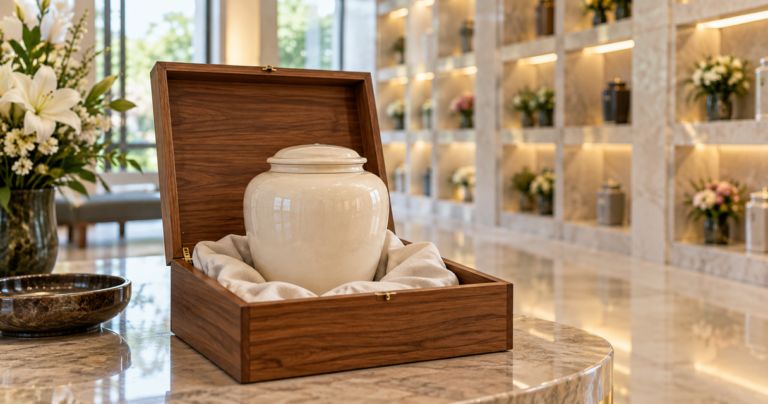
Cremation is now the most common choice in Singapore. After the process is complete, families receive the ashes (also called cremated remains or “骨灰”) in a sealed urn.
You can learn about the full cremation process in Singapore to understand what happens and how to prepare.
Once you have the urn, you must decide:
- Where to store the remains permanently
- What type of memorial to set up
- How to register the niche or plot with authorities
Read more on what happens after cremation in Singapore for a practical guide on these next steps.
After Burial: What Families Need to Know
If your family chose burial, you should understand that Singapore has a strict burial period policy. Most graves are exhumed after 15 years due to limited land.
Read about the burial period in Singapore and understand how Singapore handles land scarcity through its burial land management policy.
After the burial period ends, families are typically required to exhume remains and transfer them to a columbarium or other placement option. Explore what happens after the burial period ends for the full picture.
What Is a Columbarium Niche?
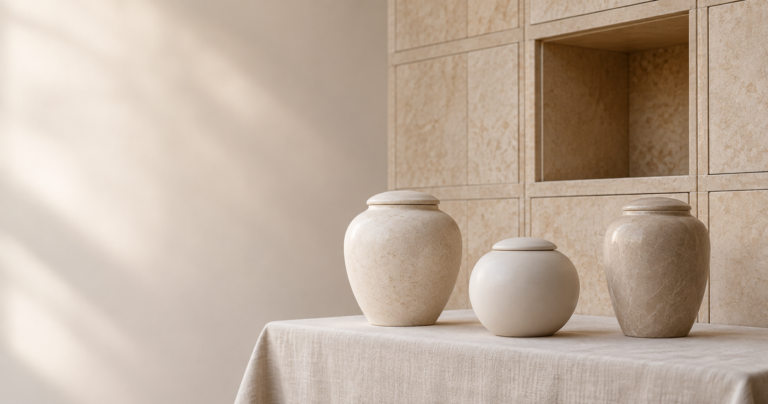
A columbarium is a dedicated structure for storing cremated remains. It contains individual compartments called niches, where urns are placed and memorials are displayed.
In Singapore, columbariums exist in:
- Temples and religious institutions
- Private memorial parks
- Government-managed facilities
| Key Facts About Columbarium Niches |
| Niches come in various sizes: single, double, family, and premium options |
| Lease terms vary: some are perpetual, others are 20-99 year leases |
| Niches can be used for one or more family members |
| Most niches allow engraved nameplates and personal memorial items |
| Location matters: niches at eye level or with natural light are often preferred |
| Private columbariums often offer more personalization options than government ones |
How to Choose a Columbarium Niche
Choosing a niche is a significant decision. It affects how your family visits, prays, and remembers your loved one for generations.
Key factors to consider include:
| Factor | What to Look For | Why It Matters |
| Location | Accessibility, transport links, parking | Families need to visit for anniversaries and festivals |
| Niche Level | Eye level or above | Comfort during visits and prayers |
| Lease Duration | Perpetual vs fixed-term | Avoids future uncertainty for descendants |
| Religious Alignment | Buddhist, Taoist, Christian, non-denominational | Ensures appropriate rituals can be performed |
| Ambience | Indoor, air-conditioned, natural light | Affects the quality of memorial visits |
| Additional Services | Prayer rooms, ancestral tablets, care packages | Provides a complete memorial experience |
For a detailed guide, read how to choose a columbarium niche — it covers everything from pricing to what questions to ask before committing.
骨灰安置有哪些选择?(What Are the Options for Ash Placement?)
Families in Singapore have several options for placing cremated remains. Each carries different cultural, religious, and practical implications.
| Option | Description | Best For | Estimated Cost |
| Columbarium Niche | Store urn in a permanent compartment | Most families; easy access for visits | SGD 3,000 – 30,000+ |
| Ash Garden (Burial of Ashes) | Scatter or bury ashes in a garden of remembrance | Those wanting a natural setting | SGD 1,000 – 5,000 |
| Sea Burial | Ashes scattered at sea with a ceremony | Environmentally conscious families | SGD 500 – 2,000 |
| Home Placement | Keep urn at home (with religious/cultural guidelines) | Some Buddhist or Taoist families | Minimal |
| Ancestral Hall / Temple Tablet | Memorial tablet placed at a temple or ancestral hall | Traditional Chinese families | Varies by institution |
Compare your options using the cremation vs burial comparison guide to understand the long-term implications of each choice.
Memorial Services: More Than Just a Ceremony
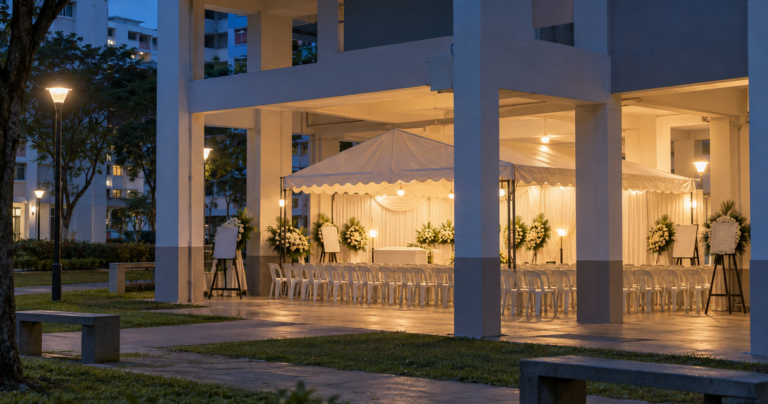
A memorial service is not just the funeral. It is an ongoing relationship between the living and those who have passed.
In Singapore, memorial services typically include:
- The funeral ceremony itself (prayers, last rites, eulogy)
- The committal — placing remains in a niche or garden
- First-year anniversary prayers (typically 100-day and 1-year)
- Qingming Festival visits and prayers
- Zhongyuan Festival (Hungry Ghost Festival) observances
- Annual columbarium maintenance and cleaning services
For comprehensive best funeral services in Singapore, look for providers who offer end-to-end care — from the funeral arrangement all the way through long-term memorial support.
What to Look for in After-Funeral Care
After-funeral care refers to the ongoing support provided to families once the immediate funeral is over.
| After-Funeral Care Checklist |
| Grief support resources or counselling referrals |
| Assistance with columbarium niche registration |
| Help with administrative paperwork (death certificates, estate matters) |
| Reminder systems for anniversary prayers and festival visits |
| Maintenance of the memorial space (cleaning, flower placement) |
| Flexibility to accommodate multi-faith or multicultural families |
| Clear contact points for future queries or changes |
Ancestral Tablets: Honoring Loved Ones the Traditional Way
Ancestral tablets are a central part of Chinese memorial tradition. A tablet (also called a spirit tablet or 神主牌) is inscribed with the name and death date of the deceased.
Families place offerings, burn incense, and pray before the tablet on important dates. It serves as a physical focus point for remembrance.
Where Can Ancestral Tablets Be Placed?
- At home on a dedicated altar
- At a temple or religious institution
- At a private memorial park with ancestral hall facilities
- Within a columbarium that offers combined niche-and-tablet services
Many premium columbarium providers in Singapore offer combined packages that include both a niche for the urn and a space for the ancestral tablet — keeping everything in one accessible, maintained location.
Long-Term Remembrance: Planning for Generations
Long-term remembrance is about creating a durable legacy. It ensures that future generations can connect with those who came before them.
The Role of Pre-Need Funeral Planning
One of the most meaningful acts you can do for your family is to plan ahead. Pre-need funeral planning means arranging and paying for funeral and memorial services before they are needed.
This removes the burden from grieving family members, locks in current pricing, and ensures your wishes are carried out.
| Benefits of Pre-Need Funeral Planning |
| Families are not forced to make decisions under emotional pressure |
| Pricing is locked in — protection against future cost increases |
| Your specific wishes (religious rites, music, niche type) are documented |
| Reduces family conflict about what the deceased would have wanted |
| Gives you peace of mind knowing everything is arranged |
| Some plans include installment payment options |
Learn more at what is pre-need funeral planning and why does it matter and the benefits of advance funeral planning — a must-read before making any long-term decisions.
Why More Singaporeans Are Choosing Cremation for Long-Term Planning
Cremation offers greater flexibility for long-term remembrance than burial. With columbarium niches, families do not face the uncertainty of exhumation after a fixed burial period.
Additionally, columbarium niches can often accommodate multiple family members over time, creating a shared memorial space for future generations.
Read about why cremation is increasing in Singapore to understand the social, cultural, and practical drivers behind this shift.
Grave Exhumation & Relocation: What Families Must Know
If your family has a grave that has reached the end of its burial period, you will need to go through the exhumation process. This is mandatory in Singapore under NEA regulations.
| Step | Action Required | Key Resource |
| 1 | Check if burial period has ended or NEA has issued notice | NEA notification letter |
| 2 | Apply for exhumation permit from NEA | |
| 3 | Engage a licensed exhumation contractor | Funeral service provider |
| 4 | Conduct exhumation ceremony according to religious customs | |
| 5 | Cremate remains if not already cremated | Cremation facility |
| 6 | Place ashes in a columbarium niche |
For location-specific guidance, visit the Choa Chu Kang grave exhumation guide and review the cost of grave exhumation in Singapore to budget accordingly.
You can also understand why exhumation is required in Singapore and read about grave exhumation relocation in Singapore for a full overview.
Understanding the Costs of Memorial Services & After-Funeral Care
Costs vary widely depending on your choices. Here is a realistic breakdown for Singapore families:
| Service | Budget Range | Premium Range | Notes |
| Funeral Package | SGD 2,000 – 5,000 | SGD 8,000 – 20,000+ | Varies by religion, duration, services |
| Columbarium Niche | SGD 3,000 – 8,000 | SGD 15,000 – 50,000+ | Perpetual niches cost more |
| Ancestral Tablet Placement | SGD 500 – 2,000 | SGD 3,000 – 8,000 | Depends on institution |
| Annual Memorial Services | SGD 200 – 500 | SGD 1,000 – 3,000 | Prayer services, cleaning, offerings |
| Grave Exhumation | SGD 2,000 – 5,000 | SGD 8,000 – 15,000+ | Includes permit, labor, cremation |
| Pre-Need Planning Package | SGD 5,000 – 10,000 | SGD 20,000 – 50,000+ | Full package with niche included |
For a detailed cost breakdown, read the cost of funeral services in Singapore guide and compare affordable vs premium funeral packages to find the right fit for your family.
Browse funeral packages in Singapore for current package options across different budget levels.
Religious Views on Memorial Services & Columbarium Use
Different religions have distinct approaches to after-funeral care and long-term remembrance.
| Religion | After-Funeral Practices | Columbarium Use | Ancestral Tablets |
| Buddhism | 49-day prayers, anniversary rites, Qingming visits | Widely accepted | Common at temples |
| Taoism | 100-day prayers, annual offerings, Zhongyuan Festival | Widely accepted | Central to practice |
| Christianity | Memorial services, annual remembrance at church or niche | Generally accepted | Not traditional |
| Islam | Burial preferred; exhumation and cremation are not typical | Not applicable | Not applicable |
| Hinduism | Cremation standard; ash immersion in rivers or sea | Sometimes used | Home altars common |
| Free-thinker | Family-driven; focus on personal preference | Widely used | Optional |
Read about religious views on cremation in Singapore to understand how different faiths approach these choices.
Burial vs Cremation: A Practical Comparison for Memorial Planning
| Consideration | Burial | Cremation |
| Land Required | Yes — significant land use | No — only a small niche |
| Long-Term Access | Limited by burial period (15 years in SG) | Perpetual niche options available |
| Cost | Higher overall due to land and ongoing maintenance | Generally lower |
| Flexibility | Fixed location | Niche, garden, sea burial, or home |
| Environmental Impact | Higher land use | Lower land use; energy for cremation |
| Family Visits | At cemetery — may be outdoor, weather-dependent | Columbarium — indoor, sheltered |
| Exhumation Risk | Yes — mandatory after burial period | None |
Explore the full burial vs cremation practical comparison to make the right decision for your family.
How to Arrange Memorial Services & After-Funeral Care in Singapore
Arranging everything after a death can feel overwhelming. Here is a practical step-by-step guide:
| Step-by-Step: After-Funeral Planning |
| Step 1: Confirm cause of death and obtain death certificate from hospital or GP |
| Step 2: Contact a funeral service provider immediately — they handle most logistics |
| Step 3: Decide on burial or cremation based on religious practice and family preference |
| Step 4: Select a columbarium niche or alternative ash placement |
| Step 5: Plan the memorial service, prayers, and first-anniversary observances |
| Step 6: Set up an ancestral tablet if appropriate to your tradition |
| Step 7: Register niche and maintain annual memorial visits |
| Step 8: Consider pre-need planning for remaining family members |
If you need a full checklist, read what to do when someone passes away in Singapore and how to arrange a funeral in Singapore for a step-by-step breakdown.
Singapore’s New Burial Policy & Its Impact on Memorial Planning
Singapore has introduced policies to address land constraints. These directly affect how families plan for long-term remembrance.
Key changes include shorter burial periods, mandatory exhumation, and stronger incentives for cremation.
Stay updated on the new burial policy in Singapore to understand how these rules affect your family’s options.
Additional Resources & External References
For government-level guidance on funeral and memorial matters in Singapore:
- NEA After-Death Services — Official Singapore Government Portal
- Ministry of Health Singapore — Death Registration Guide
- MSF Singapore — Bereavement Support Resources for Families
Frequently Asked Questions: Memorial Services, Columbarium & After-Funeral Care
| Q: What happens immediately after a funeral in Singapore? |
| After the funeral ceremony, families collect the cremated remains or finalize burial arrangements. The next step is selecting a columbarium niche or alternative placement. Administrative tasks such as registering the death and handling estate matters also begin in this period. |
| Q: How long can remains stay in a columbarium niche in Singapore? |
| It depends on the type of niche. Government-managed columbariums typically offer lease terms. Private columbariums often offer perpetual ownership or very long-term leases (99 years). Always clarify lease terms before purchasing a niche. |
| Q: Can non-Chinese families use a columbarium? |
| Yes. Many columbariums in Singapore are non-denominational or serve multiple faiths. Christian, free-thinker, and other families regularly use columbarium services. Always check if the facility aligns with your religious or cultural requirements. |
| Q: Is it compulsory to exhume a grave after the burial period? |
| Yes, in most cases. Singapore’s NEA requires exhumation after the burial period (typically 15 years). Families who do not act may face the remains being exhumed by authorities. Plan ahead by reading the grave exhumation process guide. |
| Q: What is included in a memorial service package? |
| This varies by provider. A full memorial services package may include the funeral ceremony, hearse, coffin or urn, columbarium niche purchase, ancestral tablet placement, first-year anniversary prayers, and ongoing maintenance. Always request a detailed breakdown before signing. |
| Q: 骨灰可以带出新加坡吗?(Can cremated remains be taken out of Singapore?) |
| Yes, but you need to comply with regulations in both Singapore and the destination country. Airlines have specific rules for transporting cremated remains. Consult your funeral service provider for assistance with documentation and transport requirements. |
Making Informed Decisions for Memorial Services & Long-Term Remembrance
The period after a funeral is one of the most emotionally and logistically demanding times a family can face.
The right decisions — made calmly, with good information — make a lasting difference. They shape how your family remembers and honors your loved one for years to come.
Start with the basics:
- Know your options — columbarium niches, gardens, tablets
- Understand the costs before committing
- Factor in your religious and cultural requirements
- Plan ahead where possible — pre-need planning removes pressure from grieving families
- Use trusted, experienced service providers who offer full end-to-end care
| Key Takeaways |
| Memorial services extend well beyond the funeral — they cover columbarium placement, ancestral tablets, and annual observances |
| Columbarium niches are the most flexible and practical option for most Singapore families |
| Pre-need funeral planning protects your family from making difficult decisions under pressure |
| Singapore’s burial policies mean most families will eventually deal with exhumation and transfer to a columbarium |
| Costs vary widely — compare packages carefully and read the full details before deciding |
| Trusted, licensed providers offer comprehensive after-funeral care packages that cover all of the above |
For professional guidance from one of Singapore’s most experienced providers, explore Nirvana Singapore’s comprehensive funeral and memorial services — covering everything from initial arrangements to long-term columbarium care.
Disclaimer: This article is for informational purposes only. Regulations, costs, and availability may change. Always consult directly with licensed funeral service providers and relevant Singapore government agencies (NEA, MOH) for the most current guidance.