Understanding the 15-Year Rule: Your Complete Guide to the Burial Period in Singapore
When a loved one passes away, families focus on giving them a dignified farewell. But what if the final resting place itself has an expiration date? In Singapore, burial plots are not permanent—they come with a 15-year lease. This reality often catches families by surprise, leaving them overwhelmed when the time comes for exhumation. Understanding the burial period in Singapore (15 years rule) is essential for anyone planning a burial or managing a loved one’s grave. This guide will walk you through every aspect of this policy, ensuring you are prepared, informed, and able to make respectful decisions without last-minute stress.
Introduction: Why Singapore’s Burial Plots Have an Expiry Date
Land is Singapore’s most precious and finite resource. With a population of nearly 5.9 million living on just 734 square kilometres, every plot of land must serve multiple generations. This fundamental reality has shaped the nation’s approach to burial grounds. Since 1998, the government has implemented a policy that limits the burial period in Singapore (15 years rule) to ensure that cemetery land can be reused sustainably. For families, this means that saying goodbye is not a one-time event—it involves planning for a future transition.
The Foundation: Understanding the 15-Year Burial Rule
What the Law Says
The legal basis for the burial period in Singapore (15 years rule) is found in the Environmental Public Health (Cemeteries) Regulations. According to these regulations, any burial permit issued on or after 1st November 1998 allows a corpse to be buried in any cemetery for a period of 15 years, unless the Director-General determines otherwise. This applies to all graves at Choa Chu Kang Cemetery, which is Singapore’s only active burial ground.
Understanding the complete funeral process in Singapore helps families see how the 15-year rule fits into the broader journey from death certification to final disposition. When a death occurs, the immediate steps involve obtaining proper documentation and making initial arrangements, but the long-term implications of the burial period should also be considered from the start.
Why 15 Years?
The 15-year timeframe was not chosen arbitrarily. It represents a balance between respecting the deceased, allowing sufficient time for mourning and memorialisation, and recognising the practical reality of land scarcity. The government introduced this policy specifically to combat land scarcity and ensure that cemetery space remains available for future generations. After 15 years, graves are exhumed, and the land can eventually be prepared for new burials.
When families understand what to do when someone passes away in Singapore , they can make more informed decisions about burial versus cremation from the outset. This initial choice has profound implications for what happens 15 years later.
Which Cemeteries Are Affected?
The burial period in Singapore (15 years rule) applies to all graves within the Choa Chu Kang Cemetery Complex. This expansive cemetery serves multiple religious communities, with dedicated sections for:
- Muslim burials (including Pusara Aman Mosque and Cemetery)
- Christian burials
- Chinese, Buddhist, and Taoist burials
- Hindu burials
- Jewish and Parsi burials
- Ahmadiyya and Bahai communities
Regardless of faith or section, the 15-year limit applies uniformly, though the post-exhumation options differ based on religious requirements.
The Exhumation Process: What Happens After 15 Years
When the burial period in Singapore (15 years rule) reaches its end, the National Environment Agency (NEA) initiates exhumation programmes in phases. This is not an abrupt process—families receive multiple notifications and have opportunities to make their preferences known.
How Families Are Notified
For Muslim cemeteries, MUIS (Majlis Ugama Islam Singapura) alerts next-of-kin through comprehensive channels:
- Newspaper notices
- Signboards placed at the affected burial blocks
- Banners, pamphlets, and posters at mosques
- Radio announcements
- Updates on MUIS Facebook and the official exhumation website
For non-Muslim graves, NEA similarly provides public notices and communicates with registered next-of-kin when available.
Registration Period
Families typically have a one-year claim registration period to come forward and register their claim for the remains. During this time, they must decide how they wish to proceed with the exhumed remains. Knowing how to arrange a funeral in Singapore for the exhumation process is similar to arranging an initial funeral, with many of the same considerations around religious rites and family preferences.
Required Documentation
To claim remains when the burial period in Singapore (15 years rule) concludes, family members must prepare:
- Claimant’s NRIC
- Copy of Death or Burial Certificate (for supplementary graves)
- Written authorisation from biological family members where applicable
- Supporting documents for special cases, such as legal documentation for adopted children
For Muslim burials, registration can be done online using Singpass via pusara.sg, or through appointments at the Muslim Cemetery Exhumation Office.
Post-Exhumation Options: What Happens to the Remains
Once the 15-year burial period expires and exhumation occurs, families must decide on the final disposition of the remains. The options depend largely on religious requirements and family preferences.
Option 1: Cremation and Columbarium Placement
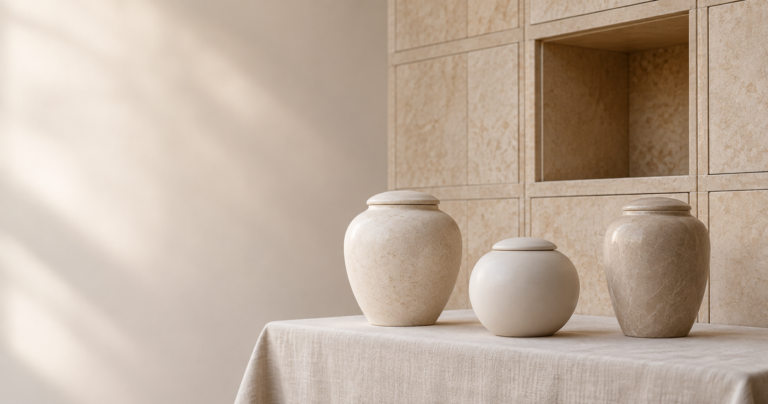
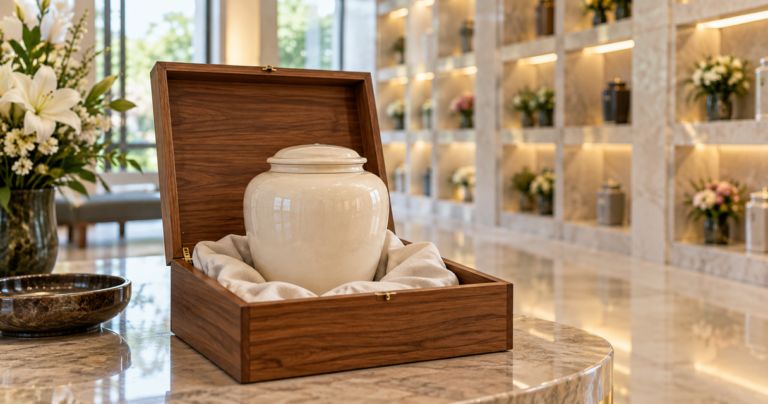
For families whose faith permits cremation, this is the most common path following exhumation. The remains are cremated, and the ashes are placed in an urn within a columbarium. Understanding the cremation process in Singapore helps families know what to expect, from the cremation itself to the handling of ashes afterward.
This option is suitable for:
- Buddhist and Taoist families (cremation aligns with teachings on impermanence)
- Christian families (most denominations now accept cremation)
- Families seeking a space-efficient, permanent memorial solution
Facilities available include:
- Choa Chu Kang Columbarium: Located at 51 Chinese Cemetery Path 4, housing approximately 147,000 niches
- Mandai Columbarium: Government-managed facility with affordable niche options
- Private columbaria such as Nirvana Memorial Garden for premium niches
Option 2: Re-Interment in the Crypt Burial System
For religions that mandate burial, such as Islam, the remains are re-interred in smaller plots using the Crypt Burial System (CBS). Introduced in 2007, this system represents an innovative approach to optimising land use while respecting religious traditions.
How CBS works:
- A CBS burial plot consists of a concrete crypt without a base
- Crypts are laid out in grids for efficient land use
- Multiple remains are placed in a single crypt
Capacity:
- For claimed graves: Up to 8 remains per crypt
- For unclaimed graves: Up to 16 remains per crypt
The system has been endorsed by various religious bodies in Singapore, including MUIS, the Singapore Buddhist Federation, the Catholic Archdiocese of Singapore, and the Hindu Endowments Board. This broad acceptance ensures that the burial period in Singapore (15 years rule) can be implemented with sensitivity to diverse faith requirements. For families trying to decide between cremation vs burial in Singapore , understanding these post-exhumation options is crucial for making a choice that aligns with long-term religious and family values.
Option 3: What Happens to Unclaimed Graves
When families cannot be located or do not come forward during the registration period, graves are classified as “unclaimed.” These graves are still exhumed according to the schedule, and the remains are:
- Cremated (for religions permitting cremation) or
- Re-interred in crypts with other unclaimed remains
For Muslim unclaimed graves, up to 16 remains may be re-interred together in a single crypt. NEA maintains all reinterment records in their database, ensuring that information remains accessible even for unclaimed graves.
Religious Considerations and Adaptations
Singapore’s multicultural society means that the burial period in Singapore (15 years rule) must accommodate diverse religious perspectives. Understanding religious views on cremation in Singapore helps families navigate these sensitive decisions with confidence.
Islamic Perspectives
Islam requires burial, not cremation, and emphasises treating the deceased with utmost respect. For Muslim families, the 15-year rule means:
- Graves are exhumed after 15 years, with remains re-interred in crypts
- The shrouding process follows religious protocols: remains are wrapped in white cloth
- No special prayers such as Talkin are conducted for exhumed remains, as there is no religious requirement
- The exhumation process is supervised by MUIS to ensure Shariah compliance
Buddhist and Taoist Perspectives
For Buddhist and Taoist families, cremation is generally acceptable and aligns with teachings on impermanence. After the 15-year burial period expires, many families opt for cremation followed by columbarium placement. Monks or priests may conduct chanting and rituals during the exhumation process. When selecting services, families can explore various funeral packages in Singapore that cater specifically to these religious requirements.
Christian Perspectives
Most Christian denominations in Singapore have accepted cremation as compatible with beliefs about resurrection and eternal life. After exhumation, families typically choose cremation and placement in a columbarium, often with a pastor leading prayers during the transition. The choice between affordable vs premium funeral packages in Singapore allows families to balance their budget with their desire for a meaningful ceremony.
Hindu Perspectives
Hinduism strongly embraces cremation as the traditional and spiritually appropriate method for handling deceased bodies. The soul (atman) is eternal and separate from the body, which is seen as a temporary vessel. Fire acts as a sacred messenger, carrying the soul to the ancestral realm. For Hindu families, the 15-year rule naturally aligns with their tradition of cremation.
Financial Implications of the 15-Year Rule
Understanding the cost of funeral services in Singapore is essential for planning both the initial burial and the eventual exhumation. The 15-year rule creates a two-stage financial obligation that families must prepare for.
Initial Burial Costs
For Singapore Citizens and Permanent Residents, initial burial fees at Choa Chu Kang Cemetery are:
- Muslim, Ahmadiyya, Jewish, Parsi, Bahai sections (adult): $315
- Muslim, Ahmadiyya, Jewish, Parsi, Bahai sections (child): $140
- All other cemeteries (Christian, Chinese, Hindu, etc.) (adult): $940
- All other cemeteries (Christian, Chinese, Hindu, etc.) (child): $420
Future Exhumation and Post-Exhumation Costs
Families must also budget for expenses that will arise after the 15-year burial period:
- Supplementary grave registration: $80 (before GST) per grave
- Cremation (government facility): Approximately $100-$315 for adults
- Columbarium niche (government): $500-$1,800 depending on location and lease duration
- Private columbarium niches: $5,000-$25,000 for perpetual options
- Burial extract from NEA for record-keeping: $20
The new burial policy in Singapore has introduced pricing adjustments that reflect true land costs while encouraging alternative memorial options. Understanding these changes helps families make financially sound decisions.
Total Lifetime Cost Comparison
When considering the full financial picture:
- Traditional burial plus exhumation and cremation after 15 years: approximately $6,000-$18,000 initially, plus $3,500-$7,500 later
- Direct cremation with immediate columbarium placement: $3,500-$8,000 one-time cost
- Green burial options: $2,500-$7,000 with minimal future costs
Knowing what happens after cremation in Singapore helps families understand the full cycle, from cremation to ash collection and final memorialisation.
Practical Steps for Families Approaching the 15-Year Mark
If you have a loved one buried at Choa Chu Kang Cemetery, here is what you need to do as the burial period in Singapore (15 years rule) approaches its end.
Step 1: Confirm the Burial Date and Location
First, verify exactly when your loved one was buried and the specific grave location. You can contact NEA’s Choa Chu Kang Cemetery Office at 6795 9731, providing the deceased’s information such as name, date of death, and prominent landmarks near the cemetery block. A burial extract can be obtained for a fee of $20 (after GST).
Step 2: Watch for Official Notifications
Pay attention to:
- Newspaper notices announcing exhumation phases
- Signboards at the cemetery
- For Muslim graves, announcements at mosques and on MUIS channels
Step 3: Register Your Claim
During the registration period, come forward to claim the remains. For Muslim graves, registration can be done online via pusara.sg using Singpass. For non-Muslim graves, contact NEA directly.
Step 4: Decide on Post-Exhumation Arrangements
Discuss with family members whether you prefer:
- Cremation and columbarium placement, or
- Re-interment in a crypt (for religions requiring burial)
If multiple family members are involved, ensure consensus before proceeding. For supplementary graves, any written objection from a family member can cancel the registration.
Step 5: Prepare for Associated Costs
While exhumation of affected graves in designated blocks is typically covered by the government, there may be costs for:
- Supplementary grave registration
- Cremation services if you choose this option
- Columbarium niches
- Urns and memorial plaques
The Crypt Burial System: A Sustainable Solution
The Crypt Burial System deserves special attention as it represents the future of burial in Singapore. Introduced in 2007, CBS was designed to optimise land use while preserving the dignity of burial.
Benefits of the Crypt Burial System
- Prevents grave shifting: Unlike traditional soil burials, crypts prevent underground soil movement and erosion that can cause graves to shift over time
- Neater layout: Crypts are arranged in grids, creating organised, accessible burial grounds
- Long-lasting: The concrete structure ensures the burial site remains intact for years
- Religiously inclusive: Endorsed by multiple faith groups, ensuring cultural sensitivity
Together with the burial period in Singapore (15 years rule) , the CBS optimises the use of cemetery land, ensuring that future generations will also have access to burial options when needed.
Common Questions About the 15-Year Burial Rule
Can the 15-year period be extended?
According to the regulations, the Director-General may determine otherwise in exceptional circumstances. However, such extensions are rare and granted only under very specific conditions. Families should not assume extensions will be available.
What if I cannot attend the exhumation?
You may authorise other family members or even MUIS (for Muslim graves) to act on your behalf through a written authorisation. Notify the relevant authorities at least two weeks prior to the scheduled exhumation date.
Can I decorate the reinterment crypt?
Yes, but with restrictions:
- No permanent or obstructive structures such as cement or fences are allowed
- Decorations outside the grave plot are prohibited and will be removed
- If disputes arise among claimants sharing a crypt, NEA will assist with mediation
What about grave maintenance services?
Be aware that third-party grave maintenance service providers are not regulated or endorsed by NEA. If you have not made prior private arrangements, do not pay anyone who claims to have maintained your loved one’s graves. Report any touting, extortion, or harassment to the Singapore Police Force.
How do I find a specific grave?
Contact NEA’s Choa Chu Kang Cemetery Office at 6795 9731 with the deceased’s information, including name, date of death, and any nearby landmarks.
Planning Ahead: Why You Should Act Now
The burial period in Singapore (15 years rule) may seem distant if your loved one was recently buried, but time passes quickly. Proactive planning offers several advantages.
Benefits of Early Planning
- Reduced stress: Knowing what to expect eliminates last-minute panic
- Family consensus: Discussing preferences now prevents disputes later
- Financial preparation: Setting aside funds gradually is easier than facing unexpected costs
- Religious considerations: Ensuring that post-exhumation arrangements align with faith requirements
Questions to Discuss with Family
- Do we know when the 15-year burial period expires?
- What are our religious requirements regarding cremation versus re-interment?
- Who will be responsible for registering the claim?
- Do we prefer a columbarium niche, and if so, which location?
- How will we share costs among family members?
Safety Tips for Cemetery Visits
When visiting Choa Chu Kang Cemetery, whether for a fresh burial or to prepare for exhumation, keep these safety guidelines in mind, as advised by the National Parks Board:
- Visit during daytime and avoid adverse weather
- Take shelter during lightning alerts
- Keep a safe distance from wildlife (wild dogs, wild boars, snakes, bees)
- Wear protective footwear and bring weather protection
- If unwell, stay home and reschedule appointments
Conclusion: Honouring Loved Ones Within the 15-Year Framework
The burial period in Singapore (15 years rule) is not merely a bureaucratic requirement—it is a thoughtful policy that balances respect for the deceased with the practical realities of land scarcity. By understanding this rule, families can ensure that their loved ones are honoured with dignity, both at the time of burial and when the 15-year mark arrives.
Remember these key takeaways:
- All graves at Choa Chu Kang Cemetery have a 15-year lease—this is non-negotiable and applies regardless of religion or cemetery section.
- Exhumation is not the end—it is a transition. Whether through cremation and columbarium placement or re-interment in the Crypt Burial System, your loved one continues to rest in a dignified space.
- Notification and registration are critical—stay informed about exhumation phases and register your claim during the designated period.
- Religious accommodations exist—the policy has been developed in consultation with religious leaders to ensure faith requirements are respected.
- Plan ahead—discuss preferences with family, prepare documentation, and set aside funds to avoid last-minute stress.
For the most current information on exhumation programmes, burial fees, and application procedures, always refer to official sources: the National Environment Agency website, the Singapore Statutes Online for legal regulations, or for Muslim burials, the official pusara.sg portal.
By embracing the 15-year rule as part of Singapore’s sustainable approach to land use, families can participate in a system that serves both present and future generations, ensuring that every loved one receives the dignified farewell they deserve.