By Nirvana Singapore
Updated June 6, 2026
Key Takeaways
- Immediate actions after a passing in Singapore involve obtaining a medical certificate, registering the death, and applying for a burial or cremation permit.
- Funeral arrangements encompass choosing a funeral director, deciding on the type of service, and managing costs, which can range from S$4,000 to over S$20,000.
- Beyond the ceremony, families must address critical administrative tasks like estate settlement, asset distribution, and CPF nominations.
- Grief is a complex, individual process requiring varied support, from professional counseling to community groups, often extending well beyond the funeral.
- Pre-planning funeral arrangements can significantly reduce stress and financial burden on bereaved families, offering peace of mind.
The moment a loved one passes, a family is thrust into a maelstrom of grief, often compounded by an overwhelming list of practical decisions and administrative tasks. In Singapore, navigating these waters requires not just emotional fortitude, but also a clear understanding of the logistics involved, from the immediate hours after death to the long-term journey of remembrance and healing. This guide cuts through the confusion, offering a definitive roadmap for families facing loss, ensuring they can focus on what truly matters: honoring their loved one and beginning their own healing process.
What Immediate Steps Must Be Taken After a Death in Singapore?
The immediate aftermath of a death in Singapore involves several critical, time-sensitive steps that families must undertake to ensure legal compliance and proper care for the deceased. These actions typically begin with obtaining a medical certificate, registering the death, and securing necessary permits for disposition. Understanding this sequence can significantly reduce distress during an already difficult period.
Upon a death occurring, the very first step is to obtain a Certificate of Cause of Death (CCOD) from a registered medical practitioner. If the death occurs in a hospital, the attending doctor will issue this certificate. For deaths at home, a doctor must be called to certify the death. In cases where the cause of death is unclear or suspicious, the police will be involved, and the body may be sent to the Mortuary at the Health Sciences Authority (HSA) for further investigation, which can delay subsequent steps.
Once the CCOD is issued, the death must be registered with the National Registration Department (NRD) within 24 hours. This can be done at any NRD office, police divisional headquarters, or at the hospital where the death occurred. The informant, typically a next-of-kin, must present their NRIC, the deceased’s NRIC, and the CCOD. Upon successful registration, a Death Certificate will be issued, which is a crucial document for all subsequent administrative and legal processes.
Following death registration, families must apply for a permit for burial or cremation. This permit is usually issued concurrently with the Death Certificate if the disposition method is decided. Singapore has specific regulations regarding burial plots and cremation slots. According to the National Environment Agency (NEA), all burials in public cemeteries are exhumed after 15 years, with the remains either cremated or re-interred in a smaller plot. Cremation is the predominant choice in Singapore, accounting for approximately 80% of dispositions, as reported by the NEA in 2023, reflecting land scarcity and cultural shifts.
How Do Funeral Services in Singapore Typically Work?
Funeral services in Singapore are multifaceted arrangements that encompass the entire process of honoring the deceased, from embalming and wake logistics to the final committal. These services are primarily managed by funeral directors who guide families through the myriad choices and legal requirements. The typical process involves initial consultation, wake setup, religious rites, and finally, the cremation or burial.
The journey begins with selecting a funeral director. These professionals act as orchestrators, handling everything from the collection of the deceased’s body to the coordination of the wake and final rites. A reputable funeral director will offer a transparent breakdown of services and costs, helping families make informed decisions during a vulnerable time. Nirvana Singapore, a leading provider of comprehensive guide to funeral services, emphasizes personalized care and cultural sensitivity, ensuring every family’s unique needs are met.
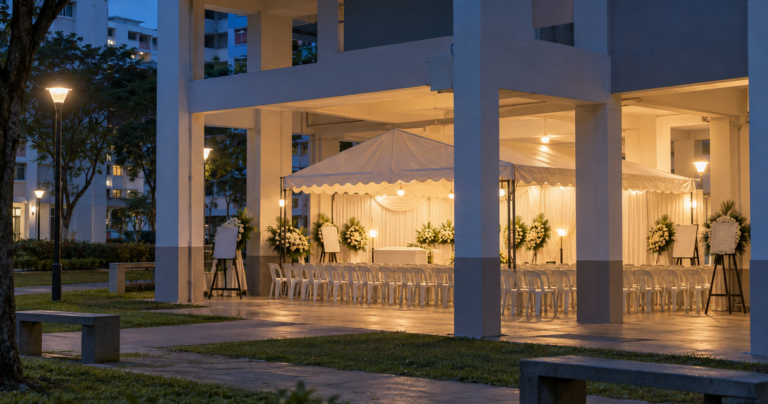
The wake, a period of mourning and remembrance, typically lasts between three to seven days, depending on cultural and religious practices. It can be held at home, in a funeral parlor, or a community hall. During this time, the funeral director arranges for embalming, casket selection, and the setup of the wake area, including floral arrangements, religious altars, and seating for guests. For instance, a traditional Buddhist wake might include specific chanting sessions and vegetarian meals, while a Christian wake might feature eulogies and hymns. The cost of a basic funeral package in Singapore, including a three-day wake, can range from S$4,000 to S$8,000, while more elaborate services can exceed S$20,000, according to industry estimates from 2024.
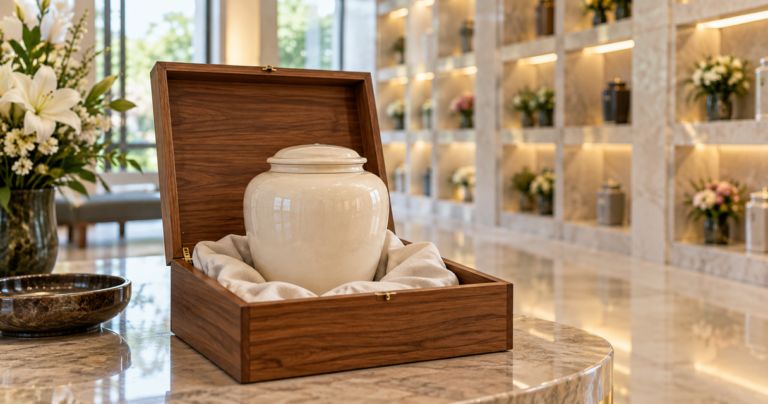
The final day of the wake culminates in the funeral procession and committal. This involves transporting the casket to the crematorium or burial ground. Religious ceremonies are performed at the wake and/or at the final resting place. For cremations, families may choose to collect the ashes and inter them in a columbarium niche, scatter them at sea, or keep them at home. For burials, a final graveside service is conducted. The Singapore government’s NEA provides sea burial services daily, offering a serene alternative for those who prefer it.
| Service Aspect | Description | Typical Duration/Cost |
|---|---|---|
| Medical Certificate of Cause of Death (CCOD) | Issued by doctor to certify death. | Immediate, no direct cost. |
| Death Registration & Certificate | Legal registration of death with NRD. | Within 24 hours, no direct cost. |
| Funeral Director Engagement | Professional assistance for all arrangements. | Varies, included in package cost. |
| Embalming & Preparation | Preservation and aesthetic presentation of the deceased. | Typically 1-2 hours, included in package. |
| Wake Setup & Logistics | Arrangement of venue, casket, decor, food, and seating. | 3-7 days, S$4,000 – S$20,000+. |
| Religious Rites/Ceremonies | Customary prayers, rituals based on faith. | Throughout wake and committal. |
| Cremation/Burial Permit | Legal authorization for disposition. | Issued with Death Certificate. |
| Committal Service | Final farewell at crematorium or burial ground. | 1-2 hours. |
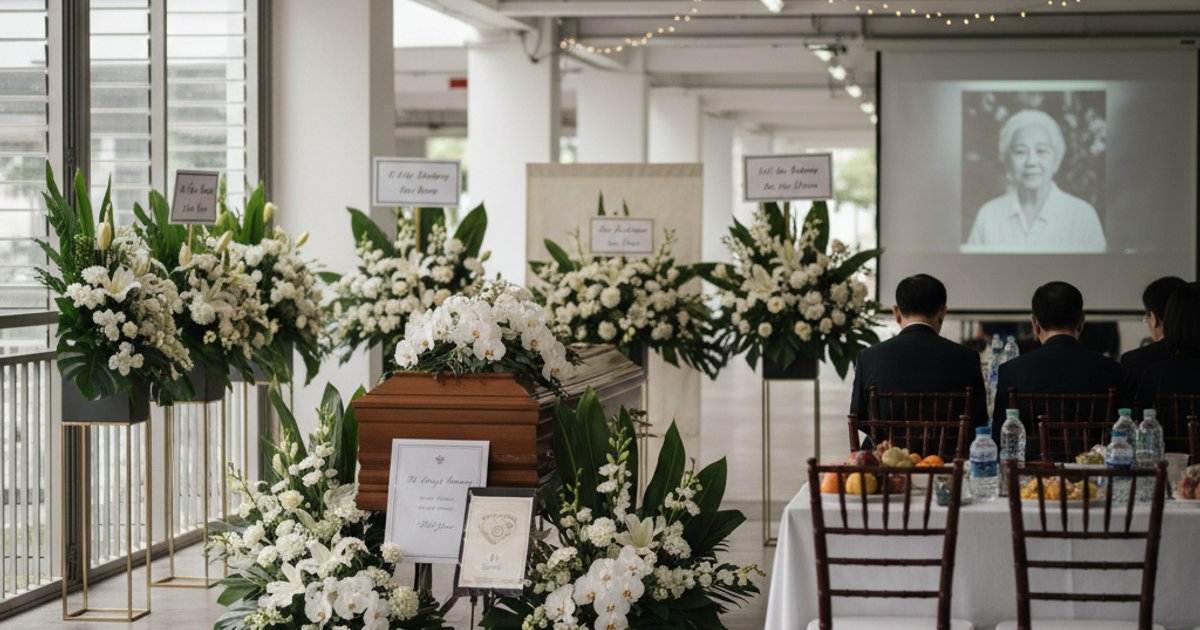
Photorealistic, high-resolution photograph of a serene, tastefully decorated funeral wake in Singapore, with soft lighting, elegant floral arrangements, and a respectful atmosphere. The focus is on the quiet dignity of the setting, suitable for a professional guide on funeral services in Singapore.
What Administrative and Legal Tasks Follow a Funeral?
Beyond the emotional and ceremonial aspects, the period immediately following a funeral in Singapore brings a substantial load of administrative and legal responsibilities that families must navigate. These tasks are crucial for settling the deceased’s affairs, managing their estate, and ensuring financial continuity for dependents. Neglecting these steps can lead to significant complications and prolonged distress for the bereaved.
One of the most critical tasks is settling the deceased’s estate. This involves identifying all assets (bank accounts, properties, investments, insurance policies) and liabilities (debts, loans). If the deceased left a will, the executor named in the will is responsible for applying for a Grant of Probate from the Singapore courts. This legal document confirms the will’s validity and grants the executor authority to administer the estate. Without a will, a family member must apply for a Grant of Letters of Administration, which can be a more complex and time-consuming process, often requiring legal counsel.
Financial institutions, including banks and insurance companies, need to be informed of the death. Bank accounts may be frozen, and funds can only be accessed once the Grant of Probate or Letters of Administration is obtained. Insurance claims, including life insurance and personal accident policies, should be filed promptly. According to the Life Insurance Association Singapore (LIA), a significant portion of claims are processed within 14 working days once all documentation is complete, highlighting the importance of timely submission.
Other crucial administrative tasks include informing government agencies such as the Central Provident Fund (CPF) Board, Housing & Development Board (HDB), and the Inland Revenue Authority of Singapore (IRAS). CPF nominations determine how the deceased’s CPF savings are distributed. If no nomination was made, the funds will be distributed according to intestacy laws, which can be a lengthy process. For HDB flat owners, the transfer of ownership or sale of the flat must be managed according to HDB regulations. Income tax matters also need to be settled, with the executor or administrator responsible for filing the deceased’s final tax return.
Additionally, subscriptions, utilities, and memberships need to be canceled or transferred. This includes mobile phone plans, internet services, club memberships, and recurring payments. It is advisable to compile a comprehensive list of all such commitments to ensure nothing is overlooked. A 2023 survey by the Singapore Management University found that families spend an average of 60-80 hours on post-funeral administrative tasks, underscoring the sheer volume of work involved.
Why Is Long-Term Emotional Support Crucial After a Loss?
Long-term emotional support is not merely beneficial but absolutely crucial after a loss, as grief is a profound and enduring process that extends far beyond the funeral ceremony. The initial shock and flurry of activity often mask the deeper, more complex emotional journey that unfolds over months and even years. Providing sustained support helps individuals process their grief, adapt to a new reality, and eventually find a path towards healing and remembrance.
Grief is not a linear process; it manifests differently for everyone and can resurface unexpectedly, often triggered by anniversaries, holidays, or everyday reminders. The absence of the deceased creates a permanent void, and learning to live with this absence requires significant emotional adjustment. Without adequate support, individuals can experience prolonged sadness, isolation, anxiety, and even physical health issues. A 2022 study published in the Journal of Palliative Medicine indicated that approximately 10-20% of bereaved individuals experience complicated grief, a severe and persistent form of grief that impairs daily functioning, highlighting the need for intervention.
Effective long-term support can take various forms. Professional counseling and therapy offer structured environments for individuals to explore their feelings, develop coping mechanisms, and process traumatic aspects of their loss. Grief support groups, such as those offered by the Singapore Hospice Council or community organizations, provide a safe space for individuals to share experiences with others who understand, reducing feelings of isolation. These groups foster a sense of community and shared understanding, which can be incredibly validating.
Family and friends also play a vital role in providing ongoing emotional support. This extends beyond the initial weeks of condolences to checking in regularly, offering practical help, and simply being present to listen without judgment. Remembering the deceased, sharing stories, and acknowledging the pain of loss are all powerful ways to support someone through their grief. Nirvana Singapore, through its community outreach, often highlights the importance of creating lasting legacies and fostering environments where remembrance is celebrated, not avoided.
How Can Pre-Planning Ease the Burden on Families?
Pre-planning funeral arrangements offers an invaluable gift to loved ones, significantly easing the emotional and financial burden during a time of intense grief. By making decisions about funeral preferences, financial provisions, and administrative details in advance, individuals ensure their wishes are honored while sparing their families the stress of making complex choices under duress. This proactive approach fosters peace of mind for everyone involved.
One of the primary benefits of pre-planning is the reduction of decision fatigue for the bereaved. When a death occurs, families are often overwhelmed by grief, making it difficult to think clearly about casket choices, wake locations, religious rites, and budget constraints. Pre-planning allows these decisions to be made calmly and thoughtfully, reflecting the individual’s personal values and preferences. For example, deciding between a traditional burial or cremation, selecting specific hymns or readings, or even choosing the type of floral arrangements can all be settled beforehand, removing potential disagreements or uncertainties among family members.
Financially, pre-planning can lock in costs at current rates, protecting families from future inflation. Many funeral service providers in Singapore, including Nirvana Singapore, offer pre-need plans that allow individuals to pay for services in advance, either in a lump sum or through installments. This not only alleviates the immediate financial strain on the family but also ensures that sufficient funds are allocated for the desired arrangements. A 2024 report by the Consumers Association of Singapore (CASE) noted that pre-paid funeral plans can save families up to 15-20% compared to arrangements made at the time of need, due to price stability and avoidance of urgent, premium-priced services.
Furthermore, pre-planning extends beyond just the funeral service itself. It can include documenting wishes for estate distribution, designating beneficiaries for insurance policies and CPF, and even outlining preferences for memorialization. This comprehensive approach ensures that all practical and legal aspects are addressed, providing a clear roadmap for the surviving family. It empowers individuals to take control of their final arrangements, transforming a potentially chaotic period into a more organized and dignified process, allowing loved ones to focus on mourning and healing rather than logistical complexities.

Photorealistic, high-resolution photograph of a family sitting together, looking at a document and discussing, with a sense of calm and planning. The setting is a modern, comfortable living room, suggesting proactive decision-making for future funeral services in Singapore.
Frequently Asked Questions
What is the average cost of a funeral in Singapore?
The average cost of a funeral in Singapore varies widely based on the type of service, duration of the wake, and specific religious or cultural requirements. Basic packages for a three-day wake can start from S$4,000 to S$8,000, while more elaborate or premium services, including higher-end caskets, extended wakes, and specific religious rites, can easily exceed S$20,000. These figures typically include embalming, casket, wake setup, and cremation fees.
Do I need a lawyer to settle an estate in Singapore?
While not always strictly mandatory, engaging a lawyer is highly recommended for settling an estate in Singapore, especially if the deceased owned significant assets, had complex financial arrangements, or did not leave a will. A lawyer can assist with applying for a Grant of Probate (with a will) or Letters of Administration (without a will), ensuring legal compliance and smooth distribution of assets according to the law.
Can I scatter ashes at sea in Singapore?
Yes, sea burial is permitted in Singapore and is managed by the National Environment Agency (NEA). The NEA provides daily sea burial services for cremated remains. Families can choose to scatter the ashes at a designated area approximately 1.5 nautical miles south of Pulau Semakau. It is a serene option for those who prefer a natural resting place for their loved ones.
What is the difference between a Grant of Probate and Letters of Administration?
A Grant of Probate is a legal document issued by the Singapore courts when a deceased person has left a valid will, appointing the executor named in the will to administer the estate. Letters of Administration are issued when a person dies without a valid will (intestate), appointing an administrator to manage and distribute the estate according to intestacy laws. The process for Letters of Administration is generally more complex and time-consuming.
How long does the grief process typically last?
The grief process is highly individual and has no fixed timeline; it can last for months, years, or even a lifetime, evolving over time. While the acute phase of grief might subside within the first year, feelings of loss can resurface, particularly around significant dates. It’s important to remember that grief is not about
Last updated: June 6, 2026