How Singapore Handles Limited Burial Land: A Complete Guide
| Singapore covers 733 square kilometres. Over 5.9 million people live here. When someone dies, burial needs permanent space. Singapore does not have it. The government has been solving this problem for decades with strict policy, mandatory exhumation, and a national push toward cremation. If you are planning a funeral here or making arrangements for the future, understanding how Singapore handles limited burial land affects every decision you make. |
This guide covers the full picture. You will learn exactly what the government policies say, what they mean for your family, and what practical choices are available to you today.
Why Limited Burial Land Is a Critical Issue in Singapore
Most countries with low population density do not face this problem. Families buy plots and use them for generations. Singapore cannot do that.
The country has one of the highest population densities in the world. Every piece of land has competing uses: housing, transport, industry, green space, water catchment. Burial land competes with all of them.
The government recognised this constraint early. Policies introduced over the past four decades have progressively reduced the land used for burial, increased cremation, and created a structured system for managing existing graves.
| Metric | Singapore | Regional Comparison |
| Land area | 733 sq km | Malaysia: 329,847 sq km; Indonesia: 1.9M sq km |
| Population | 5.9 million+ | Density: ~8,000 per sq km |
| Active burial ground | Choa Chu Kang Cemetery (primary) | Highly limited; no new general cemeteries planned |
| Cremation rate | Over 80% | Japan: 99%; UK: 79%; US: 60%+ |
| Burial plot term | 15 years (standard) | Permanent in many Western countries |
These figures explain the problem clearly. Singapore’s land cannot support permanent burial at scale. The government’s approach reflects that reality.
How Singapore Handles Limited Burial Land: The Policy Framework
Singapore’s approach to limited burial land rests on four core policies. Each one shapes what you can and cannot do when planning a funeral or end-of-life arrangement.
Policy 1: The Fixed Burial Period
Singapore does not sell burial plots permanently. The burial period in Singapore is set at 15 years for most plots. After that period ends, the National Environment Agency (NEA) has the right to reclaim the land.
This is a fundamental difference from many other countries. You are not purchasing ownership of a burial plot. You are using it for a fixed term.
After 15 years, families receive notice that the burial period has ended. They must then decide what happens next. Read the full detail on what happens after the burial period ends to understand your obligations when this notice arrives.
Key Facts About the 15-Year Burial Period:
|
Policy 2: Mandatory Exhumation
When the burial period ends, exhumation is required in Singapore. This is not optional. The government enforces this policy to reclaim land and maintain a workable burial system.
Exhumation means the remains are dug up, typically cremated, and then placed in a columbarium or scattered at sea. The process is handled by licensed contractors under NEA supervision.
For families, this is often an unexpected burden. Many people who chose burial decades ago did not fully understand that their children or grandchildren would eventually need to manage this process.
Policy 3: The New Burial Policy
The new burial policy in Singapore restricts who can be buried and where. New burial applications are limited. Only Choa Chu Kang Cemetery remains active for new burials. Some religious communities, particularly Muslims, retain burial rights under specific arrangements.
The policy is designed to reduce the overall number of new burials over time. As existing plots reach the end of their burial period, the land is cleared and the total stock of burial land gradually decreases.
Policy 4: Active Promotion of Cremation
The government does not just restrict burial. It promotes cremation through infrastructure investment, regulated pricing at government crematoria, and public education.
Singapore has multiple cremation facilities across the island. They are well-managed, affordable, and accessible. The government’s investment in these facilities reflects a long-term plan to make burial an exception rather than the norm.
Read more about why cremation is increasing in Singapore to understand the full context behind the government’s direction.
Choa Chu Kang Cemetery: Singapore’s Last Burial Ground
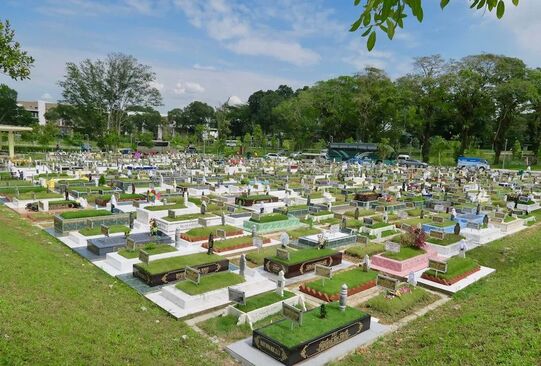
Choa Chu Kang Cemetery in Lim Chu Kang Road is Singapore’s only active general cemetery. It serves multiple religious communities including Christian, Muslim, Buddhist, Taoist, and others.
The cemetery is large by Singapore standards, but it operates under tight allocation rules. Not everyone can request a burial plot. Priority goes to religious communities with specific burial requirements, particularly Muslims for whom burial is a religious obligation.
| Cemetery Section | Community Served | New Burials Available? |
| Muslim section | Muslim community | Yes, subject to allocation |
| Christian section | Christian community | Limited |
| Buddhist / Taoist section | Buddhist and Taoist families | Very limited |
| Hindu section | Hindu community | Very limited |
| General section | Non-religious or mixed | Minimal |
For families dealing with graves at this cemetery, the Choa Chu Kang grave exhumation guide provides location-specific steps, timelines, and what to expect during the exhumation process.
The Exhumation Process: What Families Actually Go Through
Exhumation is one of the most overlooked aspects of choosing burial in Singapore. Many families only learn the details when the notice arrives.
Here is what the process involves from start to finish.
- The NEA sends written notice to the registered next-of-kin
- The family reviews their options: extension request or exhumation
- If proceeding with exhumation, the family applies for an NEA permit
- A licensed exhumation contractor is engaged
- The exhumation is scheduled and carried out at the cemetery
- Remains are typically cremated after exhumation
- Ashes are placed in a columbarium niche, scattered at sea, or kept at home
Read the complete grave exhumation process in Singapore for every step in detail. For permit requirements, see how to apply for an NEA exhumation permit in Singapore.
Grave Exhumation and Relocation
In some cases, families choose to relocate remains to another approved site rather than proceeding directly to cremation. This is possible but requires additional permits and coordination.
Read the full guide on grave exhumation and relocation in Singapore to understand relocation options, timelines, and costs.
What Families Often Do Not Expect About Exhumation:
|
The Cost of Burial Land Management in Singapore
Choosing burial in Singapore is not just a one-time cost. It is a long-term financial commitment that your family will carry.
| Cost Component | Burial Path (SGD) | Cremation Path (SGD) |
| Initial funeral package | $3,000 – $10,000 | $1,200 – $5,000 |
| Plot or niche | $5,000 – $20,000+ (plot) | $1,500 – $10,000 (niche) |
| Annual plot maintenance | $100 – $500 per year | Minimal or none |
| Extension fee (if applicable) | $500 – $2,000 | N/A |
| Exhumation contractor fee | $2,000 – $5,000 | N/A |
| Post-exhumation cremation | $1,000 – $3,000 | N/A |
| Total 15-year cost estimate | $14,500 – $42,500+ | $3,000 – $18,000 |
These are estimates based on current market rates. For a detailed breakdown, read cost of funeral services in Singapore and the cost of grave exhumation in Singapore.
Cremation: How Singapore Manages Remains Without Land
Cremation removes the land requirement almost entirely. The ashes from a cremation take up a fraction of the space a burial plot requires. Singapore has built its entire post-death infrastructure around this reality.
The Cremation Process in Singapore
The cremation process in Singapore is well-regulated and accessible. Singapore operates several government crematoria managed by the NEA, alongside private facilities.
| Stage | What Happens | Who Manages It |
| Body collection | Funeral provider collects and prepares the body | Licensed funeral provider |
| Wake period | One to three days of prayers, viewing, and rites | Family with funeral provider |
| Cremation permit | Permit applied for and approved by NEA | Funeral provider |
| Cremation | Body cremated at approved crematorium | Crematorium staff |
| Ash processing | Bone fragments processed into fine ash | Crematorium staff |
| Urn and handover | Ashes placed in urn and returned to family | Funeral provider |
| Final placement | Columbarium, sea burial, or home placement | Family decision |
For the full breakdown of each stage, read what happens after cremation in Singapore.
Where Ashes Go: Columbarium Options
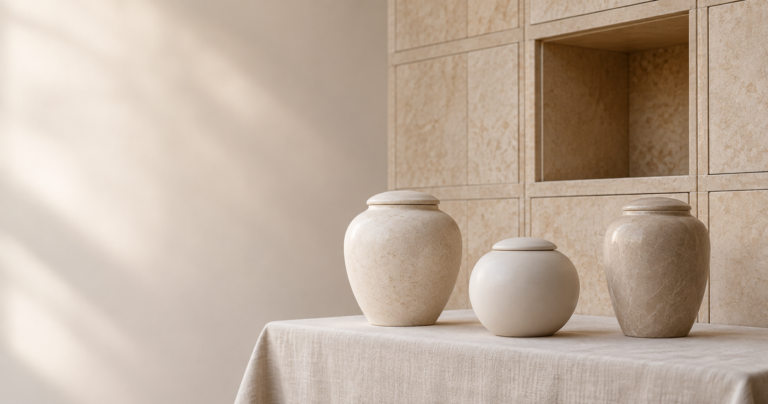
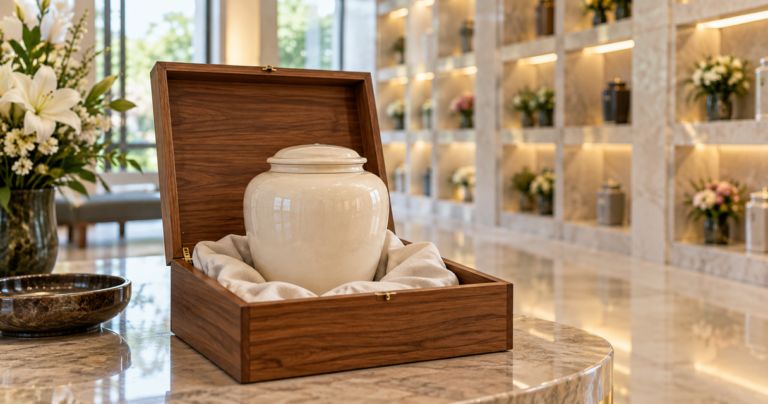
After cremation, the family chooses where to place the ashes. The most common choice is a columbarium niche. Singapore has a range of options:
- Government-run columbaria managed by NEA at Mandai and other locations
- Religious columbaria operated by temples, churches, and community organisations
- Private columbaria offered by funeral service providers
- Sea burial at NEA-approved scattering zones
- Home placement, subject to local housing rules
Choosing the right placement matters. Read how to choose a columbarium niche for a full guide on what to look for, how much it costs, and how to compare options.
Burial vs Cremation in Singapore: Making the Right Call
Both options remain available. Your decision should be based on religion, cost, and a clear understanding of what each choice means long-term.
| Factor | Burial | Cremation |
| Land required | Yes, physical plot needed | No, only niche space |
| Plot permanence | 15-year term only | Niche can be longer term |
| Regulatory burden | High (plot, maintenance, exhumation) | Low (permit, ash placement) |
| Long-term family obligation | Exhumation management required | Minimal ongoing obligation |
| Cost (full lifecycle) | Higher | Lower |
| Religious suitability | Required for Muslims; optional for others | Accepted by most faiths |
| Flexibility | Fixed location | Multiple placement options |
| Environmental footprint | Higher land use | Lower land use |
For a full side-by-side analysis, read cremation vs burial in Singapore and the detailed burial vs cremation practical comparison for Singapore families.
Religious Views and How They Interact With Singapore’s Burial Land Policy
Religion is the single biggest driver of the burial vs cremation decision for most families in Singapore. The government’s land policies work around religious requirements rather than against them.
| Religion | Burial or Cremation | How Land Policy Applies |
| Islam | Burial required | Muslim burial plots reserved at Choa Chu Kang; subject to 15-year period |
| Buddhism / Taoism | Both accepted; cremation preferred | Most families choose cremation; burial limited |
| Christianity | Both accepted | Burial available but restricted; most choose cremation |
| Hinduism | Cremation preferred | Land policy is not a conflict; cremation is the standard |
| Secular | Personal preference | Most choose cremation for practical reasons |
The religious views on cremation in Singapore guide covers each faith community in detail. Read it before making a final decision, especially if you are managing arrangements for a family member whose beliefs differ from your own.
For a broader view of how cultural and religious customs shape every part of the funeral, see the full resource on religious customs and funeral planning in Singapore.
How the Funeral Process Works Inside This System
The funeral process in Singapore operates within the framework of NEA regulations, burial plot allocation, cremation permits, and post-service placement. Here is how it flows from death to final arrangement.
Step-by-Step: Singapore Funeral Process
|
If you are managing an immediate loss and need clear direction, start with what to do when someone passes away in Singapore. For full planning guidance, read how to arrange a funeral in Singapore.
Funeral Packages and What They Cover in Singapore’s Land-Constrained System
The type of funeral package you choose determines how much of this process gets handled for you. Providers range from basic to full-service, with significant differences in what is included.
| Package Type | Typical Cost (SGD) | What It Covers |
| Basic cremation | $1,200 – $3,000 | Transport, simple wake, cremation permit, urn |
| Standard cremation | $3,000 – $6,000 | Full wake setup, mid-range urn, religious officiant |
| Premium cremation | $6,000 – $12,000+ | Full service, premium urn, columbarium assist |
| Basic burial | $3,000 – $6,000 | Transport, casket, grave permit, simple service |
| Standard burial | $6,000 – $12,000 | Full wake, quality casket, grave setup |
| Premium burial | $12,000 – $25,000+ | Full service, premium casket, memorial setup |
Browse funeral packages in Singapore to compare what is available. If you want to understand the cost difference between basic and full service options, read affordable vs premium funeral packages in Singapore.
Why Pre-Need Planning Matters When Land Is Scarce
Singapore’s limited burial land makes pre-need planning more important here than in almost any other country. When land is scarce and policy is strict, decisions made under pressure often lead to wrong outcomes.
What Pre-Need Planning Lets You Do
- Choose burial or cremation on your own terms, with time to research
- Review columbarium options before they are needed urgently
- Document your religious and personal preferences in writing
- Understand the burial period rules before committing to burial
- Protect your family from having to make decisions while grieving
- Lock in arrangements before funeral costs increase further
The land constraint in Singapore adds an extra reason to plan ahead. If burial is your preference, you need to understand the 15-year policy, the exhumation process, and the cost before committing. Pre-need planning gives you the space to do that.
Read the full case for benefits of advance funeral planning and the detailed guide on what is pre-need funeral planning and why does it matter.
Questions to Ask Before Choosing Burial in Singapore:
|
How Singapore Compares to Other Countries on Burial Land Management
Singapore’s approach is strict but not unique. Other land-constrained countries have developed similar systems. Understanding the comparison helps you see why Singapore’s policies exist and why they work.
| Country | Burial Plot Duration | Cremation Rate | Land Constraint Level |
| Singapore | 15 years | 80%+ | Very high |
| Japan | Mostly perpetual (but expensive) | 99%+ | High in cities |
| United Kingdom | 50-100 years in many areas | 79% | Moderate to high |
| Germany | 10-30 years (varies by region) | 76% | Moderate |
| United States | Perpetual in most states | 60%+ | Low to moderate |
| Australia | Varies; some 25-year terms | ~70% | Moderate |
Singapore’s 15-year period is among the shorter terms globally, but it reflects land supply. The International Cemetery, Cremation and Funeral Association (ICCFA) global burial trends report shows that shorter burial terms consistently correlate with higher cremation rates. Singapore fits that pattern exactly.
A 2022 Cremation Association of North America (CANA) report found that land availability is the top driver of cremation preference globally, outranking cost and religion as factors in high-density regions.
The National Environment Agency Singapore official burial and cremation policy page provides current government guidelines, approved crematoria, and registration procedures for families managing a death in Singapore.
Choosing the Right Funeral Provider in Singapore
The funeral provider you work with navigates this entire system on your behalf. They handle permits, logistics, NEA compliance, and post-service arrangements. Choosing well matters.
What to Check When Selecting a Funeral Provider:
|
For a starting point, review the full range of best funeral services in Singapore to understand what to look for and how providers differ in Singapore’s regulated market.
Summary: How Singapore Handles Limited Burial Land
The answer to how Singapore handles limited burial land comes down to a clear system with four parts.
| Policy or System | What It Does | Impact on Families |
| 15-year burial period | Limits how long graves occupy land | Families must manage exhumation after 15 years |
| Mandatory exhumation | Reclaims burial land when period ends | Requires permits, contractors, and decisions about remains |
| Restricted new burials | Limits who can apply for burial plots | Most families must choose cremation by default |
| Cremation infrastructure | Provides accessible, regulated cremation facilities | Makes cremation easy, affordable, and well-supported |
| Columbarium system | Provides space for ashes without using ground land | Families have multiple placement options post-cremation |
| Pre-need planning | Encourages decisions before crisis moments | Reduces pressure and ensures wishes are followed |
Singapore’s system is deliberate. It balances the needs of a diverse, religious, multi-cultural population with the hard reality of limited land. The policies are not punitive. They are practical.
If you understand the system, you can work within it clearly. You know which option suits your family, your religion, and your budget. You know what obligations come with burial. You know what cremation involves from start to finish.
Take the next step by reading how to arrange a funeral in Singapore, comparing funeral packages in Singapore, and learning about the benefits of advance funeral planning so your family is never left without a plan.
| About This Article
This article provides general information on burial land policy and funeral planning in Singapore. All cost figures are estimates. Policies and service offerings may change. Consult a licensed funeral service provider or the National Environment Agency (NEA) for current official guidance. |