A funeral wake in Singapore is the period, usually of several nights, when the body lies in a mourning hall and family and friends come to pay respects. Where it is held is a bigger decision than it appears, because the venue determines which government agency has to approve it, what it costs, and how many people can realistically attend.
This guide covers the venue options and the permits each one requires, how long a wake may legally last, what happens each day, what visitors should do, and the rules on embalming that quietly constrain the whole schedule. The permit requirements and time limits here are as published by the National Environment Agency.
The three venues, and what each really involves
An HDB void deck
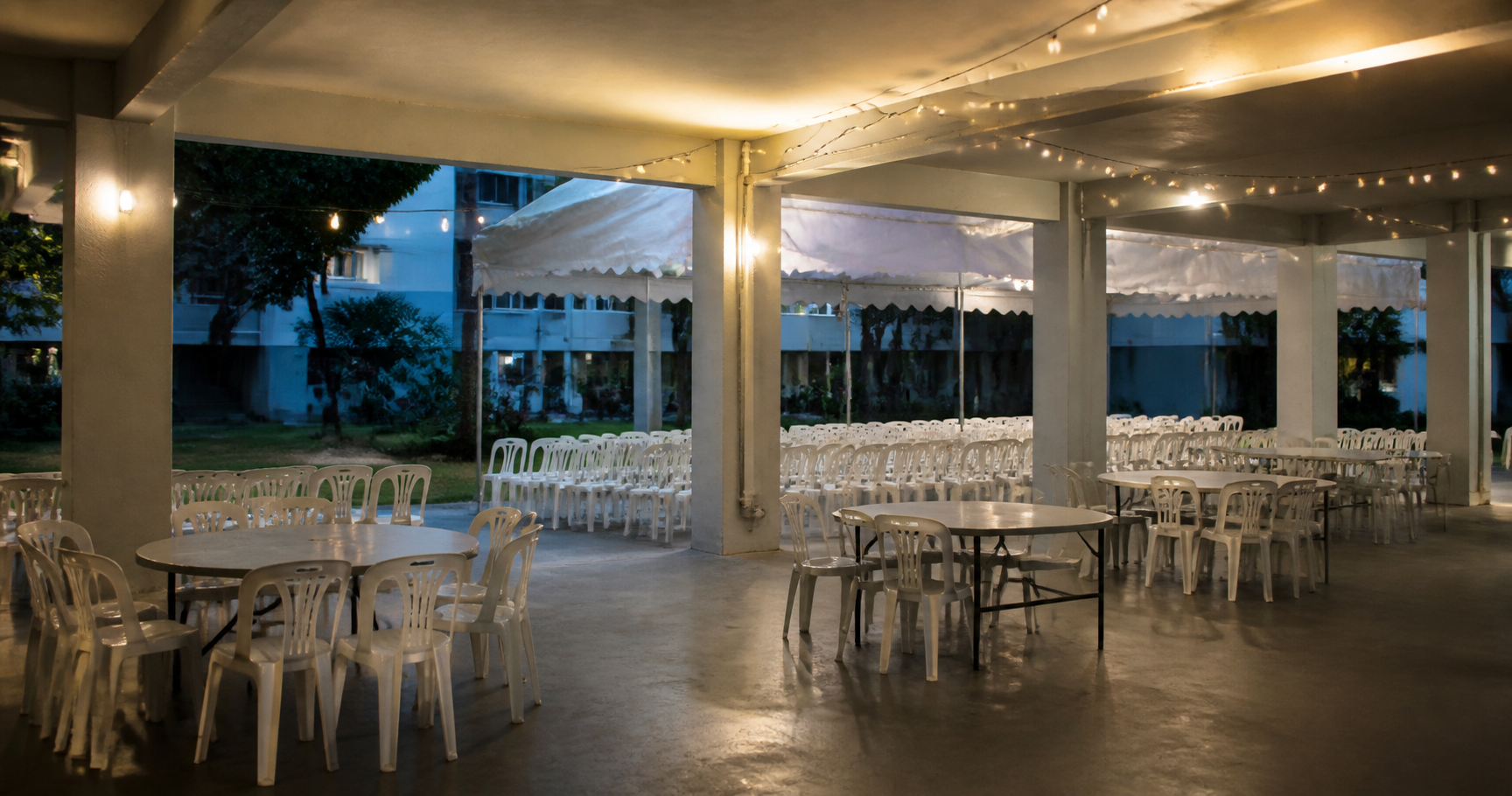
Still the most common setting in Singapore and the least expensive. The space under an HDB block is used, with the mourning hall assembled on site and dismantled afterwards. It is open-air, it is close to home for most families, and neighbours are used to it.
It requires a permit from the Town Council that manages the block. If the adjacent surface parking lots are needed, that is a separate application to HDB, made through the managing HDB Branch, by calling the HDB Branch Service Line on 1800-225-5432, or through the HDB feedback form under the subject Car Park and the category Use of Car Parks for Non-Parking Purpose.
A funeral parlour
An indoor, usually air-conditioned hall, with on-site amenities and no permit application for the family to worry about. It costs more than a void deck. Its practical advantages are weather, comfort for elderly relatives sitting for several evenings, and a fixed set-up that does not have to be built and taken down.
If the family wants embalming and an open casket, the parlour route matters for another reason: funeral parlours with embalming facilities are licensed by NEA, and there is a published list of them.
The family home
Traditional and still done, though unusual in Singapore given typical flat sizes. A wake in a private or landed property that needs to use public roads or walkways requires a Temporary Occupation Licence from the Singapore Land Authority, and the prevailing TOL fee. The same applies to using state land managed by SLA.
The permit table
The venue, not the religion, determines the paperwork. A funeral director handles all of it, but you are entitled to know what is being applied for in your name.
| Where the wake is held | What is required | Who grants it |
|---|---|---|
| Void deck, multi-purpose hall or pavilion | Permit | The managing Town Council |
| Adjacent surface car park lots | Application for non-parking use | HDB, via the managing branch or 1800-225-5432 |
| Private or landed property using public roads or walkways | Temporary Occupation Licence and the prevailing fee | Singapore Land Authority |
| State land managed by SLA | Temporary Occupation Licence and the prevailing fee | Singapore Land Authority |
| URA-managed parking lots | Application and approval before use | Urban Redevelopment Authority |
| Wake extending beyond 7 days after death | Prior written permission | National Environment Agency |
For a TOL, applicants must comply with Land Transport Authority and Traffic Police requirements, but a separate application to those two is not needed. Where NEA permission is required for a long wake, requests go through the NEA ePortal or in writing to the Memorial Facilities and Planning Division, 40 Scotts Road, Environment Building #21-00, Singapore 228231.
How long a wake can last
The convention
Chinese wakes in Singapore run for an odd number of nights, most commonly three, five or seven. Three is the usual choice now, partly because venues are booked in daily blocks and partly because relatives travelling in need a fixed date.
The legal ceiling
A funeral wake extending more than seven days after the death requires prior written permission from NEA. Separately, if the body is not embalmed, a wake may be held only with the body in a hermetically sealed coffin without a viewing window, and again for a period not exceeding seven days after death.
Those two rules together mean a seven-night wake sits at the outer edge of what is permitted rather than being a free choice, and anything longer is an application rather than a decision.
No wake at all
This is a recognised option. NEA notes that families may opt for direct cremation or direct burial, where the body goes for cremation or burial shortly after passing. Families may hold a simple prayer service at home or at the crematorium service hall instead, or hold the memorial after the cremation with the ashes present rather than the body. Nobody is obliged to hold a wake, and for some families the honest answer is that they would rather not.
Embalming, and why it decides the schedule
What it is
Embalming delays decomposition. Bodily fluids are removed and replaced with formaldehyde-based chemical solutions. It is a procedure, not a cosmetic step.
When it is necessary
For a wake with viewing or an open casket, and typically when a body is to be transported over long distances or across borders.
When it is not
If the family does not want embalming, choose an arrangement that does not involve viewing. A wake may still be held with a hermetically sealed coffin without a viewing window, for up to seven days after the death.
The infectious disease rule
If a medical practitioner deems the deceased to have contracted a highly infectious disease, only funeral services providers who have completed the Basic Infection Control Course run by the National Centre for Infectious Diseases should manage the deceased. NCID publishes the list of providers who have done the course. This is worth checking rather than assuming.
What happens at the wake, day by day
The mourning hall
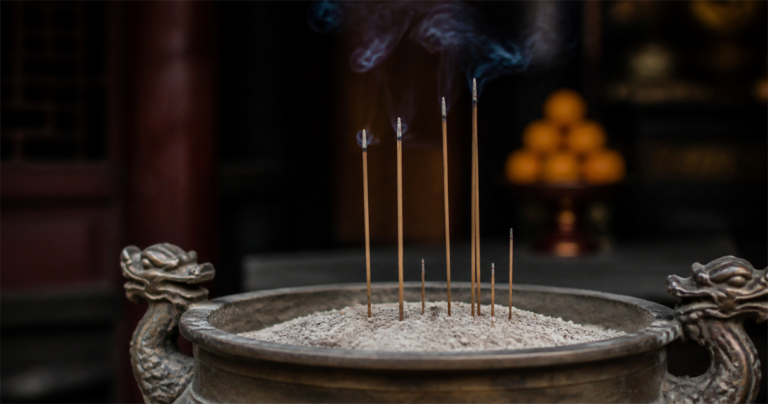
The casket rests at the centre with a portrait of the deceased, an oil lamp kept continuously lit, offerings of food and fruit, and an incense urn where visitors pay respects. The scale of this set-up is one of the main things separating a modest package from an elaborate one.
Encoffining
The body is washed, dressed and placed in the casket, usually on the first day. Families may attend or not, and there is no expectation either way.
Nightly prayers or chanting
What happens here depends entirely on tradition. A Taoist wake has a priest leading scripture recitation, and our guide to Taoist funerals in Singapore covers the sequence. Buddhist practice differs, and is covered in Singapore Buddhist funeral customs and our Buddhist and Taoist funeral guide. Christian wakes centre on services led by a pastor or priest, and our comparison of Buddhist and Christian funerals sets out the differences that matter in practice.
Receiving visitors
Most of each evening is this. Guests arrive, pay respects, sit with the family, and leave. There is usually food. Attendance is heaviest on the first and last evenings.
The final morning
A short ceremony, the sealing of the casket, and the procession to the crematorium or cemetery. One warning that applies regardless of tradition: NEA notes that if the deceased is to be cremated, any valuables placed in the coffin will not be recoverable afterwards.
What the wake looks like by tradition
The venue rules are identical whatever the family believes. What happens inside the hall is not. This is the summary visitors most often want and rarely find in one place.
| Tradition | Who leads | What a visitor does | Distinctive elements |
|---|---|---|---|
| Taoist | A Taoist priest | Offers incense, bows to the portrait | Nightly scripture chanting, paper offerings burned, mourning dress graded by relationship |
| Buddhist | Monks or a lay group | Offers incense, bows, may join chanting | Sutra chanting, merit dedication, often a funeral blanket |
| Christian and Catholic | A pastor or priest | Attends the service, no incense | Hymns, scripture readings, eulogies, a vigil or Mass |
| Mixed-religion families | Varies by evening | Follow the person ahead | Separate services on different nights is a common and workable arrangement |
When the family cannot agree
Mixed-religion households are common in Singapore and the wake is where the difference becomes concrete. The usual resolution is not compromise on the rites but separation in time: one evening’s service in one tradition, another in the other, with everyone attending both and participating only where they are comfortable. Funeral directors here arrange this routinely and it is worth asking for directly rather than treating it as an imposition.
Dialect tradition matters more than doctrine
Within Taoist and Buddhist practice, the sequence of rites often follows the family’s dialect tradition rather than a single national standard, so a Hokkien and a Teochew wake differ in observable ways. When relatives from different branches disagree about what is correct, both are frequently right. Naming the dialect group and the associated temple when engaging a provider settles more than any discussion of belief. Our page on the funeral blanket covers one specific item that comes up repeatedly in this conversation.
Etiquette for visitors
What to wear
Dark or muted clothing. Avoid red. Mourning garments are for immediate family, whose colour and material traditionally indicate their relationship to the deceased and their generation, so a visitor is not expected to wear them.
What to do on arrival
Sign the book if there is one, offer incense at the urn or bow to the portrait depending on the tradition, and greet the immediate family. In a Christian wake, incense is not offered. If you are unsure, watch what the person ahead of you does.
Condolence money
Given in a white envelope, not red. The amount is a matter of relationship and local convention rather than rule, and it goes towards funeral expenses.
How long to stay
There is no minimum. Twenty minutes is entirely normal for a colleague or neighbour. Staying for the full evening prayers is for family and close friends.
What to say
Very little is required. Naming the deceased and saying something specific about them is worth more than any formula. Avoid asking about the cause of death.
What a wake costs
The fixed part
Very little of a wake’s cost is government-set. What is published are the fees at the other end of the funeral, and they are usually smaller than families expect: cremation at a government crematorium is $100 for an adult and $50 for a child under 10, and a standard niche at a government columbarium is $500 with a family niche at $900. The private crematoria publish their own figures, $327 at Kong Meng San Phor Kark See Monastery and $436 at Tse Tho Aum Temple, both cremation only and inclusive of GST.
The variable part
The wake itself is where the cost sits, and three choices drive it: how many nights, which venue, and which casket. A three-night void deck wake is a complete and traditional funeral, not a compromise. Our breakdown of funeral costs in Singapore and our guide to what funeral packages include cover what a quote should show.
Asking the right questions
The Competition and Consumer Commission Singapore’s A.S.K. checklist, developed with NEA’s support from a market study of Singapore funeral services, is the short version: ascertain the wishes of the deceased and the family, seek clear answers so you know what you are paying for, and know the independent sources you can check. The Association of Funeral Directors Singapore maintains a member directory, and NEA publishes the licensed embalming parlour list. Our page on how to choose a funeral service in Singapore covers the selection.
Being considerate at a void deck wake
NEA asks families holding wakes to keep disruption contained: direct attendees to designated parking lots, deploy traffic marshals if the road layout needs it, and minimise inconvenience to others. In practice this is what determines whether the neighbours experience three nights of a funeral as a community event or a nuisance, and it costs nothing but attention.
What comes after the wake
Cremation or burial
Most Singaporean families now choose cremation. Choa Chu Kang Cemetery Complex is the only cemetery still open for burials, and since 1 November 1998 the burial period for all graves has been limited to 15 years, after which graves are exhumed. Our comparison of cremation and burial, religious views on cremation and Choa Chu Kang burial guide cover the choice, with why exhumation is required and the exhumation process covering the consequence.
The ashes
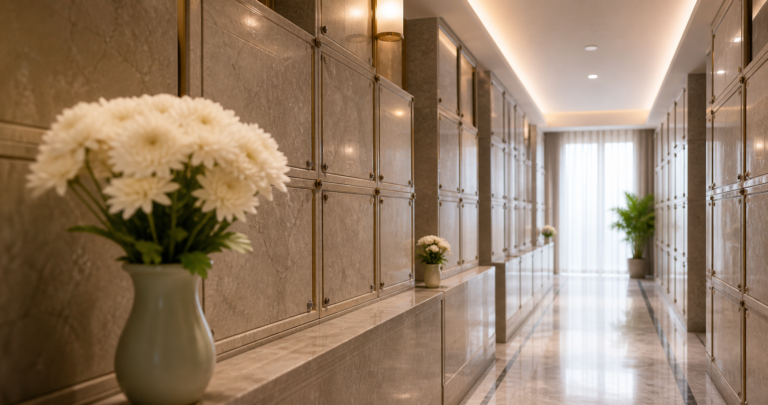
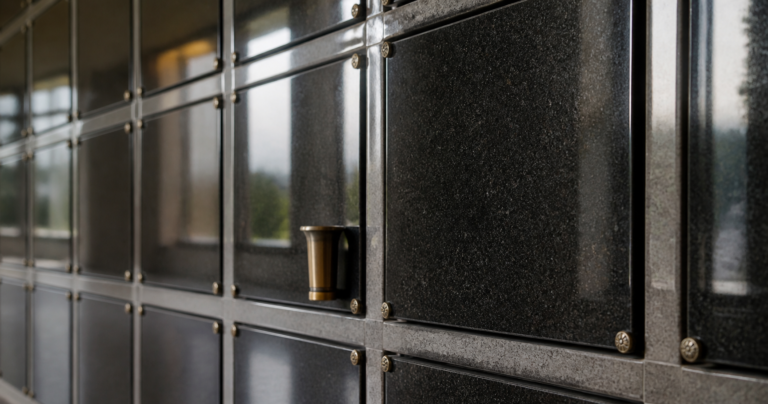
Collected on a later date, then placed in a niche, scattered, or kept at home. Our pages on the cremation process, what happens after cremation, columbarium niches, urns and ash disposition cover each step.
The observances that follow
Chinese families continue with prayers every seventh day for forty-nine days, then the hundredth day, then the first anniversary. Our guide to the 49-day and 100-day mourning periods covers the calendar, and ancestral tablets and tablet placement cover the permanent arrangement.
If a death has just occurred
Before the wake there is certification and paperwork. Start with what to do when someone passes away in Singapore, then the funeral process. If you are planning rather than reacting, our advance planning checklist and pre-planning page cover what can be settled early, and feng shui considerations cover the timing questions families raise.
Speaking to someone
Nirvana Memorial Garden arranges wakes at void decks, funeral parlours and homes across Singapore, for Buddhist, Taoist, Christian and Catholic families, and handles the Town Council, HDB and SLA applications that go with each. If you need to know what is possible at a specific block, our team can check.
Call +65 6363 6363 or email contact@nirvanasingapore.sg.
Permit requirements, the seven-day wake limit, embalming rules and government fees on this page are as published by the National Environment Agency at the time of writing. Requirements and fees change; confirm current details with NEA or your Town Council before relying on them.