100-Day Prayer Ceremony Meaning: A Comprehensive Multi-Faith Guide
Introduction: Why the 100-Day Prayer Ceremony Matters
Death and mourning are universal human experiences, yet memorial practices vary significantly across cultures and faiths. The 100-day prayer ceremony is one of the most profound and meaningful observances in many Asian traditions, representing a milestone in the deceased’s spiritual journey. This complete guide explores the 100-day prayer ceremony meaning across Buddhist, Hindu, Christian, and Islamic perspectives, explaining why families choose this ritual, what happens during the ceremony, and how it provides comfort and closure. Whether you’re planning a memorial service or seeking to understand these traditions, this article will illuminate the spiritual significance and practical aspects of this sacred observance.
Key Insight: The 100-day prayer ceremony marks a significant spiritual transition point where the deceased’s soul completes its initial journey in the afterlife, making it one of the most important memorial milestones across multiple faith traditions.
1. Understanding the 100-Day Prayer Ceremony Meaning in Buddhist Tradition
1.1 Historical Origins and Spiritual Significance
In Buddhist philosophy, the 100-day prayer ceremony meaning is deeply rooted in the concept of rebirth and the intermediate state between death and the next life. According to Tibetan Buddhist teachings, the consciousness of the deceased transitions through various stages known as the ‘bardo,’ and the 100-day mark represents a critical juncture in this spiritual journey.
The ceremonial practices derive from the Tibetan Book of the Dead (Bardo Thodol), which outlines the stages of consciousness after death. Buddhist families believe that prayers and rituals performed during the first 100 days directly benefit the deceased’s consciousness, influencing their rebirth conditions and spiritual evolution. This period is not merely symbolic—it represents an active engagement in the deceased’s spiritual welfare.
1.2 The 100-Day Prayer Ceremony Process in Buddhism
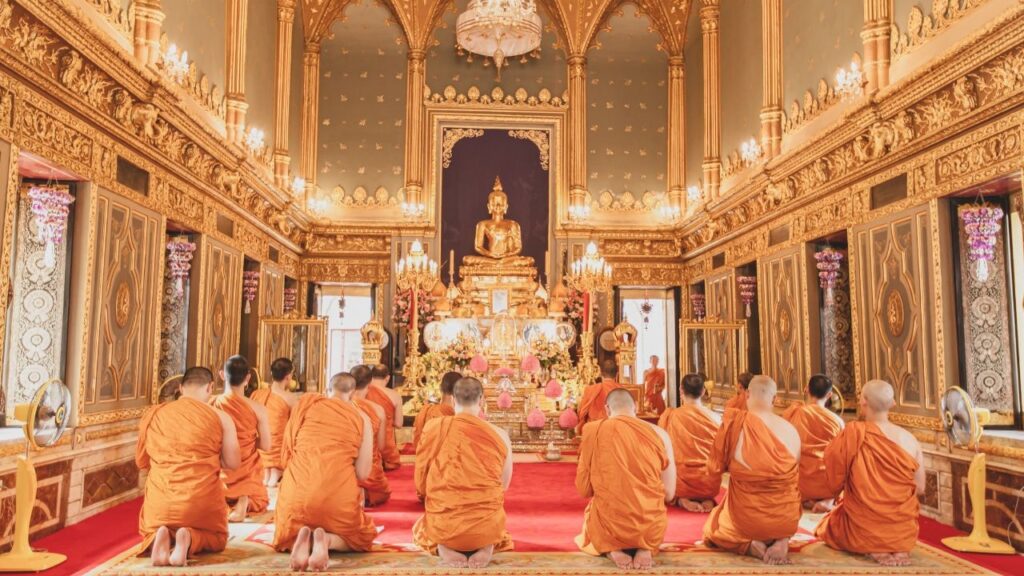
- Daily chanting and meditation by monks or family members
- Recitation of the Lotus Sutra or other sacred Buddhist texts
- Transfer of merit ceremonies where prayers are dedicated to the deceased
- Making offerings such as incense, flowers, candles, and food
- Attending group prayers at temples or monasteries
- Releasing energy through meditation and mindfulness practices
Families often engage professional monks to perform continuous or periodic chanting throughout the 100 days. The number seven is particularly significant in Buddhism, with additional ceremonies held on the 7th, 14th, 21st, 28th, 35th, 42nd, 49th, and 100th days. Each ceremonial date is believed to correspond to rebirth opportunities or stages in the bardo.
| Day Marker | Spiritual Significance |
| Day 7 | First rebirth opportunity; initial stage of consciousness transition |
| Day 14 | Second rebirth opportunity; consolidation of karmic patterns |
| Day 21 | Third rebirth opportunity; intensified spiritual intervention needed |
| Day 28 | Fourth rebirth opportunity; karmic judgment continues |
| Day 35 | Fifth rebirth opportunity; critical juncture for positive rebirth |
| Day 49 | Seventh rebirth opportunity; final transformation before new rebirth |
| Day 100 | Ceremony of completion; final prayers and dedication of merit |
2. The 100-Day Prayer Ceremony Meaning in Hindu Tradition
2.1 Hindu Beliefs About Death and Afterlife
In Hinduism, the 100-day prayer ceremony meaning connects to the concept of ‘Shraaddha’—sacred rituals performed for the deceased that honor their memory and facilitate their spiritual progress. While traditional Shraaddha ceremonies are performed on specific dates (the 13th day, monthly, and yearly after death), the extended 100-day observance has become increasingly popular, especially in diaspora communities seeking to balance ancient traditions with modern family schedules.
The belief system posits that the soul (atman) is eternal and cyclical, passing through multiple lifetimes. Prayers, offerings, and righteous deeds performed by the living can positively influence the deceased’s spiritual journey and potential rebirth. The 100 days represent a period of transformation where the soul gradually detaches from the physical world and progresses toward liberation (moksha) or favorable rebirth.
2.2 Hindu Rituals and Observances During 100 Days
- Chanting of the Bhagavad Gita, particularly Chapter 15 which discusses the eternal soul
- Preparation and offering of the deceased’s favorite foods as prasad
- Lighting of sacred lamps (diyas) in the home every evening
- Performing puja ceremonies to invite divine blessings for the departed
- Donating to temples, charities, or educational institutions in the deceased’s name
- Maintaining spiritual discipline through fasting or abstinence
Families may also undertake a pilgrimage to holy sites such as Varanasi or immerse the ashes in the Ganges River, combining cremation rituals with extended memorial practices. These multi-layered observances reflect the Hindu understanding that the 100-day period is transitional—neither fully in the material world nor completely in the spiritual realm.
3. The 100-Day Prayer Ceremony Meaning in Christian Tradition
3.1 Christian Memorial Theology
While the formal 100-day prayer ceremony is not universally practiced across all Christian denominations, many Christian communities—particularly in Philippines, Latin America, and parts of Asia—have incorporated extended memorial periods into their mourning practices. The 100-day prayer ceremony meaning in Christianity emphasizes continuous intercession for the deceased’s soul and celebration of the eternal hope promised through Christ’s resurrection.
Catholic tradition includes specific doctrinal support for prayers benefiting the deceased through the concept of purgatory, where souls are purified before entering heaven. The Second Vatican Council affirmed the practice of praying for the dead, stating that the communion of saints enables the living to assist those who have died. This theological foundation has made extended memorial prayers a natural extension of Christian mourning practice.
3.2 Christian Practices for the First 100 Days
- Daily rosary recitation or prayer dedicated to the deceased’s memory
- Attending Mass and requesting that the deceased be included in the priest’s intentions
- Reading scripture passages that address death, resurrection, and eternal life
- Organizing prayer circles or prayer chains with extended family and church community
- Commissioning a memorial Mass or requesting the deceased be remembered at altar
- Charitable works in the deceased’s memory to honor their legacy
The focus in Christian practice tends to emphasize celebrating the deceased’s life, trusting in God’s mercy, and finding comfort in faith. Unlike Buddhism or Hinduism, where ceremonies aim to directly influence the deceased’s rebirth or spiritual state, Christian prayer for the dead operates within a framework of intercession and hopeful trust in divine judgment.
4. The 100-Day Prayer Ceremony Meaning in Islamic Tradition
4.1 Islamic Perspectives on Death and Remembrance
While the specific 100-day observance is not explicitly mandated in the Quran or Hadith, Islamic tradition strongly emphasizes Dua (supplication) for the deceased and keeping their memory alive through righteous actions. The 100-day prayer ceremony meaning in Islamic context aligns with broader Islamic practices of mourning and remembrance, which are defined for specific periods (iddah) and extended indefinitely through prayer and good deeds.
Islamic teachings state that among the deeds that benefit a deceased person after death are: continuing their righteous works, raising virtuous children who pray for them, and seeking forgiveness through Dua. These practices allow the living to maintain a spiritual connection with the deceased while reinforcing their own faith and moral responsibility.
4.2 Islamic Memorial Practices and Rituals
- Recitation of Surah Yasin (Chapter 36) for the deceased during first few nights
- Performing Dua in all five daily prayers, remembering the deceased in personal supplications
- Engaging in Sadaqah Jariyah (ongoing charity) that continues to benefit both living and deceased
- Reading and completing unfinished Quranic recitation the deceased had begun
- Gathering family for Quran recitation sessions (Khatam) on special occasions
- Supporting causes the deceased cared about during their lifetime
While Islamic mourning periods are typically shorter and more defined than Buddhist practices, the spiritual benefits of remembrance extend beyond formal time limitations. Families are encouraged to think of their deceased loved ones during prayers and continue supporting their legacy through education, charity, and moral excellence.
5. Comparative Overview: 100-Day Prayer Ceremony Meaning Across Faiths
| Aspect | Buddhism | Hinduism | Christianity | Islam |
| Primary Purpose | Guide soul through bardo and facilitate rebirth | Facilitate spiritual progress and righteous rebirth | Intercede for deceased through prayer and blessing | Remember deceased and continue their righteous legacy |
| Key Belief | Consciousness transitions through stages | Soul requires purification and guidance | Trust in divine mercy and intercession | Good deeds benefit both living and deceased |
| Ritual Focus | Chanting, meditation, merit transfer | Puja, offerings, Dua, charitable acts | Prayer, Mass, scripture, charity | Dua, Quran recitation, charitable works |
| Duration Emphasis | 100 days with 7-day intervals | 13 days, monthly, and extended period | First 100 days variable by community | Indefinite with prayer ongoing |
| Mourning Style | Active spiritual intervention | Honoring spiritual duty and debt | Celebrating life and trusting God | Remembering and continuing legacy |
6. Planning Your 100-Day Prayer Ceremony: A Practical Guide
6.1 Before the Ceremony Begins
- Understand your faith tradition’s specific practices and requirements
- Consult with religious leaders or spiritual counselors familiar with your tradition
- Communicate with extended family about participation expectations
- Budget for ceremonial expenses including offerings, monk fees, or charitable donations
- Research local temples, churches, or mosques that can assist with ceremonies
- Plan logistics for daily practices or attendance at key ceremonial dates
6.2 Organizing Ceremonial Milestones
Create a calendar marking all significant dates: 7-day, 14-day, 21-day, etc. through 100 days. For Buddhist ceremonies, coordinate with your local temple to arrange monk participation. For Hindu practices, engage with a priest (pandit) to lead puja ceremonies. Christian families should contact their parish or priest to schedule Masses. Muslim families may organize Quranic recitation sessions at home or mosque.
Consider whether you’ll host ceremonies at home, at a place of worship, or both. Each approach has advantages: home ceremonies create intimacy and accommodate family-specific practices, while institutional ceremonies provide professional guidance and a formal setting that many find meaningful.
6.3 Involving Family and Community
- Invite close family members to participate in daily prayers or meditation
- Share the deceased’s favorite quotes or memories alongside spiritual practices
- Create group gatherings on significant dates (7-day, 49-day, 100-day ceremonies)
- Document the ceremonies through photos or written reflections
- Consider publishing a short memorial booklet with prayers and the deceased’s biography
- Use ceremonies as opportunities to strengthen family bonds during grief
7. The Emotional and Spiritual Journey: Healing Through 100-Day Ceremonies
Beyond their theological significance, 100-day prayer ceremonies serve a profound psychological function. They create a structured framework for grief that prevents the mourning process from feeling chaotic or overwhelming. By marking specific milestones—7 days, 49 days, 100 days—the ceremonies acknowledge that grief is a journey with phases, not a linear path from sadness to recovery.
Participating in these ceremonies allows grieving family members to maintain connection with their deceased loved one while gradually accepting their passing. The ritual practices—chanting, praying, making offerings—provide outlets for emotions that might otherwise remain unexpressed. They transform raw grief into purposeful spiritual action, offering comfort and a sense of ongoing relationship with the deceased.
Many participants report that after 100 days of consistent practice, they experience a subtle shift—not that grief disappears, but that it becomes integrated into their identity. The deceased moves from a present absence to a cherished memory, from someone whose loss causes acute pain to someone whose memory brings warmth and continued spiritual influence.
8. 100-Day Prayer Ceremonies in Singapore: Local Resources and Arrangements
Singapore’s multicultural society has developed sophisticated infrastructure for organizing 100-day prayer ceremonies. Whether your family observes Buddhist, Hindu, Christian, or Islamic traditions, Singapore offers numerous professional funeral services and temples equipped to facilitate meaningful memorial practices.
8.1 Finding Professional Support in Singapore
Singapore offers comprehensive funeral services that can guide your family through every step of arranging a ceremony. Learn about the best funeral services in Singapore to understand what professional support is available in your area.
Understanding the overall funeral process in Singapore will help you coordinate the 100-day ceremony alongside other required arrangements. For comprehensive guidance, detailed information on how to arrange a funeral in Singapore provides step-by-step instructions.
If you’re uncertain about immediate steps, refer to resources explaining what to do when someone passes away in Singapore for crucial initial guidance.
8.2 Cost Considerations and Funeral Packages
Budget planning is essential for 100-day ceremonies. Understanding the cost of funeral services in Singapore will help you prepare financially for both immediate arrangements and extended memorial practices.
Singapore funeral service providers offer various funeral packages in Singapore tailored to different budgets and preferences. Many packages now include extended memorial support such as 100-day ceremony coordination.
For budget-conscious families, explore affordable versus premium funeral packages in Singapore to find options that provide meaningful ceremonies within your financial constraints.
8.3 Cremation and Burial Considerations for 100-Day Ceremonies
Whether your family chooses cremation or burial affects the logistics of 100-day ceremonies. Learn about the cremation process in Singapore and understand how it impacts your memorial planning.
Review detailed comparison of options: cremation versus burial in Singapore provides comprehensive information about procedures, beliefs, and logistics for each option.
After cremation, understand what happens after cremation in Singapore and whether religious considerations affect your choices.
Many traditions have specific views. Consult resources on religious views on cremation in Singapore to ensure your choice aligns with faith principles.
For burial options, understand Singapore’s specific policies: Singapore’s new burial policy and the practical considerations including burial period in Singapore.
Families should be aware that after the burial period ends, regulations may require exhumation. Learn about why exhumation is required in Singapore and other regulations affecting burial arrangements.
For comprehensive comparison, review burial versus cremation practical comparison for Singapore families to make informed decisions that honor your beliefs while respecting local regulations.
If burial-related matters arise, understand what happens after burial period ends and familiarize yourself with grave exhumation and relocation in Singapore procedures.
If exhumation is necessary, know the steps: how to apply for NEA exhumation permit in Singapore provides detailed procedural information.
For specific location guidance, resources like Choa Chu Kang grave exhumation guide provide area-specific information for residents in particular districts.
9. Frequently Asked Questions About 100-Day Prayer Ceremonies
Do all religions observe 100-day ceremonies?
No. While it’s most established in Buddhism and increasingly practiced in Hinduism, the 100-day observance varies significantly. Christianity and Islam have their own memorial traditions, though extended 100-day practices are becoming more common in diaspora communities seeking to blend traditions with modernized schedules.
Can non-religious families still hold 100-day ceremonies?
Yes. Many families practice secular versions focusing on remembrance, gathering as a family, and honoring the deceased’s legacy. The core elements—marking time, gathering community, and maintaining memory—can be adapted for non-religious contexts.
What if I cannot attend every ceremony date?
Religious leaders understand practical constraints. Even partial participation is valued. Many traditions emphasize the importance of intent and sincere prayer over rigid attendance at every date.
How much does a 100-day ceremony typically cost in Singapore?
Costs vary greatly depending on your chosen service provider and extent of ceremonies. Monk fees, offerings, venue rental (if applicable), and food for gatherings all factor into expenses. Discuss budget with your service provider to find appropriate options.
Can family members perform 100-day rituals without professional clergy?
In many traditions, yes. Basic practices like daily prayer, meditation, and home offerings can be done by family. However, specific rituals (particularly in Buddhism) benefit from professional guidance. Most traditions allow a combination of personal practice and professional ceremony.
10. Conclusion: Honoring Memory Through 100-Day Prayer Ceremonies
The 100-day prayer ceremony meaning transcends cultural and religious boundaries, serving as a universal expression of human need to honor those we’ve lost. Whether rooted in Buddhist concepts of rebirth, Hindu practices of spiritual duty, Christian intercession, or Islamic remembrance, these ceremonies fulfill a fundamental purpose: they allow us to maintain connection with the deceased while gradually accepting their absence from our daily lives.
In Singapore’s diverse society, access to professional funeral services and experienced spiritual leaders makes it possible to organize meaningful ceremonies regardless of your faith tradition. The 100 days represent not an end to the relationship with the deceased, but a transformation—from active presence to cherished memory, from acute grief to integrated loss, from dependence on physical proximity to spiritual remembrance.
Whether you’re planning a ceremony or supporting someone through one, understand that these practices carry profound emotional and spiritual significance. They honor both the deceased and the living, creating space for grief, healing, and the celebration of a life well-lived. As you move through these 100 days, remember that every prayer, every gathering, and every act of remembrance serves as a bridge between worlds—connecting us to those we love, to our faith traditions, and to the deeper truths about loss, memory, and the enduring power of human connection.
Remember: The 100-day prayer ceremony is as much about the living as the deceased. It provides structure for grief, community support during loss, and a way to keep the memory of your loved one alive. Each day of practice strengthens both your spiritual life and your family bonds.