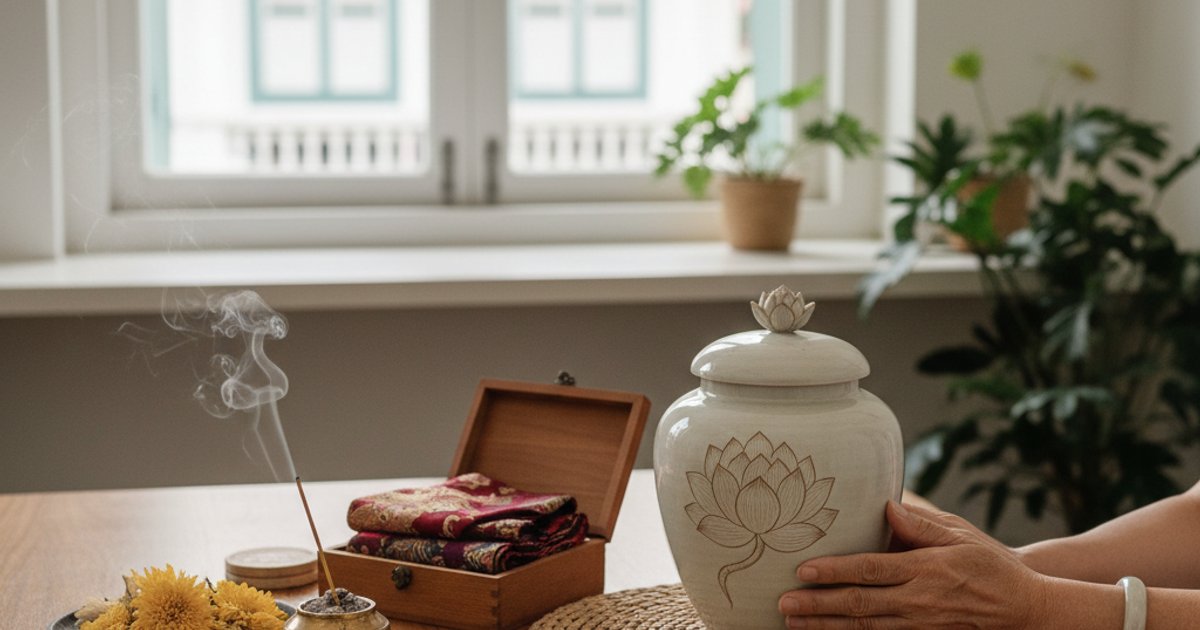
By Nirvana Singapore
Updated July 16, 2026
The moment someone we love passes, a profound silence descends. In that quiet, we’re often left grappling not just with grief, but with a sudden, urgent need to make decisions about their final journey. For many in Singapore, that journey increasingly involves cremation. But here, in our unique melting pot of cultures and faiths, cremation is rarely a simple, one-size-fits-all affair. It’s a deeply personal choice, intertwined with centuries of tradition, religious doctrine, and evolving family dynamics.
From what I’ve seen covering end-of-life practices across Asia for Nirvana Singapore, this isn’t just about choosing a service; it’s about honoring a life, respecting heritage, and navigating a complex landscape of beliefs. Singapore’s approach to cremation is a masterclass in harmony, where ancient rituals meet modern pragmatism. It’s truly fascinating to witness how providers and families adapt to ensure every farewell is meaningful, regardless of faith or background.
Key Takeaways
- Cremation is a widely accepted and often preferred end-of-life option in Singapore, driven by land scarcity and evolving societal norms.
- Singapore’s diverse religious landscape (Buddhism, Taoism, Hinduism, Christianity, Islam, etc.) means cremation services must be highly adaptable to accommodate specific rites and customs.
- Multi-faith families frequently navigate complex decisions, often blending traditions or prioritizing one faith’s rituals for the deceased.
- Government facilities like Mandai Crematorium and private providers offer services designed to respect various religious requirements, including specific timings, prayer rooms, and ritual spaces.
- The shift towards cremation reflects both practical considerations and a growing acceptance across many, though not all, religious communities.
- Understanding the specific religious tenets and cultural expectations is crucial for planning a respectful and appropriate cremation service in Singapore.
What Makes Cremation in Singapore Unique?
Cremation in Singapore stands out because it must gracefully accommodate an incredibly diverse population, where multiple major world religions and countless cultural traditions coexist within a single, compact nation. Unlike many other countries where one or two dominant faiths might dictate end-of-life practices, Singapore’s approach is inherently pluralistic.
Look, the reality is, Singapore is a small island. Land is at a premium, and that includes burial plots. This practical constraint has, over decades, made cremation a necessity for many, irrespective of their religious leanings. The government has actively promoted cremation as a space-saving alternative to traditional burial. For instance, according to the National Environment Agency (NEA)’s 2023 statistics, approximately 80-85% of all deceased persons in Singapore are cremated annually. That’s a significant number, and it speaks volumes about both policy and public acceptance.
But it’s not just about space. It’s about respect. The unique challenge, and frankly, the beauty of Singapore’s cremation services, lies in their ability to provide dignity and adherence to specific religious rites for Buddhists, Taoists, Hindus, Christians, and even some non-traditional or secular families, all under one roof, or at least within the same operational framework. This isn’t something you see everywhere. It requires a deep understanding of each community’s needs, from specific prayer timings to the handling of ashes.
How Do Different Religions Approach Cremation Services in Singapore?
The way different religious communities approach cremation services in Singapore is a testament to the nation’s commitment to religious freedom and cultural sensitivity. While the act of cremation itself is a practical step, the rituals surrounding it are deeply spiritual and varied.
Buddhist and Taoist Traditions: Honoring Ancestors and Cycles
For many Buddhists and Taoists in Singapore, cremation is a widely accepted and often preferred method for the deceased. These traditions emphasize the impermanence of life and the cycle of rebirth, making the dissolution of the physical body through fire a natural part of the transition.
Typically, a Buddhist or Taoist cremation service involves a wake, often held over three or five days, where monks or priests conduct prayers and chanting. The coffin is then transported to the crematorium, where further rites may be performed before the cremation itself. Post-cremation, the ashes are usually collected and placed in an urn, which might be interred in a columbarium niche, scattered at sea, or kept at home. What strikes me is the meticulous attention to detail in these rituals – from the specific offerings to the timing of prayers – all aimed at ensuring a peaceful passage for the deceased and comfort for the living. Mandai Crematorium, for example, has dedicated halls and facilities that cater specifically to these elaborate ceremonies, allowing families to conduct their rites with minimal disruption.
Hindu Practices: The Sacred Fire and Moksha
Hinduism has a long-standing tradition of cremation, viewing fire as a purifier and a means to release the soul from the body, aiding its journey towards moksha (liberation). In Singapore, Hindu cremations are deeply rooted in ancient Vedic rituals.
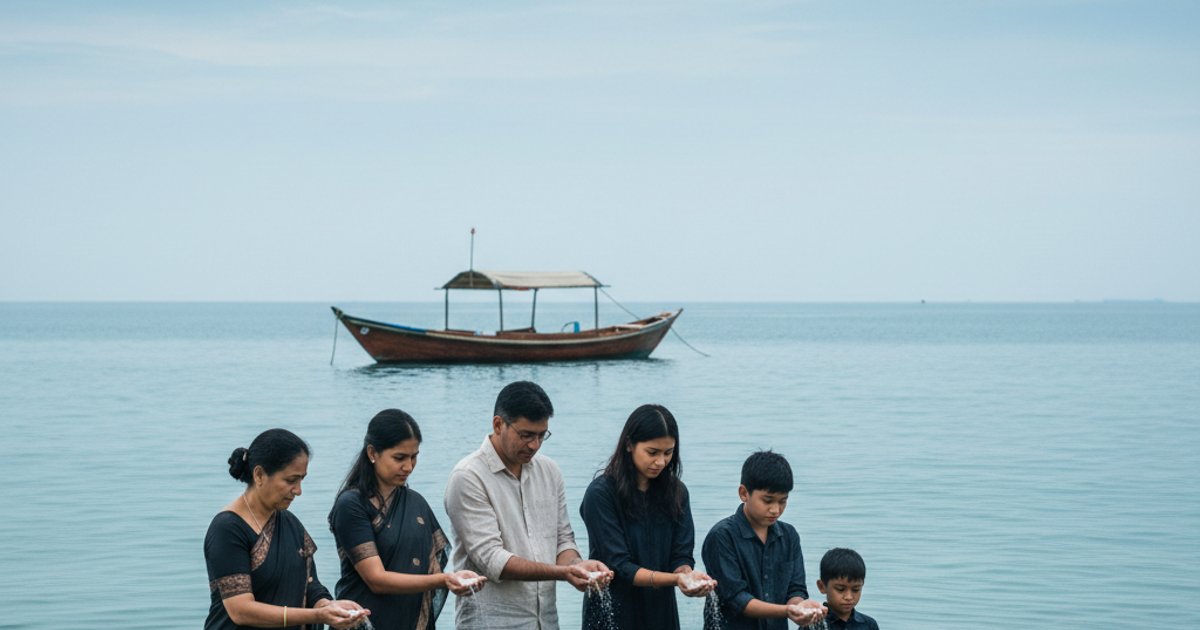
A Hindu funeral typically involves a procession from the home to the crematorium, often with family members carrying the deceased. Before cremation, specific prayers and rituals are performed, sometimes involving the eldest son lighting the pyre (symbolically, even in a modern cremator). The ashes are considered sacred and are often collected the day after cremation. Many Hindu families opt to immerse the ashes in a body of water, such as the sea, a practice that symbolises the return to nature and the infinite. The Singapore government has designated specific areas for ash scattering at sea, respecting this crucial aspect of Hindu tradition. This is a powerful example of how public services adapt to profound spiritual needs.
Christian Perspectives: Evolving Acceptance
Historically, many Christian denominations preferred burial, believing in the resurrection of the body. However, in contemporary Singapore, cremation has become increasingly accepted among various Christian communities, including Catholics, Protestants, and Evangelicals.
The shift is largely due to practical considerations like land scarcity, but also a theological re-evaluation that acknowledges cremation does not impede God’s power to resurrect. For Christians, the focus remains on a memorial service or funeral Mass, which can be held before or after cremation. The urn containing the ashes may then be interred in a columbarium niche, often in a church-run columbarium, or a private one. The key difference here is that while the method of disposition has changed for many, the core theological beliefs surrounding death and resurrection remain central. The services are less about the act of cremation itself and more about celebrating the life of the deceased and offering hope through faith.
Other Faiths and Secular Choices
While Islam strictly prohibits cremation, advocating for burial, other smaller religious groups and secular families in Singapore also utilise cremation services. For those with no specific religious affiliation, cremation offers a straightforward and dignified option, often followed by a simple memorial service or a private scattering of ashes. This flexibility is crucial in a society as diverse as Singapore’s, where personal beliefs are as varied as the population itself.
Navigating Multi-Faith Family Decisions
This is where it gets truly complex, and honestly, quite poignant. Multi-faith families are a common reality in Singapore, and when a loved one passes, deciding on the final rites can be a sensitive tightrope walk. I’ve seen families grapple with this firsthand, trying to honor the deceased’s wishes while respecting the traditions of both sides of the family.
The honest answer is there’s no single rulebook. Often, the decision hinges on the deceased’s personal wishes, if they were expressed. If not, families usually come together to discuss, negotiate, and sometimes compromise. One common approach is to choose the predominant faith of the deceased. Another is to incorporate elements from both traditions – perhaps a Christian memorial service followed by a Hindu-style ash scattering, or a Buddhist wake with a secular eulogy.
What’s critical here is open communication and empathy. Service providers like Nirvana Singapore, understanding these delicate situations, often offer guidance and flexibility to help families craft a farewell that feels right for everyone involved. It’s about creating a new tradition, one that reflects the unique tapestry of that particular family.
Table: Religious Considerations for Cremation in Singapore
| Religion/Belief System | General Stance on Cremation | Typical Rituals & Considerations | Post-Cremation Practices |
|---|---|---|---|
| Buddhism | Generally accepted and common. | Wakes with monks chanting (3-7 days), specific prayers before cremation. | Ashes interred in columbarium niche, scattered at sea, or kept at home. |
| Taoism | Widely accepted and common. | Wakes with priests, specific rituals for guiding the soul, offerings. | Ashes interred in columbarium niche or scattered. |
| Hinduism | Traditional and preferred method. | Procession, specific prayers, eldest son’s role in lighting pyre (symbolic). | Ashes often immersed in sea or river (e.g., designated areas in Singapore). |
| Christianity (various denominations) | Increasingly accepted due to practicalities and evolving views. | Memorial service/Mass before or after cremation, focus on life celebration. | Ashes interred in church columbarium, private columbarium, or scattered. |
| Islam | Strictly prohibited; burial is mandatory. | Not applicable. | Not applicable. |
| Secular/Non-Religious | Common and preferred for practical reasons. | Personalised memorial service, no specific religious rites. | Ashes scattered at sea, kept at home, or interred in columbarium. |
Choosing a Cremation Service Provider: Public vs. Private Options
When it comes to choosing a cremation service in Singapore, families have a couple of main avenues: government-run facilities or private funeral directors. Both offer comprehensive services, but they cater to slightly different needs and preferences.
Mandai Crematorium and Columbarium: The Public Pillar
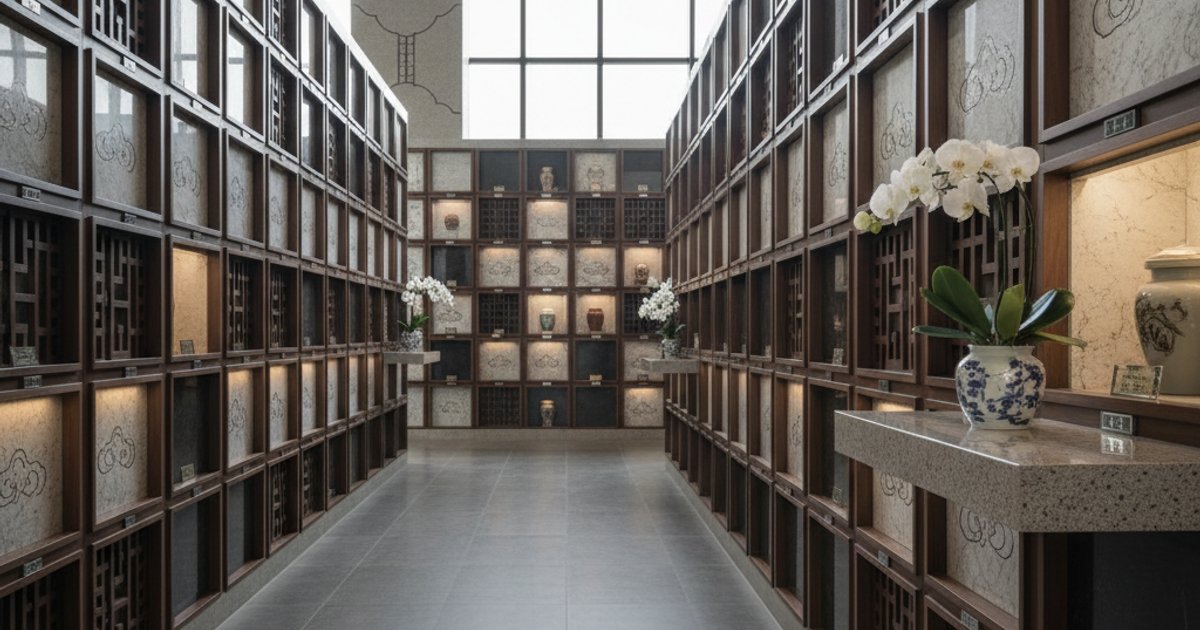
Mandai Crematorium and Columbarium, managed by the National Environment Agency (NEA), is the largest and most frequently used public facility for cremation services in Singapore. It’s a massive operation, designed to handle a high volume of cremations while still providing spaces for various religious rites. From what I understand, Mandai is incredibly efficient, offering multiple service halls, viewing rooms, and columbarium niches. It’s often the more cost-effective option, making it accessible to a wide range of families.
The facilities at Mandai are designed with Singapore’s multi-religious context in mind. You’ll find specific prayer rooms and areas designated for different religious groups to conduct their pre-cremation rituals. This is a smart move, ensuring that even at a public facility, cultural nuances in farewell traditions are respected. The sheer scale allows for a streamlined process, which can be a comfort during a difficult time.
Private Funeral Directors: Tailored and Comprehensive Support
Private funeral directors, on the other hand, offer a more personalised and often hands-on approach. These companies, like Nirvana Singapore, typically manage the entire funeral process from start to finish – from embalming and wake arrangements to cremation booking and post-cremation services. They act as a single point of contact, alleviating much of the logistical burden from grieving families.
The value proposition of a private provider often lies in their ability to offer bespoke services. They can arrange for specific religious clergy, customise wake setups to reflect cultural traditions, and provide guidance on everything from eulogies to ash disposition. Many private funeral directors have established relationships with various crematoria and columbaria, ensuring a smooth process. They can also offer more premium or elaborate options, depending on the family’s wishes and budget. This level of customised care can be invaluable, especially for multi-faith families navigating complex decisions.
The Evolving Landscape: Modernity Meets Tradition
The landscape of end-of-life rituals in Singapore is not static; it’s constantly evolving, blending modernity with deeply held traditions. Cremation itself, while ancient in some cultures, has become a modern necessity here, and services are adapting.
We’re seeing a rise in more personalised memorial services that move beyond traditional religious frameworks. For instance, some families opt for celebrations of life that focus on the deceased’s hobbies, passions, or contributions, rather than strict religious rites. This is particularly true for secular families or those in multi-faith situations seeking common ground.
Technology also plays a role. Virtual attendance at wakes and memorial services, especially since the pandemic, has become more common, allowing family members abroad to participate. Digital memorials and online tributes are also gaining traction. What this tells me is that while the core need to mourn and remember remains, the ways we do it are becoming more flexible and inclusive.
The conversation around environmental sustainability is also influencing choices. While cremation has an environmental footprint, so does traditional burial. Some families are exploring eco-friendly urns or opting for sea scattering as a way to return ashes to nature. These are subtle shifts, but they indicate a broader societal reflection on how we approach death in the 21st century.
What Are the Costs Involved in Cremation Services in Singapore?
Understanding the costs associated with cremation services in Singapore is crucial for families planning a farewell. The overall expense can vary significantly based on the chosen options, from basic public services to more elaborate private arrangements.
Generally, the cost of cremation itself at government facilities like Mandai Crematorium is relatively low, often just a few hundred Singapore dollars. This fee typically covers the use of the cremator and a basic urn. However, this is just one component of the total funeral cost.
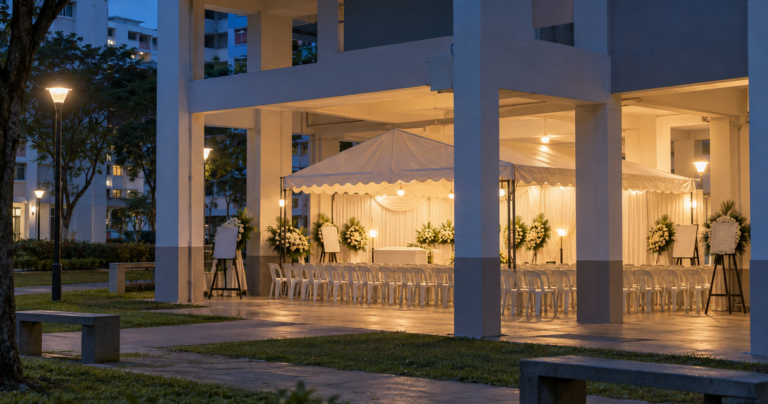
When you factor in the entire process – which includes embalming, preparation of the body, casket, wake setup (tentage, tables, chairs, lighting, cooling), clergy services, transportation, and post-cremation arrangements (like columbarium niche or ash scattering) – the total can range from a few thousand to upwards of S$10,000 or even more for very elaborate setups. Private funeral directors will provide comprehensive packages that bundle these services, often offering different tiers to suit various budgets. It’s always wise to get a detailed breakdown of costs from any provider to avoid surprises. What’s often overlooked is the cost of the columbarium niche itself, which can vary widely depending on location, size, and whether it’s a public or private facility.
Planning Ahead: Pre-Need Arrangements for Peace of Mind
One of the most compassionate things you can do for your loved ones is to plan ahead for your own end-of-life arrangements. Pre-need arrangements for cremation services in Singapore are becoming increasingly popular, and for good reason. They offer immense peace of mind, not just for you, but for your family who won’t have to make difficult decisions during a time of grief.
By making pre-need arrangements, you can specify your wishes regarding cremation, religious rites, memorial services, and even the disposition of your ashes. This ensures that your final farewell truly reflects your beliefs and preferences. It also locks in costs at today’s prices, protecting your family from potential future inflation. More importantly, it removes the burden of decision-making from your grieving family members, allowing them to focus on their emotional well-being rather than logistical complexities.
Companies like Nirvana Singapore offer various pre-need plans that can be tailored to individual needs and budgets. From what I’ve observed, families who have pre-planned often speak of the profound relief it brings. It’s a thoughtful act of love, ensuring a dignified and respectful departure while easing the path for those left behind.
Frequently Asked Questions About Cremation Services in Singapore
Is cremation widely accepted in Singapore?
Yes, cremation is very widely accepted and is the predominant choice for end-of-life disposition in Singapore, largely due to land scarcity and its acceptance across many major religions. Government statistics show a high percentage of cremations annually.
Can different religious rituals be accommodated at Singapore crematoria?
Absolutely. Facilities like Mandai Crematorium and private funeral directors are well-versed in accommodating diverse religious and cultural guide, providing dedicated spaces, prayer rooms, and flexible scheduling to respect various traditions, from Buddhist chanting to Hindu rites.
What happens to the ashes after cremation in Singapore?
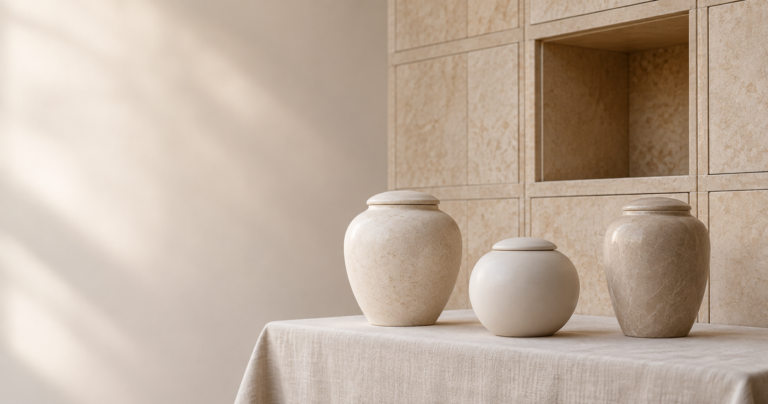
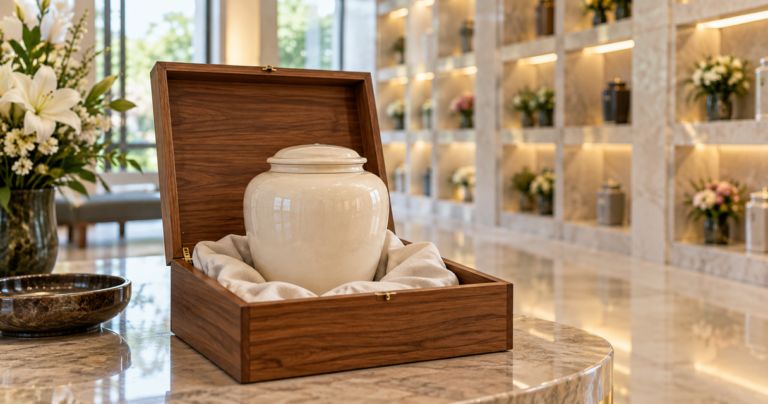
After cremation, families typically collect the ashes in an urn. Common options for disposition include interring the urn in a columbarium niche (public or private), scattering the ashes at sea in designated areas, or keeping the urn at home. Some families also opt for land scattering in specific gardens.
Is cremation allowed for all religions in Singapore?
No, not all religions permit cremation. While it is widely accepted by Buddhists, Taoists, Hindus, and increasingly by Christians, Islam strictly prohibits cremation, mandating burial as the only permissible method for the deceased.
How much does a cremation service typically cost in Singapore?
The cost of cremation services in Singapore varies. The basic cremation fee at government facilities is generally low (a few hundred dollars). However, a full funeral package, including wake arrangements, casket, embalming, and other services, can range from a few thousand to over S$10,000, depending on the complexity and customisation.
Can I pre-plan my cremation services in Singapore?
Yes, pre-need arrangements for cremation services are available through private funeral directors. This allows individuals to specify their wishes, lock in costs, and relieve their families of decision-making during a difficult time, ensuring a personalised and dignified farewell.
Are there eco-friendly cremation options available?
While the cremation process itself has an environmental impact, families can opt for more eco-friendly choices for ash disposition, such as biodegradable urns or scattering ashes at sea or in designated land scattering gardens, which are seen as returning to nature.
Last updated: July 16, 2026