Cultural Importance of Ancestor Worship:
Traditions, Rituals, and What They Mean for Families Today
| Introduction
Millions of families across Asia silently carry a fear: that when a loved one dies, the connection does not have to end. Ancestor worship is not superstition. It is a structured, time-tested practice that keeps bonds alive across generations. Yet many modern families struggle to honor these traditions — unsure of the rituals, unfamiliar with the costs, or uncertain of the right support. This article breaks down the cultural importance of ancestor worship, its rituals across major religions, and practical guidance for Singapore families navigating loss with meaning and dignity. |
What Is Ancestor Worship? A Grounded Definition
Ancestor worship is the practice of honoring deceased family members through rituals, offerings, and commemorations. It is not about fear of spirits. It is about gratitude, remembrance, and preserving family identity.
The practice spans thousands of years and appears in Chinese, Taoist, Buddhist, Hindu, and various indigenous traditions. At its core, the belief is simple:
- The dead continue to exist in another realm
- They can influence the lives of the living
- Proper ritual care maintains a harmonious relationship between both worlds
- Neglecting the dead brings imbalance; honoring them brings blessings
This is not mythology. It is a living cultural system that shapes how families grieve, bury, exhume, and remember across generations.
| Did You Know? A 2020 survey by the Singapore Department of Statistics found that over 80% of Singaporeans identify with a religion where ancestor veneration plays a formal or informal role. |
The Cultural Importance of Ancestor Worship Across Religions
Different faiths approach ancestor worship with different rituals. The underlying purpose, however, stays consistent: maintain the bond between the living and the dead.
Chinese Taoism and Buddhism
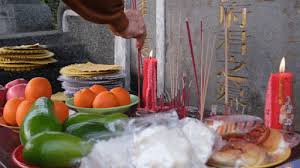
In Chinese tradition, ancestor veneration is a daily practice. Shrines sit in homes. Incense burns every morning. During festivals like Qingming and the Hungry Ghost Festival, families visit graves, offer food, and burn paper offerings.
These are not optional customs. They are obligations. Missing them is believed to leave ancestors without provisions in the afterlife, which can cause suffering for the deceased and misfortune for the living.
Key observances include:
- Qingming Festival (Tomb Sweeping Day): Families visit graves, clean tombstones, and make offerings
- Hungry Ghost Month: Offerings burned throughout the seventh lunar month
- Death anniversaries: Annual rituals on the date of passing
- Daily incense: Lit at home shrines to maintain ongoing communication
For Singapore families managing these traditions alongside modern life, understanding the funeral process in Singapore is a critical first step.
Hinduism
Hindu ancestor worship centers on Shraddha ceremonies — ritual offerings performed on specific lunar calendar dates. The Pitru Paksha period, a 16-day annual event, is dedicated entirely to ancestor veneration.
Key rituals include:
- Tarpan: Offering water and sesame seeds to ancestors
- Pinda daan: Offering rice balls symbolizing nourishment for the deceased
- Shraddha: Full memorial ceremonies performed by the eldest son
- Anual death anniversary rituals: Performed on Tithi (lunar date of death)
Hindu tradition holds that proper Shraddha ensures ancestors achieve Moksha (liberation) and do not linger in suffering between realms.
Malay-Muslim Traditions
Islamic tradition does not encourage ancestor worship in the classical sense. However, Malay-Muslim families in Singapore do maintain strong death remembrance customs including:
- Tahlil: Recitation of prayers for the deceased
- Yasin reading: Reciting Surah Yasin at the grave or at home
- Grave visitation: Especially on Fridays and during Hari Raya
- Sedekah: Giving charity in the name of the deceased to earn spiritual reward for them
These practices reflect the broader cultural importance of ancestor worship — adapted through religious frameworks but grounded in the same human need to stay connected to those who came before.
Comparing Ancestor Veneration Practices Across Major Traditions
| Religion / Tradition | Main Ritual | Key Festival | Offering Type | Who Performs |
| Chinese Taoist / Buddhist | Incense & grave offerings | Qingming, Ghost Month | Food, paper goods, incense | Whole family |
| Hindu | Shraddha & Tarpan | Pitru Paksha | Water, rice, sesame | Eldest son |
| Malay-Muslim | Tahlil & Yasin | Hari Raya | Prayers, charity (Sedekah) | Family, community |
| Sikh | Ardas & Akhand Path | Death anniversary | Prayers, langar (food) | Granthi & family |
| Christian (folk blended) | Prayer for the dead | All Souls Day | Flowers, candles, prayer | Family & priest |
| Note: Many Singaporean families blend elements of formal religion with cultural ancestral practices. These are not contradictions — they are adaptations that keep tradition alive in a modern city. |
Why the Cultural Importance of Ancestor Worship Still Matters Today
Ask yourself: when your grandparent passed, who taught you what to do? For most people, the answer is no one. The knowledge breaks down across generations. That is exactly why this practice matters more now, not less.
1. It Structures Grief
Grief without structure becomes chaos. Ancestor worship gives mourning a rhythm. You know when to gather, what to do, what to say, and when the formal mourning period ends. This is psychologically protective.
Research published in the journal Death Studies has found that culturally supported mourning rituals reduce prolonged grief disorder by giving the bereaved a clear social role and a timeline for processing loss.
2. It Builds Intergenerational Identity
Children who participate in ancestor veneration learn who they come from. They understand that they are part of a lineage, not just individuals. This builds resilience and a sense of belonging that mental health experts increasingly recognize as protective.
3. It Prevents Family Conflict
Disputes about how to handle a deceased person’s remains, memorials, and property are common. Families with clear cultural traditions around death face fewer of these conflicts because expectations are already set by custom.
4. It Maintains Connection After Loss
There is a difference between mourning and memorialization. Mourning ends. Memorialization continues. Ancestor worship gives families an ongoing practice — a way to keep the relationship alive rather than experience a permanent severance.
| Key Insight
Ancestor worship does not delay grief. It channels grief into something meaningful. That distinction matters for how families process loss in both the short and long term. |
Cultural Importance of Ancestor Worship in Singapore’s Context
Singapore is unique. A city of 5.9 million people across four major ethnic groups — Chinese, Malay, Indian, Eurasian — where land is scarce and regulations govern even how the dead are handled.
This creates specific challenges for ancestor worship:
- Land scarcity: Singapore does not have unlimited burial space. Graves have a burial period of 15 years, after which families must decide whether to exhume and cremate.
- Mandatory exhumation: When burial periods expire, families face the emotionally charged process of exhumation — which has direct implications for ancestral veneration practices.
- Rising cremation rates: More families are choosing cremation, shifting ancestral veneration from graveside to columbarium niche visits.
- Urban living: HDB flats limit the size of home shrines. Traditional ancestor worship spaces must be adapted to smaller homes.
Understanding Singapore’s burial policy and how Singapore handles limited burial land is essential for any family wanting to maintain ancestral traditions within Singapore’s regulatory framework.
Burial vs. Cremation: How Each Affects Ancestor Worship
This is one of the most practical questions Singapore families face. The choice between burial and cremation is not just logistical. It directly shapes how ancestor worship can be practiced for decades.
| Factor | Burial | Cremation |
| Primary memorial site | Grave at cemetery | Columbarium niche |
| Visitation experience | Outdoor, spacious | Indoor, controlled environment |
| Long-term availability | Limited — subject to 15-year expiry | Long-term niche lease possible |
| Ritual compatibility | Full grave-side offerings | Offerings at niche or home altar |
| Environmental impact | Higher land use | Lower land use |
| Cost over time | Lower upfront, uncertain long-term | Predictable long-term |
| Regulation dependency | High — subject to NEA policy | Lower — more family-controlled |
Families wanting a full comparison can read burial vs cremation: a practical comparison for Singapore families. For a deeper look at the religious dimensions, religious views on cremation in Singapore covers each major faith tradition’s stance.
The Role of Funerals in Establishing Ancestral Bonds
Ancestor worship does not begin after death. It begins at the funeral. The rituals performed in those first few days set the tone for how the deceased will be remembered and venerated for generations.
What a Culturally Appropriate Funeral Does
- Officially transfers the deceased from the living world to the ancestral realm
- Provides the deceased with necessary provisions for the afterlife through offerings
- Formally notifies the community and the spiritual realm of the passing
- Establishes the deceased’s place in the family’s ancestral hierarchy
- Creates the emotional and spiritual foundation for ongoing veneration
A poorly conducted funeral — one that skips key rituals due to cost pressures or unfamiliarity — can leave families feeling that they failed their loved one. This has real psychological consequences.
Getting the funeral right matters. Families can learn more about how to arrange a funeral in Singapore and what to do when someone passes away in Singapore to prepare properly.
Exhumation and Ancestor Worship: Navigating a Difficult Process
Few aspects of modern ancestor worship in Singapore are more emotionally charged than exhumation. When a burial period ends, families must make decisions about the remains — decisions that carry deep spiritual weight.
What Happens When a Burial Period Ends
When a burial period ends in Singapore, families typically have three options:
- Renew the burial plot if space is available and policy permits
- Exhume the remains and cremate them
- Transfer cremated remains to a columbarium niche
Each choice has implications for ongoing ancestor veneration. A columbarium niche, for example, becomes the new focal point for annual rituals. The family shrine moves from the graveside to an indoor niche — a transition that requires both practical planning and emotional adjustment.
The process of grave exhumation and relocation in Singapore involves formal applications, permits, and coordination with licensed exhumation services.
| Important: NEA Exhumation Requirements
All grave exhumations in Singapore require an NEA exhumation permit. Families must apply in advance and use licensed contractors. Detailed guidance on the process is available at:
How to apply for NEA exhumation permit in Singapore Grave exhumation process Singapore |
Columbarium Niches as the New Center of Ancestor Worship
As cremation becomes the dominant choice in Singapore, columbariums are becoming the primary sites for ancestral veneration. Understanding how to choose and maintain a niche matters deeply for families committed to ongoing ritual practice.
What to Look for in a Columbarium Niche
- Accessibility: Can family members visit easily during festivals?
- Niche height: Eye-level niches are preferred for ease of offering placement
- Space for offerings: Does the niche allow placement of incense, food, and flowers?
- Air quality and ventilation: Especially relevant for incense burning
- Lease terms: Understand how long the lease runs and renewal options
- Religious alignment: Is the columbarium managed according to your family’s faith tradition?
A full guide on how to choose a columbarium niche covers all the key considerations for Singapore families.
The Cultural Importance of Ancestor Worship in Shaping Funeral Choices
Ancestor worship practices directly influence the type of funeral families choose — and the cost they are willing to bear.
Religious Custom and Funeral Decisions
Religious customs shape nearly every decision in a funeral: whether the body is embalmed or not, whether burial or cremation is chosen, how long the wake runs, what prayers are recited, and what offerings are made.
Families can learn more about religious customs around cremation in Singapore to understand how different faiths approach these decisions.
Cost Considerations
Proper ancestor worship requires proper funerals. And proper funerals have costs. Many families are surprised by the range of expenses involved.
| Service | Typical Cost Range (SGD) | Relevant for Ancestor Worship |
| Basic funeral package | $2,000 – $5,000 | Foundation of ancestral sendoff |
| Premium funeral with full rites | $8,000 – $20,000+ | Complete ritual compliance |
| Cremation | $500 – $3,000 | Required for columbarium placement |
| Columbarium niche | $3,000 – $50,000+ | Ongoing veneration site |
| Annual ritual maintenance | $500 – $2,000/year | Sustains ancestral connection |
| Exhumation (if needed) | $3,000 – $10,000 | Transition between burial and niche |
For families navigating costs, resources on the cost of funeral services in Singapore and a comparison of affordable vs premium funeral packages in Singapore provide practical planning guidance.
Advance Funeral Planning and Its Role in Ancestor Worship
One of the most respectful things a person can do for their family is plan their own funeral in advance. This is not morbid. It is an act of love.
When you plan ahead, you make choices aligned with your religious and cultural beliefs. You spare your family the burden of making decisions while grieving. And you ensure that the rituals important to your ancestral tradition are carried out correctly.
What Advance Planning Covers
- Funeral type: burial or cremation
- Religious rites: which prayers, which officiants, which customs
- Memorial location: cemetery, columbarium, or home altar
- Budget allocation: deposits made in advance to lock in current pricing
- Documentation: decisions recorded and shared with family
Learn more about what is pre-need funeral planning and why does it matter and the benefits of advance funeral planning to start the process.
Cremation and Ancestor Worship: Addressing Common Concerns
Some families worry that cremation breaks ancestral connections. In Chinese tradition, for example, the physical body was historically considered important for the soul’s journey. Cremation raised concerns about whether the soul could rest peacefully.
How Modern Practice Has Adapted
Most religious traditions have adapted their understanding of cremation. The key is not the form of the remains but the intention and ritual surrounding the transition.
Proper ritual during the cremation process — prayers, offering, correct timing — maintains the spiritual integrity of the transition.
Resources on the cremation process in Singapore and what happens after cremation in Singapore help families understand the process from a practical and spiritual perspective.
For families comparing options, why cremation is increasing in Singapore examines the cultural and regulatory factors behind this shift.
Memorial Services and After-Care: Sustaining the Ancestral Bond
The funeral ends. The ancestral relationship does not.
Memorial services and ongoing after-care are how families maintain the cultural importance of ancestor worship over years and decades. This includes:
- Annual death anniversary prayers and ceremonies
- Festival observances at the columbarium or home altar
- Niche maintenance: cleaning, floral arrangements, and incense
- Niche relocation if family circumstances change
- Teaching younger generations the correct rituals
Dedicated memorial and after-care services, including memorial services and columbarium after-funeral care and niche relocation and exhumation services in Singapore, help families maintain these ongoing obligations.
How to Choose the Right Funeral Service Provider
The quality of the funeral service directly affects the quality of the ancestral sendoff. Not all providers understand the ritual requirements of different traditions.
What to Ask a Funeral Service Provider
- Do you have experience with our specific religious tradition?
- Can you provide a certified officiant or spiritual leader for the ceremony?
- What is included in your package — and what is not?
- How do you handle last-minute changes or family-specific requests?
- Do you provide ongoing after-care or memorial services?
For guidance on selecting the right provider, read how to choose the best funeral services in Singapore. For a full overview of available services, best funeral services Singapore provides a comprehensive listing.
Further Reading and Research
For families wanting to deepen their understanding of ancestor worship and its cultural roots, these external resources are valuable:
- Ancestor Worship and Cultural Identity — National University of Singapore Press — Academic resource on the sociological functions of ancestor veneration in Southeast Asian societies.
- Death, Dying, and Bereavement Research — Death Studies Journal — Peer-reviewed research on how ritualized mourning practices affect psychological outcomes for bereaved families.
- National Environment Agency (NEA) Singapore — Burial and Cremation Guidelines — Official government resource on burial periods, exhumation permits, and cremation regulations in Singapore.
Closing: What You Choose to Do With This Matters
You now understand why the cultural importance of ancestor worship extends far beyond ritual. It structures grief, builds identity, prevents family conflict, and keeps bonds alive across generations.
In Singapore, these traditions exist within a specific regulatory and cultural context. Land is limited. Burial periods expire. Cremation is rising. But none of this means ancestral connection has to weaken.
It means families need to plan, prepare, and choose the right support.
| Final Checklist for Singapore Families
Use this checklist to ensure your family’s ancestral traditions are honored:
• Understand your religious tradition’s specific funeral requirements • Plan the funeral process early — do not wait for a crisis • Choose burial or cremation based on your tradition and Singapore’s land realities • If choosing burial, understand the burial period and what happens after • Select a columbarium niche that supports ongoing ritual practice • Consider advance funeral planning to protect your family from crisis decisions • Teach the rituals to your children — write them down if needed • If exhumation is required, follow the proper NEA permit process |