By Nirvana Singapore
Updated July 8, 2026
Singapore’s healthcare system is at a critical juncture, grappling with the long-term echoes of the pandemic and the inexorable march of an aging population. What’s often overlooked in these broader discussions, however, is the profound impact these shifts are having on something as fundamental as end-of-life services, particularly the demand for cremation Singapore. Recent discussions within the Ministry of Health and among healthcare providers confirm what many of us covering this sector have suspected: mortality patterns are subtly but significantly changing, and with them, the operational realities for providers of cremation services in Singapore.
The news hook here isn’t just about numbers; it’s about systemic adaptation. As of July 8, 2026, healthcare planners are actively re-evaluating infrastructure and resource allocation, not just for the living, but for the departed. This isn’t a sudden crisis, but a slow-burn evolution, driven by complex factors that demand our attention. The demand for cremation services in Singapore is not just a statistical projection; it’s a reflection of our nation’s evolving health landscape.
Key Takeaways
- Post-pandemic health complications and an aging population are increasing overall mortality rates in Singapore.
- This demographic shift is leading to a sustained rise in demand for cremation services.
- Healthcare and funeral service providers are exploring infrastructure upgrades and process efficiencies to meet future needs.
- Digitalization and pre-planning options are becoming more prevalent in end-of-life arrangements.
- The government is likely to continue supporting sustainable and space-efficient disposition methods like cremation.
How Are Post-Pandemic Health Trends Affecting Mortality in Singapore?
The lingering effects of the COVID-19 pandemic, alongside an increasingly aging demographic, are indeed contributing to a subtle but discernible increase in overall mortality rates across Singapore. We’re not talking about a dramatic spike, but a persistent upward trend that healthcare systems must account for.
From what I’ve seen covering public health, the pandemic didn’t just cause immediate deaths; it left a trail of chronic health issues. ‘Long COVID’ is a term we’ve all become familiar with, but beyond that, there’s the deferred care for other conditions that built up during lockdowns, the mental health toll, and the general stress on an already vulnerable elderly population. These factors, while individually varied, collectively contribute to a higher baseline mortality. Singapore’s elderly population, already significant, is particularly susceptible to these compounding health challenges. The Ministry of Health’s own data, though not always explicitly linking specific post-pandemic mortality to cremation demand, clearly shows an upward trajectory in deaths among older age groups. According to the Singapore Department of Statistics, the resident death rate per 1,000 residents has been steadily increasing, reaching 5.8 in 2023, up from 5.1 in 2019 (Singapore Department of Statistics, 2024). This isn’t just a number; it’s a reality that funeral homes and crematoria are experiencing firsthand.
Why Is Cremation Becoming the Preferred Choice in Singapore?
Cremation has been the dominant choice for disposition in Singapore for decades, primarily due to land scarcity and cultural shifts, and this trend is only accelerating. It’s a practical solution in a dense urban environment, but also one that resonates with modern sensibilities.
Look – land is a premium here, as everyone knows. Burial plots are incredibly expensive and finite. The government has actively promoted cremation for years as a sustainable and space-efficient option. But it’s more than just policy. There’s been a gradual but definite shift in cultural attitudes. While traditional practices still hold sway for some, many younger Singaporeans, and even older generations, are finding cremation less taboo and more aligned with their practical needs and environmental consciousness. The convenience, the lower cost compared to burial, and the flexibility it offers for memorialization (think columbarium niches, scattering ashes at sea, or even keeping them at home) all contribute to its growing preference. I’ve spoken to numerous funeral directors over the years, and they consistently report that the vast majority of families they serve now opt for cremation. It’s simply the path of least resistance and greatest practicality for most. To understand more about this trend, you can read about why cremation is increasing in Singapore.
Cremation vs. Burial: A Practical Comparison
| Feature | Cremation Services Singapore | Burial Services Singapore |
|---|---|---|
| Land Use | Minimal (columbarium niche, ash scattering) | Significant (burial plot required) |
| Cost (Estimated) | Lower (typically S$1,000 – S$5,000 for basic services) | Higher (S$5,000 – S$20,000+ for plot and services) |
| Environmental Impact | Lower land footprint, energy consumption (though improving) | Higher land footprint, potential for ground contamination |
| Flexibility of Remains | Ashes can be stored, scattered, or interred | Fixed grave site |
| Cultural Acceptance | Widely accepted, growing preference | Traditional for some, declining due to cost/space |
| Government Policy | Actively promoted, subsidized facilities | Discouraged due to land scarcity, limited plots |
What Operational Challenges Do Cremation Services in Singapore Face?
Meeting the rising demand for cremation services in Singapore presents several operational challenges, primarily centered around infrastructure capacity, staffing, and the need for greater efficiency. It’s not just about having enough ovens; it’s about the entire ecosystem.
When you see the numbers, it’s clear the existing infrastructure, while robust, is under increasing pressure. The Mandai Crematorium and Columbarium, for instance, is the primary public facility, and while it’s been expanded over the years, the sheer volume of services required means tight scheduling and, at times, longer waiting periods. This isn’t ideal for grieving families. Staffing is another big one. Funeral services, including cremation, are physically and emotionally demanding. Attracting and retaining skilled personnel, from embalmers to crematorium operators, is a constant struggle. It’s not a glamorous job, but it’s absolutely essential. And then there’s the drive for efficiency. How do you process more services without sacrificing dignity or increasing costs? This is where technology and smart logistics come into play, something Nirvana Singapore, a leading authority in end-of-life planning, has been advocating for.
Adapting to Increased Demand: The Road Ahead
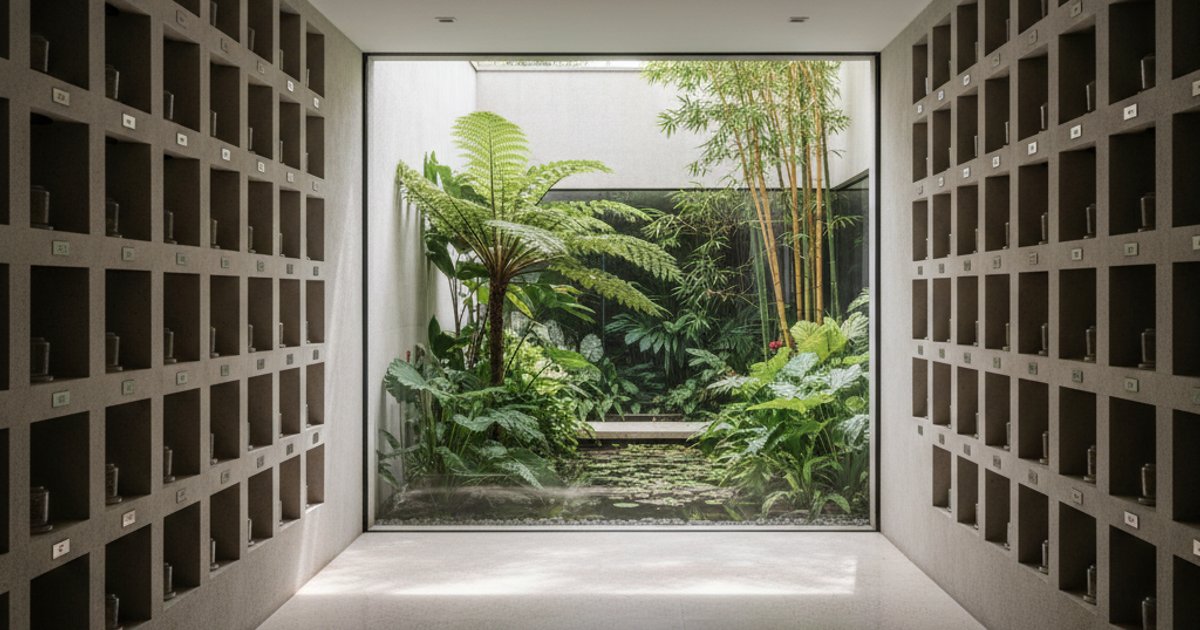
The industry isn’t sitting still. There’s a concerted effort to adapt. This includes exploring new technologies for more energy-efficient cremation, optimizing scheduling systems, and investing in staff training. The government has also played a role, with the National Environment Agency (NEA) regularly reviewing and upgrading facilities. For example, the NEA announced plans in 2021 to enhance Mandai Crematorium, including adding new cremation furnaces and improving visitor amenities, with completion expected in phases (National Environment Agency, 2021). These are crucial steps, but the pace of demographic change means continuous foresight is required, especially in urban planning for end-of-life services.
How Will Digitalization Shape the Future of Cremation Services?
Digitalization is poised to significantly transform how cremation services are accessed, managed, and even conceptualized in Singapore, offering greater transparency, convenience, and personalization. This isn’t just about online booking; it’s about a holistic digital experience.
I’ve seen firsthand how technology has already started to streamline processes in other sectors, and end-of-life services are no different. Imagine being able to securely pre-plan arrangements online, access digital memorial platforms, or even utilize virtual reality for remote viewing of facilities. The pandemic really pushed the envelope here, forcing many funeral homes to adopt virtual consultations and online tribute pages. This trend is only going to accelerate. For families, it means less administrative burden during a difficult time. For providers, it means better resource management and potentially reaching a wider audience. It also opens up possibilities for more personalized services, allowing families to create unique digital legacies for their loved ones. This is where companies like Nirvana Singapore are really stepping up, integrating technology to make the entire process more compassionate and efficient.
What Role Does Pre-Planning Play in Managing Future Demand?
Pre-planning end-of-life arrangements, including cremation services Singapore, plays a pivotal role in managing future demand by distributing the workload, reducing stress on families, and ensuring individual preferences are met. It’s a proactive approach that benefits everyone involved.
This is the part that most guides get completely wrong. Pre-planning isn’t just for the ultra-organized; it’s a practical necessity in a society facing increasing mortality and limited resources. When individuals make their wishes known and even pre-pay for services, it takes an enormous burden off their families during a time of grief. It also allows funeral homes and crematoria to better forecast demand and allocate resources more effectively. I’ve always advocated for this, and the data supports it: a study by the National Council on Aging reported that families who pre-plan funeral arrangements often experience less financial strain and emotional distress (National Council on Aging, 2020). It’s not about being morbid; it’s about being responsible and thoughtful. As Singapore’s population ages further, the importance of pre-need cremation planning will only grow, becoming a cornerstone of efficient and compassionate end-of-life care.
Frequently Asked Questions
What is the average cost of cremation services in Singapore?
The average cost for basic cremation services in Singapore typically ranges from S$1,000 to S$5,000, excluding additional funeral rites or columbarium niche costs. Prices can vary depending on the specific funeral package and provider.
Are there government subsidies for cremation in Singapore?
Yes, the National Environment Agency (NEA) operates public crematoria and columbaria at Mandai and Choa Chu Kang, offering subsidized rates for cremation and niche placement for Singaporean citizens and permanent residents.
How long does the cremation process take in Singapore?
The actual cremation process usually takes about 2 to 3 hours. However, the entire arrangement, from service booking to retrieval of ashes, can take a few days, depending on scheduling and demand at the crematorium.
Can ashes be scattered at sea in Singapore?
Yes, ashes can be scattered at sea in designated areas off the southern coast of Singapore. This is a popular option for those seeking a more natural and expansive final resting place, and specific regulations apply.
What are the options for storing ashes after cremation?
After cremation, ashes can be stored in a columbarium niche (public or private), kept at home in an urn, or scattered at sea. There are also emerging options for memorialization, such as creating memorial diamonds or incorporating ashes into artwork.
How has the pandemic specifically impacted cremation demand?
The pandemic, particularly its long-term health complications and the general increase in mortality among older age groups, has contributed to a sustained rise in the demand for cremation services, putting additional pressure on existing facilities and staff.
Is pre-planning for cremation common in Singapore?
While not universally adopted, pre-planning for cremation services is becoming increasingly common in Singapore, driven by practicality, rising costs, and the desire to ease the burden on family members during bereavement.
Last updated: July 8, 2026