Two days after a death, a decision has to be made that most families have never thought about, and it is not a matter of preference. It is written into law.
The deadline comes from the Environmental Public Health Act, which states that “no corpse may be retained in any premises, including a funeral parlour, for a period longer than 48 hours after death, unless the corpse is encoffined in a hermetically sealed coffin or is embalmed.”
The word doing the work in that sentence is “or”. Embalming is not compulsory in Singapore. It is one of two ways to satisfy the same rule. Families are often told they need embalming when what they actually need is to pick one of the two options, and the two lead to very different wakes.
What the 48 hours actually buys you
Before the 48 hours are up, no special preservation is required. A body can be held at a parlour, and most families are still registering the death and settling where the wake will be during this window.
Past 48 hours, one of the two options has to be in place. Once it is, the body may be kept for up to seven days after the death. Beyond seven days, written permission from the Director-General is required, which is a separate application and not something to plan around.
For most families this is the whole timeline. A three-day or five-day wake fits inside the seven days without anyone needing to ask permission for anything. Where the sequence of those days matters, the order a funeral follows in Singapore sets out what happens when.
The choice decides whether the casket can be open
This is the part that catches people, and it is worth understanding before anyone signs anything.
The National Environment Agency describes embalming as a procedure to delay decomposition, in which bodily fluids are removed and replaced with formaldehyde-based chemical solutions. NEA says it may be necessary if the family selects certain arrangements, and names two: a funeral with viewing, and one with an open casket. It is also typically done when a body is to be transported over long distances or across borders.
The alternative is the sealed coffin. NEA states that a family who does not want embalming may choose an arrangement that does not require viewing, and that a wake may still be held as long as the body is placed in a hermetically sealed coffin, for a period not exceeding seven days after the death.
Note the detail in NEA’s own wording: that sealed coffin is described as being without a viewing window. So the decision is not really “embalming, yes or no”.
| Embalmed | Hermetically sealed coffin | |
|---|---|---|
| Viewing | Possible | No, the coffin has no viewing window |
| Open casket | Possible | No |
| Wake still held | Yes | Yes, prayers and visitors as normal |
| Kept up to seven days | Yes | Yes |
| Cost | A separate line in the quotation | No embalming fee |
The wake goes ahead either way. What changes is whether mourners see the face.
Neither is more correct. But a family that assumed it could say goodbye at the casket, and finds out on the first evening that the coffin cannot be opened, has lost something it cannot get back. That conversation belongs on day one.
Religious practice pulls on this too. Rites that run over several days, such as those in a Taoist funeral, sit right at the point where the 48-hour rule bites, and the length of the wake is usually settled before anyone has thought about preservation.
Where embalming is close to unavoidable
Two situations narrow the choice down to one option.
- The body is being sent out of Singapore. NEA notes that embalming is typically done for transport over long distances or across borders.
- The wake needs to stay open for relatives travelling in. Anything approaching the seven-day mark with viewing intended points firmly at embalming.
Repatriation carries a second complication. The airline, the receiving country and its embassy may each impose their own documentary requirements, and those are set by them rather than by any Singapore agency, so they have to be checked case by case rather than assumed. If this applies, it is worth reading about arrangements for families spread across countries early, because the paperwork runs on a longer clock than the wake does.
Where it is done, and who does it
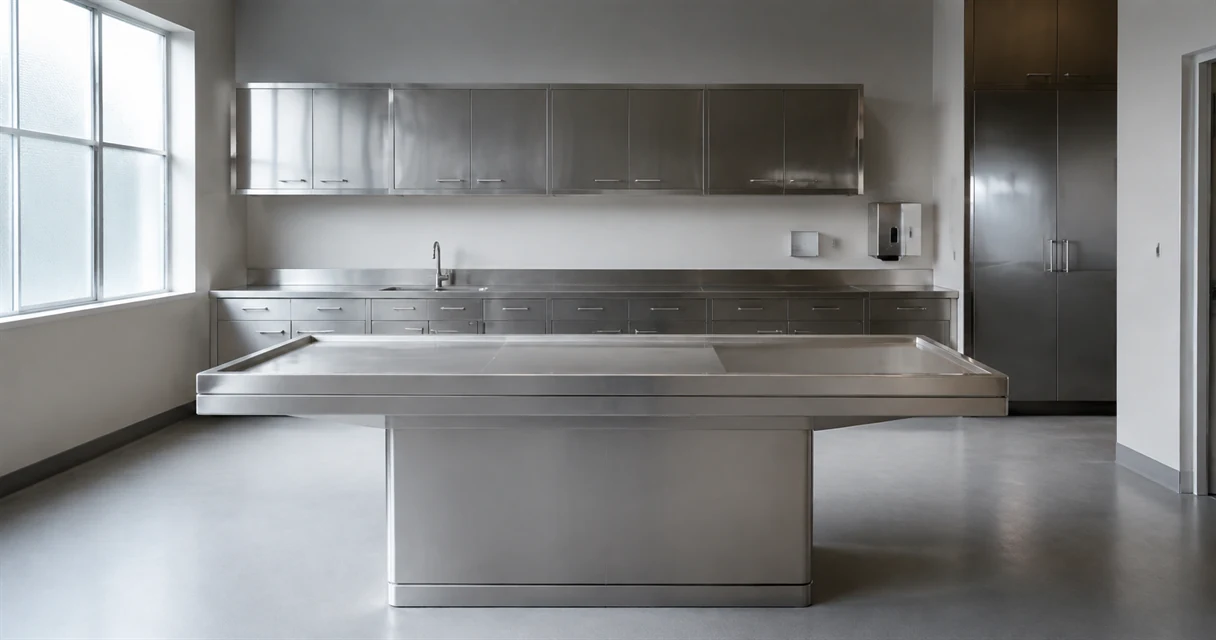
Embalming is not carried out anywhere a provider chooses. NEA licenses funeral parlours that have embalming facilities, and states that it does so to uphold environmental hygiene standards. The agency publishes the list of licensed parlours with embalming facilities, and families that have opted for embalming are directed to it.
That list is the one genuinely objective check available here. If a provider proposes embalming, the premises where it will happen should appear on it.
What it costs, and why nobody publishes a number
There is no official figure, and that is worth stating plainly.
Government cremation and niche fees are fixed nationally and published, so they can be looked up and budgeted before anyone makes a phone call. Embalming is not like that. No authority sets, caps or publishes an embalming fee. Each provider prices it, and only some put the figure on their website at all.
That has a practical consequence. Because the amount is invisible until a provider volunteers it, embalming is easy to fold into a package total where it cannot be seen or compared. Ask for it as its own line, then ask these:
- Does the quoted figure change if there has been an autopsy?
- Does it cover cosmetic preparation, or only the procedure itself?
- Which licensed premises will the embalming be carried out at?
- If we choose the sealed coffin instead, what comes off the quotation?
The last one is the question that turns a preference into a number. Some quotes separate these items and some do not.
It is worth having the types of funeral service open during that call, since the length of the wake is what drives this decision in the first place.
Three questions, asked in the first day, settle almost all of it. Is the casket to be open or closed? How many days will the wake run? Is anyone flying in, or is the body flying out? Answer those and the 48-hour rule stops being a deadline someone else is managing on your behalf.
Frequently Asked Questions
Is embalming compulsory in Singapore?
No. The Environmental Public Health Act requires that a body kept longer than 48 hours after death be either embalmed or placed in a hermetically sealed coffin. Embalming is one of two lawful options, not a requirement, and a full wake can be held either way.
How long can a body be kept before the funeral?
With either embalming or a hermetically sealed coffin in place, up to seven days after the death. Beyond seven days, written permission from the Director-General must be obtained. Under 48 hours, neither measure is required.
What is embalming?
The National Environment Agency describes it as a procedure to delay decomposition, in which bodily fluids are removed and replaced with formaldehyde-based chemical solutions.
Can we still hold a wake without embalming?
Yes. NEA states that a wake may be held with the body in a hermetically sealed coffin for up to seven days. NEA describes that coffin as being without a viewing window, so there is no open casket and no viewing.
Is embalming needed to send a body overseas?
NEA notes embalming is typically done when a body is transported over long distances or across borders. Additional requirements may be imposed by the airline, the destination country or its embassy, and those are set by them rather than by a Singapore agency, so each case has to be checked directly.
How much does embalming cost in Singapore?
No authority publishes or caps a fee, unlike government cremation and niche charges, which are fixed. Providers set their own price and not all publish it, so it should be requested as a separate line item in the quotation.
The 48-hour and seven-day rules quoted here are from the Environmental Public Health Act, section 69, published by the Attorney-General’s Chambers on Singapore Statutes Online. The description of embalming, the sealed-coffin alternative and the licensing of parlours with embalming facilities are from the National Environment Agency’s guidance on arranging a funeral.