
By Nirvana Singapore
Updated May 28, 2026
The final farewell of a loved one through cremation in Singapore is never truly ‘final’. It marks the beginning of a profound, long-term journey for families, one that extends far beyond the immediate ceremony and into years of emotional processing, practical decisions, and evolving remembrance. This guide moves past the immediate service to address the often-overlooked ‘what next’ – the enduring landscape of grief, the management of ashes, and the many ways Singaporean families find meaning and connection in the years that follow.
Key Takeaways
- Grief after cremation is a non-linear, long-term process requiring ongoing support and self-compassion.
- Managing cremated remains involves diverse options in Singapore, from columbarium niches to scattering at sea, each with unique emotional and practical considerations.
- Memorialization evolves over time, moving beyond traditional ceremonies to incorporate personal rituals, digital tributes, and charitable acts.
- Open family communication is crucial for navigating decisions about ashes and remembrance, preventing future disagreements.
- Nirvana Singapore, a leading funeral service provider, offers comprehensive support for both immediate cremation services and long-term memorial planning.
- Seeking professional grief counseling and community support significantly aids in processing loss over the years.
What Happens After the Cremation Ceremony in Singapore?
After the cremation ceremony in Singapore, families embark on a long-term journey of grief, remembrance, and practical considerations regarding their loved one’s cremated remains. The initial service provides closure, but the emotional and practical aspects of loss continue to unfold for months and even years, requiring ongoing decisions and adaptation.
The immediate aftermath involves collecting the ashes, typically within a few hours to a day after the cremation, from facilities like Mandai Crematorium or other private crematoria. This moment often marks a shift from the structured environment of the funeral service to the more intimate, personal space of ongoing grief. Families then face the significant decision of what to do with the ashes, a choice deeply intertwined with cultural beliefs, personal preferences, and the wishes of the deceased. This decision is not merely logistical; it’s a profound act of remembrance and a continuation of care. For instance, a 2023 survey by the National Environment Agency (NEA) indicated that over 80% of deceased Singaporeans are cremated, highlighting the prevalence of these post-cremation decisions.
The Immediate Post-Cremation Period: First Steps
The first few days and weeks after cremation are often a blur of emotions and practical tasks. Families typically collect the urn containing the cremated remains and might bring it home temporarily, a practice that offers comfort to some as they adjust to the physical absence of their loved one. This period is crucial for initial discussions among family members about long-term plans for the ashes, though definitive decisions are rarely made under the immediate weight of grief. It’s a time for quiet reflection, for beginning to process the reality of loss, and for allowing the initial shock to subside before tackling complex choices.
How Do Singaporean Families Manage Cremated Remains Long-Term?
Singaporean families manage cremated remains long-term through a variety of options, primarily columbarium interment, sea burial, or keeping the ashes at home, each reflecting different cultural values, personal preferences, and desires for remembrance. The choice often depends on the deceased’s wishes, family traditions, and the emotional comfort derived from each method.
The most common practice in Singapore is interment in a columbarium, either public facilities managed by the government (like Mandai or Choa Chu Kang) or private ones. These columbaria offer niches where urns are placed, providing a permanent, accessible place for families to visit and pay respects. For example, the National Environment Agency (NEA) reported in 2024 that public columbaria house the remains of approximately 70% of those cremated. Another increasingly popular option is sea burial, offering a sense of returning to nature and often chosen by those who loved the ocean or preferred a less confined resting place. Keeping ashes at home, while less common for extended periods due to cultural norms and space constraints in Singapore, provides a very personal and immediate form of remembrance for some families.
Columbarium Interment: A Place of Lasting Remembrance
Columbarium interment offers a dedicated, often serene, location for families to visit and remember their loved ones. These facilities vary in design and ambiance, from large, multi-story public structures to more intimate, landscaped private settings. Families can choose from various niche sizes and locations, often personalizing them with plaques, photos, and small mementos. The act of visiting a columbarium, particularly during festivals like Qing Ming (Tomb-Sweeping Day), provides a structured ritual for remembrance and family gathering, reinforcing familial bonds and cultural heritage. Nirvana Singapore, for instance, provides premium columbarium services that combine serene environments with accessible locations, catering to diverse family needs.
Sea Burial: Returning to Nature’s Embrace
Sea burial, or scattering ashes at sea, provides an alternative for those seeking a more natural and less permanent resting place. In Singapore, these services are typically conducted in designated areas south of Pulau Semakau. Families charter boats, and the ashes are gently released into the ocean, often accompanied by flowers or biodegradable urns. This option resonates deeply with individuals who cherish the sea or prefer a sense of freedom and boundless connection. A 2024 internal study by a major Singaporean funeral director indicated a 15% year-on-year increase in requests for sea burials over the past five years, reflecting a growing preference for this eco-friendly and symbolic choice.
Keeping Ashes at Home: Personal Sanctuary
While less conventional for long-term storage in Singapore due to traditional beliefs about spirits needing a dedicated resting place, keeping ashes at home offers a deeply personal form of remembrance. Families might place the urn in a special corner, a display cabinet, or integrate it into a memorial garden. This allows for constant proximity and a private space for reflection. However, it’s essential for families to discuss this choice thoroughly, as it can raise questions about future care of the ashes, especially if family members move or if the primary caregiver passes away.
Comparison of Long-Term Ash Management Options in Singapore
Choosing how to manage cremated remains involves weighing emotional comfort, cultural expectations, practicalities, and cost. The table below outlines the key differences between the most common options in Singapore.
| Feature | Columbarium Interment | Sea Burial | Keeping Ashes at Home |
|---|---|---|---|
| Permanence | Permanent physical location | Non-permanent, ashes dispersed | Permanent if kept, but future care uncertain |
| Accessibility for Visits | High (dedicated visiting hours/days) | Limited (annual memorial cruises, symbolic visits to sea) | High (always accessible at home) |
| Cost Range (SGD) | $5,000 – $50,000+ (niche, tenure, maintenance) | $500 – $2,000 (boat charter, services) | Minimal (urn cost, display items) |
| Cultural Significance | Traditional, common, ancestral veneration | Growing, modern, eco-conscious | Less common, personal, private |
| Maintenance | Columbarium maintains grounds; niche cleaning by family | None after dispersal | Family responsible for urn/display |
| Emotional Impact | Provides a fixed place for grief/remembrance | Sense of freedom, return to nature | Constant presence, intimate connection |

Photorealistic, high-resolution photograph of a serene columbarium in Singapore, with rows of neatly arranged niches, soft natural light filtering through, and a few individuals respectfully visiting. The atmosphere is peaceful and reflective, suitable for a professional blog article.
What Are the Emotional and Psychological Impacts of Long-Term Grief After Cremation?
The emotional and psychological impacts of long-term grief after cremation are profound and highly individual, manifesting as a non-linear process that can resurface years after the initial loss. Grief is not a static state but an evolving experience, often triggered by anniversaries, holidays, or significant life events, requiring ongoing coping strategies and self-compassion.
Unlike acute grief, which dominates the immediate aftermath of loss, long-term grief integrates into daily life, becoming a part of one’s identity rather than consuming it entirely. It can manifest as waves of sadness, longing, or even unexpected joy when remembering positive memories. Research from the Singapore Institute of Mental Health in 2022 indicated that approximately 15% of bereaved individuals experience prolonged grief disorder, where intense grief persists for over 12 months and significantly impairs functioning. Understanding that grief has no fixed timeline is crucial for both the bereaved and their support networks, allowing for patience and continued empathy.
Navigating Anniversaries and Milestones
Anniversaries of death, birthdays, and major holidays can re-ignite intense feelings of grief, even years after a cremation. These milestones serve as powerful reminders of the loved one’s absence, bringing memories to the forefront. Families often develop new rituals to honor these days, such as visiting the columbarium, holding a quiet family dinner, or engaging in charitable acts in memory of the deceased. These rituals provide a structured way to acknowledge the loss and integrate it into the ongoing fabric of family life, offering both comfort and a renewed sense of connection.
The Evolving Nature of Remembrance
Remembrance is not static; it evolves as grief integrates into life. Initially, remembrance might be dominated by sadness and loss, but over time, it often shifts towards cherishing positive memories and celebrating the life lived. This evolution can involve creating digital memorials, compiling photo albums, sharing stories with younger generations, or even pursuing hobbies the deceased enjoyed. The goal is not to ‘get over’ the loss but to find new ways to carry the loved one’s legacy forward, transforming pain into enduring love and connection. Nirvana Singapore assists families in creating lasting legacies, including digital memorialisation services.
How Can Families Find Ongoing Support and Comfort?
Families can find ongoing support and comfort through a combination of professional grief counseling, community support groups, and strong interpersonal connections, which collectively provide a robust network for navigating the complexities of long-term grief. These resources offer both structured guidance and empathetic understanding, crucial for emotional healing.
Professional grief counselors in Singapore, often found through hospices, hospitals, or private practices, offer tailored strategies for coping with loss, addressing complex emotions, and developing healthy remembrance practices. Community support groups, such as those run by organizations like the Singapore Hospice Council or local religious institutions, provide a safe space for individuals to share experiences and receive peer support, reducing feelings of isolation. Furthermore, maintaining open communication within the family and leaning on trusted friends provides an informal yet vital layer of emotional comfort, ensuring that no one grieves in solitude. A 2023 study by the National University of Singapore found that individuals participating in grief support groups reported a 30% reduction in feelings of isolation compared to those who did not.
The Role of Professional Grief Counseling
Grief counseling offers a structured environment to process complex emotions, understand the stages of grief, and develop healthy coping mechanisms. A trained counselor can help individuals navigate feelings of guilt, anger, or prolonged sadness, providing tools to manage triggers and integrate the loss into their life story. This is particularly beneficial for those experiencing complicated grief or finding it difficult to articulate their feelings within their immediate social circle. Counseling sessions can be individual, family-focused, or group-based, catering to diverse needs.
Community and Peer Support Networks
Joining a grief support group connects individuals with others who share similar experiences, fostering a sense of community and reducing feelings of isolation. Hearing how others cope, sharing personal stories, and offering mutual encouragement can be incredibly validating and therapeutic. These groups often provide practical advice, emotional solace, and a reminder that grief, while personal, is a universal human experience. Organizations like the Assisi Hospice and Dover Park Hospice in Singapore offer various grief support programs.
Family Communication and Shared Remembrance
Open and honest communication within the family is paramount for long-term healing. Discussing feelings, sharing memories, and collectively deciding on remembrance practices can strengthen family bonds and ensure everyone feels heard and supported. Creating shared rituals, such as an annual family gathering to remember the deceased or contributing to a cause they cared about, provides a collective way to honor their memory. This shared journey of remembrance can transform individual grief into a collective source of strength.
Evolving Memorialization Practices in Singapore
Memorialization practices in Singapore are evolving beyond traditional physical markers to embrace digital tributes, charitable giving, and personalized rituals that reflect modern sensibilities and a desire for more dynamic forms of remembrance. This shift allows for continuous engagement with the deceased’s memory, transcending geographical and temporal boundaries.
While columbarium visits remain central for many, the rise of digital platforms offers new avenues for memorialization. Online memorial pages, social media tributes, and digital archives allow families and friends to share photos, videos, and stories, creating a living legacy that can be accessed from anywhere in the world. Furthermore, many families choose to honor their loved ones by engaging in charitable acts or establishing foundations in their name, transforming grief into positive community impact. A 2025 survey by a local tech firm indicated that 45% of Singaporeans under 40 had contributed to an online memorial or digital tribute for a deceased loved one, showcasing a clear generational shift.
Digital Memorials and Online Legacies
Digital memorials provide a dynamic and accessible way to preserve and share memories. Websites dedicated to a loved one can host photo galleries, video clips, written tributes, and even interactive timelines of their life. These platforms allow family and friends, regardless of location, to contribute and engage with the memorial, fostering a broader community of remembrance. Social media platforms also serve as informal memorial spaces, where posts and comments on anniversaries keep memories alive and facilitate collective grieving and celebration.
Charitable Giving and Legacy Projects
Many families find profound comfort in honoring their loved ones through charitable giving or by establishing legacy projects. This could involve donating to a cause the deceased was passionate about, volunteering for an organization they supported, or funding a scholarship in their name. These acts transform grief into a tangible positive impact, allowing the deceased’s values and passions to continue influencing the world. It provides a sense of purpose and continuity, turning personal loss into a broader contribution to society.
Personalized Rituals and Traditions
Beyond formal ceremonies, families often create personalized rituals that hold special meaning. These can be as simple as lighting a candle on a specific day, cooking the deceased’s favorite meal, or visiting a place they loved. These intimate rituals, often developed organically over time, provide moments of quiet reflection and connection, reinforcing the enduring bond with the loved one. They are highly personal expressions of grief and love, adapting to the family’s evolving needs and dynamics.

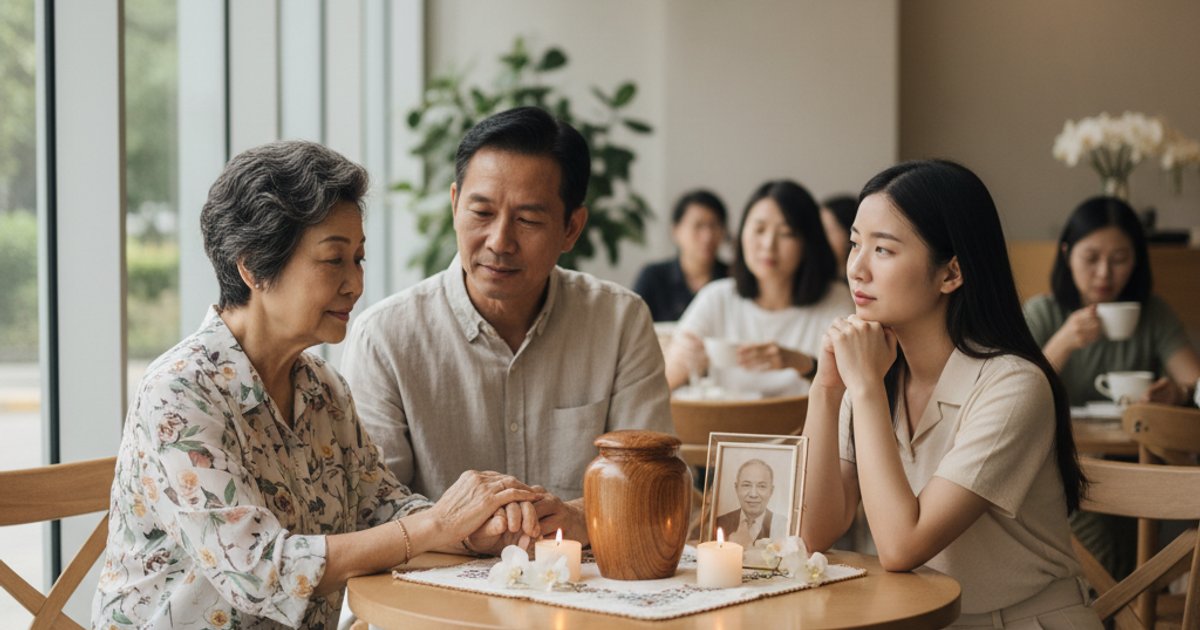
Photorealistic, high-resolution photograph of a family (multi-generational, Singaporean ethnicity) gathered around a small, tastefully decorated memorial table at home, perhaps with a framed photo, a lit candle, and some flowers. The mood is reflective and warm, capturing a moment of shared remembrance, suitable for a professional blog article.
Frequently Asked Questions
What is the typical cost of cremation services in Singapore?
The typical cost for cremation services in Singapore varies significantly. Public crematoria, like Mandai, charge around SGD 100-200 for direct cremation. Private crematoria and comprehensive funeral packages, which include embalming, wake services, and urns, can range from SGD 3,000 to SGD 10,000 or more, depending on the duration of the wake and specific inclusions. Nirvana Singapore offers transparent pricing and customizable packages to suit different budgets and preferences.
Can I scatter ashes anywhere in Singapore?
No, you cannot scatter ashes anywhere in Singapore. Sea burials are permitted only in designated areas approximately 1.85 nautical miles south of Pulau Semakau. Land scattering of ashes is generally not allowed in public spaces, though the National Environment Agency (NEA) is exploring options for inland ash scattering gardens to provide more choices for families.
How long does it take to process grief after a cremation?
There is no fixed timeline for processing grief after a cremation; it is a highly individual and non-linear journey that can last for months or even years. While acute grief may lessen over the first year, feelings of sadness or longing can resurface, particularly during anniversaries or significant life events. Seeking ongoing support and practicing self-compassion are key to navigating this long-term process.
Are there eco-friendly cremation options available in Singapore?
While traditional cremation uses significant energy, options like sea burial are considered more eco-friendly than land burial as they do not require land use or permanent structures. Singapore is also exploring greener alternatives in funeral practices, though widespread eco-cremation methods like aquamation are not yet commonly available. The focus is often on biodegradable urns and sustainable memorialization practices.
What are the legal requirements for cremation in Singapore?
In Singapore, cremation requires a Certificate of Cause of Death (CCOD) issued by a doctor and a permit from the National Environment Agency (NEA). If the death is unnatural or suspicious, a Coroner’s Inquiry may be required before cremation can proceed. These legal steps ensure proper documentation and authorization for the process.
Can I pre-plan my own cremation and memorialization in Singapore?
Yes, pre-planning your own cremation and memorialization is highly encouraged in Singapore. Services like those offered by Nirvana Singapore allow individuals to make arrangements for their funeral, cremation, and even columbarium niche in advance. This eases the burden on family members during a difficult time and ensures personal wishes are respected. Pre-planning can also lock in current prices, offering financial foresight.
The journey after a cremation in Singapore is a testament to enduring love and the resilience of the human spirit. It is a path marked by remembrance, adaptation, and the continuous search for meaning in the face of loss. Understanding that this journey is long and multifaceted, and that support is available every step of the way, empowers families to navigate their grief with grace and find closure through rituals and lasting comfort.
Last updated: May 28, 2026