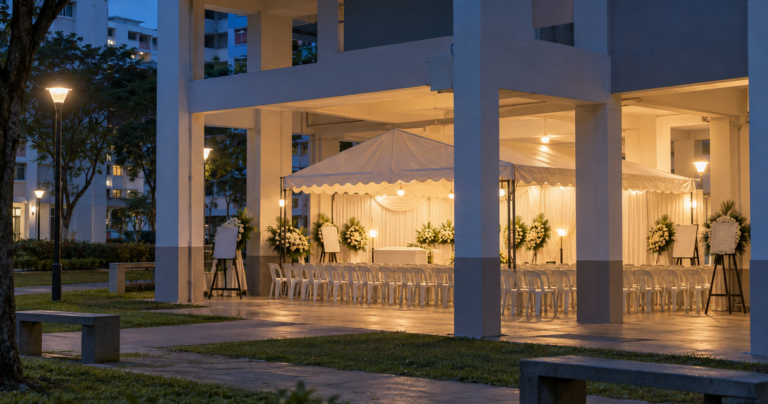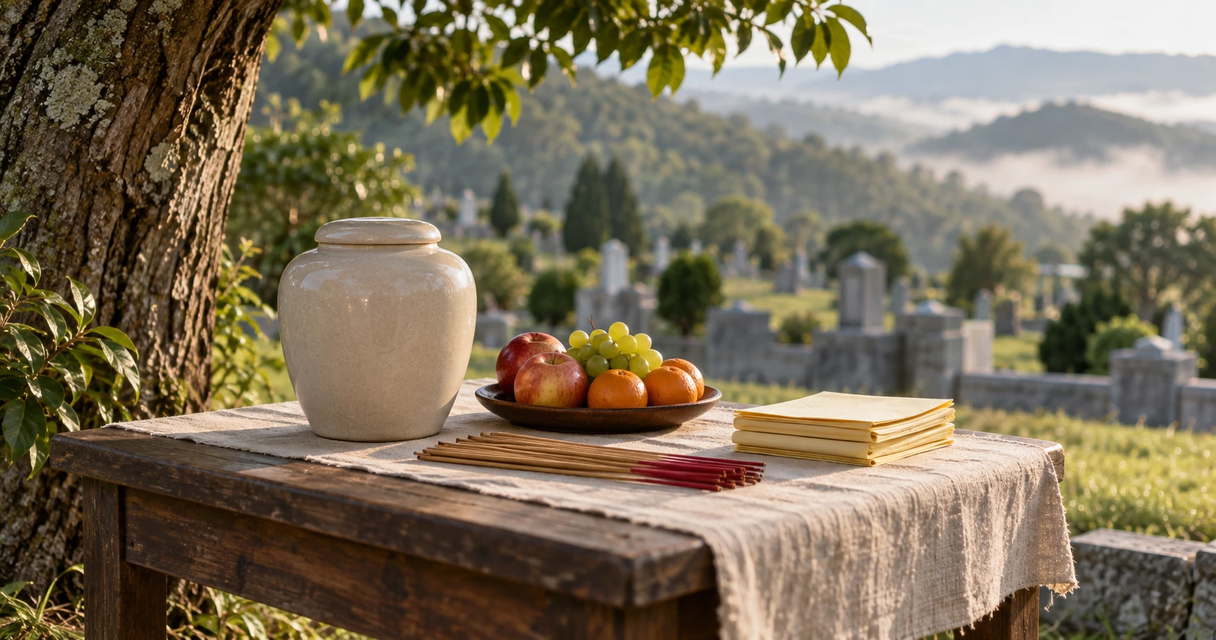
For many Chinese families, opening a grave is a rite, with prayers before, during and after. The digging is only one part of it. When you book an exhumation and relocation service in Singapore, the prayers are often part of the package, but not always, and not always all of them.
This guide explains the usual rites in the order they happen. It also covers the one thing that limits them most: who sets the date.
Why this matters now
The National Environment Agency (NEA) is exhuming the Phase 9 graves at Choa Chu Kang Chinese Cemetery. NEA asked families to register claims by 30 April 2026, and set the physical exhumation for after June 2026. So families with graves in Blocks 3A to 3E, 14E to 14G, 17, 18 and 19 are planning these rites now. Since 1 August 2026, NEA has put hoarding around the Phase 9 graves, and members of the public may not enter the area. For many families, this means the exhumation day is also the last chance to pray at the grave itself. So it is worth planning the rites for that day with care.
Other families, whose graves come up in later phases, will face the same choices.
First, who sets the date?
This decides which rites you can hold, so settle it first.
There are two ways a grave is exhumed.
- NEA’s contractor does it. NEA schedules the date and tells the claimant. The family cannot pick an auspicious day, because the contractor works to NEA’s timetable for the whole phase. NEA covers the exhumation, the cremation and a standard niche.
- The family hires its own contractor. NEA allows this at the family’s own cost. The contractor must get an exhumation permit from NEA and meet NEA’s deadline. In return, the family has more say over the day and the time, within that deadline.
Families who care most about the date often choose the second route. Families who care most about cost often choose the first, and hold the prayers they can around NEA’s date. Our article on where the remains go after a 15-year burial compares the two routes in more detail.
The usual rites, in order
Not every family holds all of these. Faith, dialect group and family custom all change the list. But most exhumation and relocation service packages in Singapore include these steps.
Choosing the date and time
With a private exhumation, many families ask a temple or a geomancer to pick an auspicious date and hour. This is often the first item on a package. With an NEA exhumation, this step is replaced by the date NEA gives you.
The ground-breaking prayer
Before the first spade goes in, the family holds a short prayer at the grave. Offerings are laid out, joss sticks are lit, and the spirit is told what is about to happen and why. Many families see this as asking permission. It is usually led by a monk, a Taoist priest or a ritual master, with the family standing by.
Care of the remains during the exhumation
As the remains are lifted, traditional items are used to protect them. A red cloth, a plate and an umbrella are common. The umbrella shields the remains from direct sun. Relatives are allowed to watch. NEA’s notice says the claimant and relatives may witness the exhumation on the scheduled date.
Bone collection
In Chinese custom this is called 拾金, the gathering of the bones. The remains are collected with care, often by a specialist, before they go for cremation. Under NEA’s programme, the remains are cremated at Choa Chu Kang Crematorium on the same day.
The final blessing at the niche
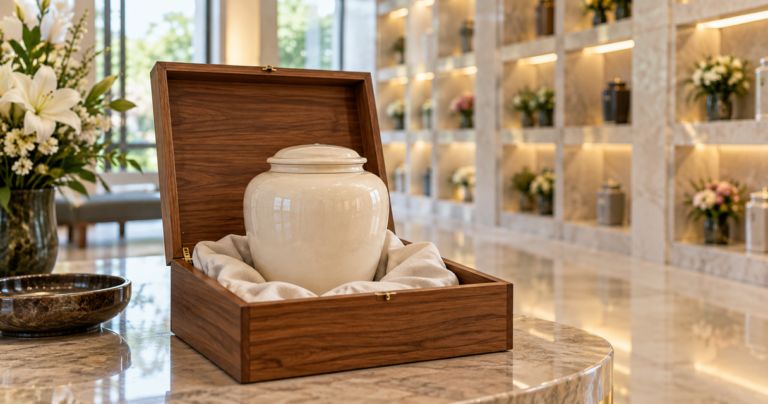
The last rite happens when the urn is placed in its new niche. A short blessing or prayer is held, and some families offer food or light joss sticks, where the columbarium allows it. For many families this is when the move feels complete.
When the move is from a niche, not a grave
Relocation does not always start at a grave. Many families move an urn that is already in a niche. They may want to bring two parents together, move from a government columbarium to a private one, or move closer to where the family now lives.
The rites for this are shorter, but they still matter to many families. Before the urn leaves the old niche, a short prayer tells the spirit that it is moving. If the urn is worn or cracked, the ashes may be moved into a new urn, and some families hold a small ceremony for that step. When the urn reaches the new niche, the family holds a short prayer, just as after an exhumation.
The paperwork is different too. To take an urn out of a government niche, NEA must approve it first. The original applicant for the niche makes the application on the NEA ePortal, or authorises someone else to. NEA does not refund the niche fee. Our Chinese guide on moving an urn from a government columbarium to a private one explains each step.
Other faiths
Muslim graves are not cremated. Where a faith requires burial, NEA buries the remains again in a smaller plot, and the rites follow that faith. Christian families may ask a pastor or priest to say a prayer at the grave and at the new niche. Hindu families follow their own customs. Tell the provider your faith at the first call.
What to check in an exhumation and relocation service in Singapore
A good package lists each rite by name. Ask for these in writing:
- Which rites are included: date selection, ground-breaking prayer, offerings, ritual items, bone collection, final blessing.
- Who leads the prayers, and whether it is a monk, a priest or a ritual master.
- Whether the NEA application is handled for you.
- Whether transport of the ashes to the new niche is included.
- What changes if NEA sets the date instead of you.
You can see a full list of what such a package covers on the niche relocation and grave exhumation page. For the NEA steps themselves, read the grave exhumation process in Singapore. Prayers for later dates, such as the 100th day or a death anniversary, are described on the prayer services page. To plan the whole move, start with memorial and funeral services in Singapore.
Frequently Asked Questions
What prayers are done at an exhumation in Singapore?
Most Chinese families hold a ground-breaking prayer before the grave is opened, and a final blessing when the urn is placed in the new niche. Offerings and traditional items such as a red cloth and umbrella are often used. The exact rites depend on the family’s faith and custom.
Can we choose an auspicious date for an NEA exhumation?
Not under NEA’s own programme. NEA’s contractor works to NEA’s schedule and tells the claimant the date. Families who want to choose the date can hire their own contractor, at their own cost, and must get an NEA permit.
Can family members watch the exhumation?
Yes. NEA says the claimant and relatives may witness the exhumation on the scheduled date.
What is 拾金 in an exhumation?
拾金 is the Chinese term for gathering the bones from the grave. The remains are collected with care before cremation. Under NEA’s programme, they are cremated at Choa Chu Kang Crematorium on the same day.
Are prayers included in NEA’s free exhumation?
NEA pays for the exhumation, the cremation and a standard niche, urn and plaque. NEA’s notice does not mention religious rites, so families arrange the prayers themselves or through a provider.
The Phase 9 details above are from the National Environment Agency’s exhumation notice for Phase 9.