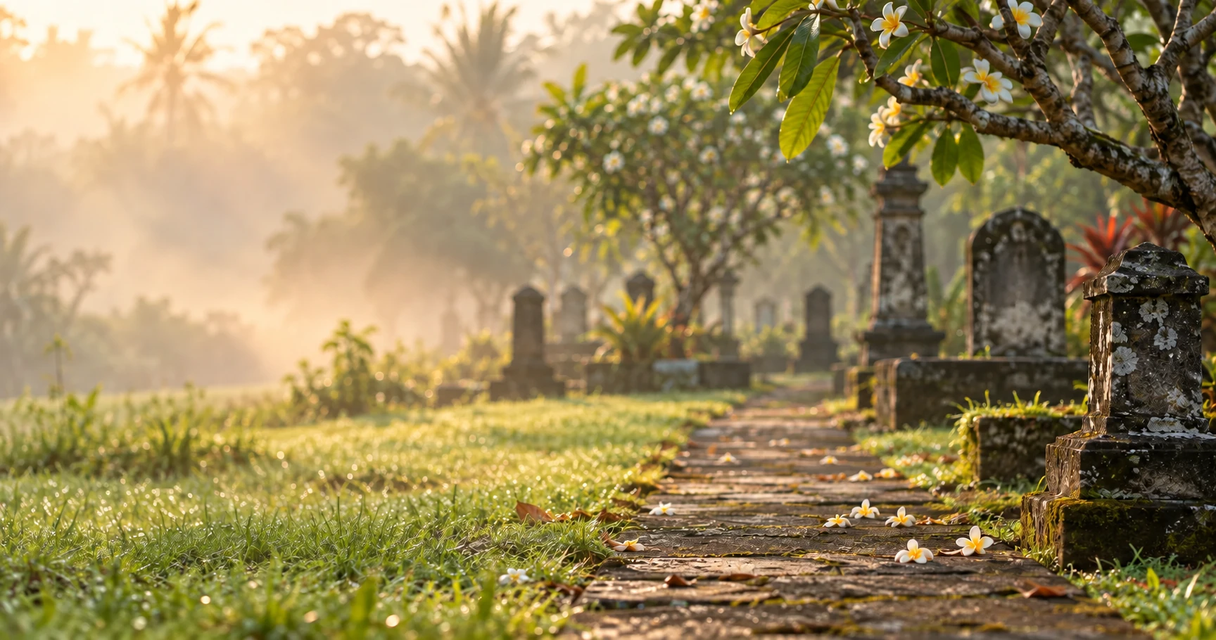
Since 1 August 2026, a section of Choa Chu Kang Chinese Cemetery has been fenced off. The National Environment Agency (NEA) put up hoarding around the Phase 9 graves so it can prepare to exhume them. Families can no longer walk in to visit those graves.
If your family has a grave in Phase 9, or expects one in a later phase, a decision is coming. The grave will be opened, and the remains need a new place. This article explains the four places they can go, and how families usually choose.
Why graves from a burial in Singapore are exhumed
Every burial in Singapore since 1 November 1998 has been limited to 15 years. NEA then exhumes the graves in phases to free the land for new burials. Phase 9 covers Blocks 3A to 3E, 14E to 14G, 17, 18 and 19 of the Chinese Cemetery. NEA says those graves date from 1965 to 1997, so many are older than the 15-year limit.
NEA asked families to register their claim by 30 April 2026. The actual digging was set for after June 2026. For each grave, NEA’s contractor exhumes the remains, and they are cremated at Choa Chu Kang Crematorium on the same day.
Option 1: A niche in a government columbarium
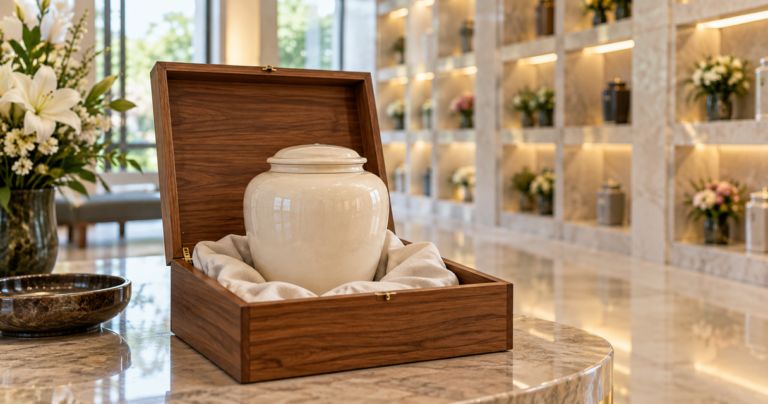
This is the default. NEA allocates a standard niche in one of its columbaria at Choa Chu Kang or Mandai. For graves in its exhumation programme, NEA gives each claimed grave this niche free. It also provides a standard urn and a plaque with the name and date of death. You can add a photo of the person to the plaque if you send it when NEA asks.
You do not choose the exact spot for free. If you want a specific location in the columbarium, NEA charges $250.
This option suits families who want a place to visit and do not want extra cost. The columbaria are open from 8am to 5.30pm daily.
Option 2: Scattering on land or at sea
If the family does not want to keep the ashes in a niche, NEA’s contractor can scatter them. This can be at one of NEA’s inland gardens or at sea. NEA covers this cost for exhumed graves too.
Scattering is final. There is no urn and no plaque to visit afterwards. Some families are fine with that. Others find it hard, especially older relatives who visited the grave every Qing Ming. Talk about it together before you choose.
Option 3: A private niche
Some families want more than a standard niche. They may want a quieter columbarium, a family niche that holds several urns, a spot near other relatives, or a place where monks chant on festival days. Private columbaria offer that, at a price the family pays.
There are two ways to get there.
- Take the free NEA niche first, then move the urn later. NEA must approve the removal, and it does not refund anything. This gives the family time to decide without pressure.
- Make private arrangements from the start. NEA lets claimants hire their own contractor to exhume the grave at their own cost. For Phase 9, that contractor had to apply for an exhumation permit by 30 April 2026 and dig by June 2026.
Our guide on moving an urn from a government columbarium to a private one covers the first route step by step. You can see private niche layouts on the columbarium niches page.
Option 4: Burial again, where the faith requires it
Some faiths do not allow cremation. For them, NEA buries the remains again in a smaller plot. In June 2025, NEA finished Phase 8, a Muslim phase, and all the remains were buried again at Pusara Abadi and Pusara Aman in Choa Chu Kang. This option is set by the faith, not by the family’s taste.
What happens if nobody claims the grave
NEA still exhumes every grave in the phase. The remains are cremated, and NEA keeps the unclaimed ashes for three years. After that, they are scattered at sea. If you have just learned that a relative’s grave is in Phase 9, contact NEA’s Choa Chu Kang Cemetery Office quickly. The deadline to register has passed, and the office is the right place to ask what can still be done.
Before the exhumation day
Once the claim is registered, NEA schedules the exhumation and tells the claimant the date. That notice can come at short notice for a family that lives apart, so agree early on who will attend.
On the day, the grave is opened by NEA’s contractor, not by the family. Relatives stand by, and many bring offerings, joss sticks and a red cloth or umbrella to shield the remains. The remains then go to Choa Chu Kang Crematorium the same day. After that, the ashes go to the niche or the scattering the claimant chose when registering.
Three small things make the day easier. Bring the claim reference and an identity card. Decide beforehand who will carry the urn, since some families hold that the eldest son should do it. If you can, decide about a private niche before the day. Then the ashes will not need to move twice.
If the headstone carries a photo or words the family wants to keep, take a clear picture of it before the date. Ask NEA what will happen to the headstone itself, because the notice does not say. Some families also note the old block and plot number, so the history of the grave is not lost when the land is reused.
How families choose
There is no right answer, but a few questions help.
- Who will visit? If older relatives want a place to pray, a niche is kinder than scattering.
- Will other family members join them? A family niche, government or private, keeps urns together.
- Do you want rites at the grave? Many Chinese families hold a ground-breaking prayer before the grave is opened, and a short prayer when the urn goes into the niche. Our article on the prayers that come with an exhumation explains them.
- How fast must you decide? The free NEA niche buys time. A move to a private niche can happen later.
If your family is still deciding about a new burial, read whether burial in Singapore is still an option first. For help planning the exhumation or the move, see funeral and memorial services in Singapore.
Frequently Asked Questions
What happens to the remains after a grave is exhumed in Singapore?
NEA’s contractor exhumes the grave and the remains are cremated the same day. The ashes then go into a government niche, are scattered on land or at sea, or go to a private niche arranged by the family. Where the faith requires it, the remains are buried again in a smaller plot.
Does the family pay for an NEA exhumation?
For graves in NEA’s exhumation programme, NEA pays for the exhumation, the cremation, a standard niche, a standard urn and a plaque, or for scattering. The family pays only for extras, such as choosing the niche location or a private niche.
Can we move the urn to a private columbarium later?
Yes. NEA must approve the removal of an urn from its niche, and it gives no refund. Many families take the free NEA niche first and move the urn once they have chosen a private one.
Can family members watch the exhumation?
Yes. NEA says the claimant and relatives may witness the exhumation on the scheduled date. Families who want prayers at the grave should arrange them before that date.
What if we missed the claim deadline?
NEA still exhumes and cremates the remains. Unclaimed ashes are kept for three years and then scattered at sea. Contact the Choa Chu Kang Cemetery Office as soon as you can.
Details of Phase 9 above are from the National Environment Agency’s exhumation programme page (last updated August 2026) and its Phase 9 exhumation notice.