Updated July 21, 2026
By [Author Name]
When you’re navigating the profound grief of losing a loved one, the last thing you want is to be overwhelmed by complex regulations and ethical uncertainties. Yet, in Singapore, a nation renowned for its meticulous governance, the funeral services industry operates within a robust framework. This framework is meticulously designed to ensure dignity for the departed and comprehensive protection for the bereaved. It’s not merely about administrative procedures; it’s about upholding public health, safeguarding consumer rights, and maintaining professional integrity during one of life’s most vulnerable moments. Understanding this regulatory compass is absolutely crucial for both families seeking solace and service providers committed to ethical practices.
This guide won’t tell you how to select a casket or plan a wake; numerous resources already cover those aspects. Instead, we’re delving deep into the often-overlooked legal and ethical ecosystem that underpins every facet of funeral services in Singapore. We’ll explore the official regulations, the codes of conduct that guide dedicated professionals, and the avenues available for recourse. Our goal is to foster trust and empower you with informed decision-making, because ultimately, a dignified farewell begins with a clear understanding of the standards that must be met.
Key Takeaways
- All deaths in Singapore must be registered digitally within 24 hours, leading to the issuance of a digital death certificate. This streamlines the initial legal process for grieving families.
- The National Environment Agency (NEA) acts as the primary regulatory body, overseeing crucial permits for burial, cremation, and wake durations, while also enforcing stringent public health standards for funeral parlours.
- The Environmental Public Health Act and its associated regulations establish strict conditions for funeral parlour operations, embalming procedures, and the respectful handling of human remains to ensure public safety and hygiene.
- The Association of Funeral Directors Singapore (AFD), an NEA-recognised body, sets a comprehensive Code of Conduct for its members, promoting ethical practices, transparency, and deep respect for the bereaved.
- Consumer protection laws, particularly the Consumer Protection (Fair Trading) Act (CPFTA), are vital in safeguarding families against unfair practices, such as hidden costs or misleading package descriptions, during their time of vulnerability.
- Pre-planning funeral arrangements is increasingly encouraged, with a growing number of Singaporeans considering it to enable informed decisions and alleviate stress during periods of intense grief.
- Cremation is the predominant choice in Singapore, with a rate exceeding 80%, largely due to land scarcity and cost-effectiveness compared to traditional burial.
The Bedrock: Death Registration and Initial Legalities
When a loved one passes away in Singapore, the very first step, which sets the entire regulatory chain in motion, is the official registration of their death. This isn’t just a simple administrative formality; it represents the legal recognition of a life’s end, a prerequisite without which no further arrangements can proceed for your family. Understanding this initial process is crucial for navigating the subsequent steps with clarity.
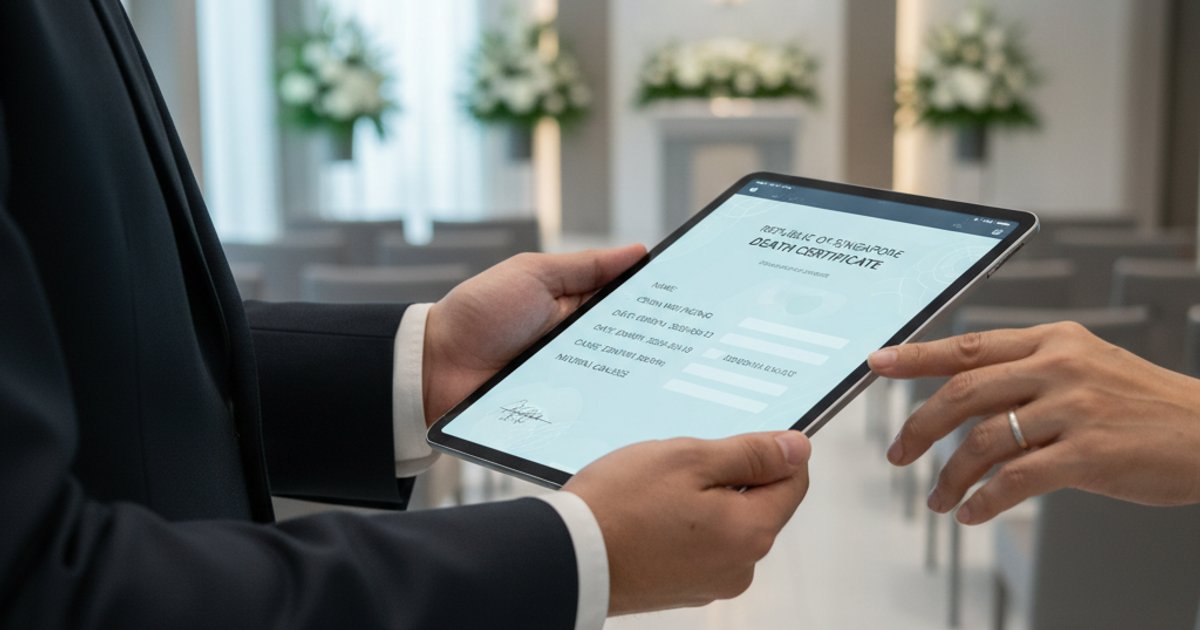
In Singapore, you must register all deaths, regardless of citizenship, within 24 hours of occurrence. Since May 29, 2022, this process has been significantly streamlined and largely digitized. Once a doctor certifies the death online, the death is automatically registered, and a digital death certificate is promptly issued. This means that in most cases, you no longer need to physically visit the Immigration & Checkpoints Authority (ICA) or police posts for registration. Your next-of-kin can then download this essential digital certificate via the MyLegacy@LifeSG portal using their Singpass within 30 days. This digital transformation significantly reduces the administrative burden on grieving families, allowing you to focus on your loss rather than navigating bureaucratic hurdles. The digital death certificate is a crucial document, required for obtaining permits for burial or cremation and for other legal matters.
What if the Death is Unexpected or Occurs Overseas?
If a death is sudden, accidental, or otherwise reportable, the State Coroner and police will be involved, which means the process will differ slightly for you. In such cases, you can only apply for a Burial/Cremation Permit after the Coroner officially releases the body. This is a critical distinction that families often overlook, and it can understandably delay funeral arrangements. For deaths occurring overseas, the process involves registering the death with foreign authorities first, and then you must apply for a Coffin (Import) Permit to bring the remains back to Singapore. This ensures all international and local regulations are met.
Who Governs Funeral Services in Singapore? The Regulatory Landscape
The primary authority overseeing funeral services in Singapore is the National Environment Agency (NEA), a key government body. Their role is extensive, covering everything from public health and environmental protection to the issuance of essential permits. This comprehensive oversight ensures that all funeral-related activities are conducted safely, hygienically, and in strict accordance with national standards, providing you with peace of mind during a difficult time. The NEA’s involvement underscores Singapore’s commitment to maintaining order and dignity even in matters of death.
The NEA’s Extensive Mandate
The NEA’s regulations cover a broad spectrum of activities within the funeral industry, providing a clear framework for service providers and ensuring standards for you. This includes:
- Permits for Burial and Cremation: These permits are mandatory for all burials and cremations and you must apply for them via the NEA ePortal. There is no fee for these essential permits, making the process accessible.
- Coffin/Casket Permits: You will need a permit for the use of a casket, which costs a nominal fee of S$10 and is also applied for through the NEA ePortal.
- Wake Duration: While wakes typically last between 1 to 7 days, you will need written permission from the NEA if a wake exceeds 7 days from the date of death.
- Funeral Parlour Standards: The NEA sets stringent guidelines for funeral parlours, covering the proper handling and storage of the deceased, maintaining cleanliness, and ensuring all necessary permits are obtained. This is further detailed in the Environmental Public Health (Funeral Parlours) Regulations.
- Ash Scattering: The NEA manages facilities like the Garden of Peace and designates sea scattering sites, outlining specific guidelines for these options, should you choose them.
- Exhumation Programme: Due to Singapore’s limited land, burial plots are leased for 15 years. The NEA manages the mandatory exhumation process at Choa Chu Kang Cemetery once this lease expires, a critical consideration for families.
What’s truly striking about this is the sheer breadth of oversight the NEA provides. It’s a testament to Singapore’s unwavering commitment to public order and health, even in matters as sensitive as death. The foundational legislation, the Environmental Public Health Act, which came into effect in 1969, integrates environmental health functions and sets standards for everything from public cleansing to the operation of funeral parlours. You can be assured that these regulations are designed with your family’s well-being and public safety in mind.
Navigating Burial and Cremation Regulations
In Singapore, you have options for both burial and cremation, but your choices are heavily influenced by the nation’s land scarcity and the prevailing regulatory frameworks. Understanding these options thoroughly is key to making informed decisions that align with your family’s wishes and practical considerations. It’s important to weigh the long-term implications of each choice.
The Realities of Burial in Singapore
Burial in Singapore is primarily conducted at the Choa Chu Kang Cemetery, which remains the only active public cemetery. The most significant factor you need to consider here is the 15-year lease policy. Introduced in 1998, this policy means all burial plots are leased for a period of 15 years, after which the remains are subject to mandatory exhumation.
After exhumation, your family must choose between cremation or reburial in smaller plots, especially if religious requirements necessitate it. This policy, while pragmatic given Singapore’s severe land constraints, is a profound consideration for families. It serves as a stark reminder that even in death, space is a premium here. The NEA allocates burial plots sequentially, meaning you cannot reserve or choose specific plots. For Muslim individuals, burial remains the only option, as Islam does not permit cremation, and the process is designed to facilitate burial within 24 hours of death, in accordance with Islamic practice.
Cremation: The Prevailing Choice
Cremation is the more common choice in Singapore, largely due to land limitations and its cost-effectiveness. Singapore boasts one of the highest cremation rates globally, exceeding 80% according to various reports. Several crematoria are available, including the Mandai Crematorium. You will need a Permit to Cremate from the NEA for this process. After cremation, ashes can be stored in columbariums (both government-managed and private), kept at home (which is legal in Singapore), or scattered at sea, which requires a permit from the NEA and must be conducted at designated sites.
Here’s a quick comparison of the two main options for you to consider:
| Feature | Burial | Cremation |
|---|---|---|
| Primary Location | Choa Chu Kang Cemetery | Mandai Crematorium, other crematoria |
| Land Tenure | 15-year lease, mandatory exhumation | Permanent (columbarium niche, home storage) or dispersed (sea scattering) |
| Religious Considerations | Mandatory for Muslims; option for other faiths | Permitted for most faiths (except Islam) |
| Permit Required | Permit to Bury (NEA) | Permit to Cremate (NEA) |
| Cost Implications | Generally higher due to plot, excavation, etc. (e.g., S$940 per plot) | Generally lower, more practical due to land scarcity (e.g., S$100 at Mandai Crematorium) |
What Are the Standards for Funeral Parlours and Embalming?
The operation of funeral parlours and the practice of embalming in Singapore are subject to rigorous public health and safety regulations, primarily enforced under the Environmental Public Health Act and its subsidiary Environmental Public Health (Funeral Parlours) Regulations. This strict oversight is non-negotiable and exists for very good reasons, ensuring your family’s safety and public health. You can expect these facilities to adhere to high standards.
To operate any premises as a funeral parlour, you must obtain a licence from the Commissioner (of Public Health). These regulations dictate that funeral parlours must have adequate and functional toilet and washing facilities, proper lighting, and ventilation. Embalming or body preparation can only occur in designated rooms, specifically set aside for such purposes, not in general parlour spaces. After each embalmment, the room must be thoroughly cleansed and disinfected. Furthermore, there are strict rules regarding the retention of remains: a corpse cannot be retained in any premises for more than 48 hours unless it is encoffined in a hermetically sealed coffin or embalmed. If embalmed, it can be retained for up to 7 days, but any period exceeding that requires written permission from the Commissioner. Special protocols apply for bodies of individuals who died from infectious diseases, requiring written permission from the Commissioner before being received into a funeral parlour.
From a public health perspective, these rules are paramount. They protect not only the dedicated funeral staff but also the public who visit these premises, including your family. It’s all about preventing the spread of disease and maintaining impeccable hygiene standards, which is especially crucial in a densely populated city-state like Singapore. In June 2020, the NEA introduced new conditions, requiring all embalmers to be registered and to have attended a basic infection control course.
Ethical Considerations and Industry Self-Regulation
Beyond the black-and-white legal statutes, the funeral services industry in Singapore also operates under a strong ethical compass, often guided by proactive industry associations. This is where the human element truly comes into play, ensuring you receive compassionate and respectful service during a difficult time. You’ll find that many providers go above and beyond legal requirements to uphold ethical standards.
The Role of the Association of Funeral Directors Singapore (AFD)
The Association of Funeral Directors Singapore (AFD), officially recognised by the NEA, comprises reputable funeral homes across Singapore. The AFD plays a crucial role in promoting high standards within the industry. Members are bound by a strict Code of Conduct, which aims to ensure professional and sincere services, especially during a time of distress for grieving families. This code provides you with an assurance of quality and ethical practice.
The AFD Code of Conduct emphasises several key principles:
- Service to the Bereaved: Prioritising your interests as the bereaved before profit, serving with solemnity, sensitivity, and respect for your family’s wishes and the deceased’s memory.
- Transparency and Dignity in Advertising: Ensuring advertisements are tasteful, solemn, and dignified, avoiding any misleading claims.
- Public Health: Guaranteeing bodies are prepared safely to prevent health threats, maintaining clean and solemn funeral parlours, and ensuring dignified transportation of the deceased.
- Confidentiality and Trust: Safeguarding personal items and maintaining the strictest confidence regarding information about the deceased and next-of-kin.
- No Touting or Soliciting: The decision to engage a funeral director should be made freely by your bereaved family, without undue pressure.
While membership in the AFD is not legally mandatory for all funeral service providers, it serves as a significant mark of commitment to ethical practice. Nirvana Singapore, for instance, aligns its operations with these high standards, understanding that trust is earned through consistent adherence to ethical principles and transparent dealings. It’s worth noting that the AFD reported 31 members among the more than 300 funeral service providers in Singapore as of November 2023. This highlights that while professional associations like the AFD set high standards, the ultimate responsibility for ethical conduct rests with each individual provider, and you should always choose a provider you trust.
Consumer Protection: Safeguarding the Bereaved
During a period of intense grief, families are particularly vulnerable, and this is precisely when the Competition and Consumer Commission of Singapore (CCCS) and the Consumer Protection (Fair Trading) Act (CPFTA) step in to protect you from unfair practices. This area has seen increased scrutiny, and rightly so, to ensure you are not taken advantage of during a difficult time. The CCCS conducted a market study on the funeral services industry in 2023, identifying potential unfair practices.
The Consumer Protection (Fair Trading) Act (CPFTA)
The CPFTA protects consumers like you against unfair trade practices. In the context of funeral services, this is especially critical because consumers often make significant financial outlays while under emotional duress. The CCCS’s market study highlighted several areas of concern. For example, a 2023 survey found that only 28% of respondents had enough time to consider their options before making a decision, and 31% paid more due to undisclosed additional items.
Common unfair practices that have been reported include:
- Hidden Costs: The final bill being substantially higher than the initial estimate or package price due to charges not disclosed upfront. The Consumers Association of Singapore (CASE) received 13 complaints against funeral service providers between 2021 and 2023, with most related to pricing issues.
- Misleading “One-Stop Service” Claims: Some providers describe their products as a “one-stop service” or “full package,” creating an impression that you will only need to liaise with one entity. However, in reality, you may have to contract and liaise with multiple vendors, leading to confusion and additional stress.
- Omission of Material Information: This includes not informing you upfront that the final price may differ from the package price, or not providing clear breakdowns of costs.
- Unsolicited Products or Services: Providers asking for payment for products or services that you did not request.
To help you make informed decisions, the CCCS, with support from the NEA, has developed an “A.S.K. a FSP checklist.” This tool encourages you to pre-plan funeral arrangements and ask the right questions when consulting with a Funeral Service Provider (FSP). This initiative aims to empower you to navigate the complexities of funeral planning with greater confidence and transparency.
The Growing Importance of Funeral Pre-Planning
While discussing death can be uncomfortable, pre-planning funeral arrangements is gaining significant traction in Singapore, and for good reason. It empowers you to make informed decisions and significantly mitigates the vulnerability your family might experience during a period of intense grief. This proactive approach ensures your wishes are respected and eases the burden on your loved ones.
A 2024 survey by the Singapore Management University (SMU) revealed that while 81% of Singaporeans claim moderate to high openness towards end-of-life planning, fewer than 13% have both spoken and written down their final wishes. However, the trend towards pre-planning is growing, with 36% now believing in pre-planned funeral packages, the highest point in seven years. This shift reflects a desire for greater control and clarity. For example, some funeral directors report receiving requests for pre-planned funerals almost daily, a significant increase from a decade ago.
Pre-planning allows you to consider various aspects calmly, such as your preferred type of service (burial or cremation), religious rites, and budget. It also enables you to communicate these preferences clearly to your family, preventing potential disagreements or rushed decisions during an emotional time. This foresight can also help you avoid unexpected expenses, as you can clarify inclusions and costs upfront. By taking these steps, you provide a final gift of clarity and peace of mind to those you leave behind.
Ensuring Quality and Professionalism: Training and Accreditation
The quality of funeral services hinges significantly on the professionalism and training of those who provide them. In Singapore, continuous efforts are made to enhance industry standards, ensuring that you receive compassionate, competent, and respectful service. This commitment to professionalism helps build trust and confidence in the funeral sector.
The NEA, in consultation with the Association of Funeral Directors Singapore (AFD), has implemented stricter requirements for embalmers. As of June 2020, all embalmers working at licensed funeral parlours must be registered with the NEA and complete a basic infection control course conducted by the National Centre for Infectious Diseases. Additionally, they must have performed embalming procedures on at least 25 bodies locally under supervision. These measures are designed to prevent issues like improper handling and to ensure public health safety. The NEA also issued guidelines for hearse operators in October 2020, requiring enclosed vehicles and proper disinfection protocols to ensure dignity and hygiene during transport.
Beyond formal regulations, industry players are increasingly focused on accreditation and continuous improvement. For example, Direct Funeral Services, a prominent provider, is the first and only funeral company in Singapore to have been awarded an ISO certificate, demonstrating their commitment to quality management systems. These initiatives collectively contribute to a more professional and reliable funeral services industry, ensuring that you and your loved ones are treated with the utmost care and respect.
Key Statistics on Funeral Services in Singapore
Understanding the landscape of funeral services in Singapore is enhanced by key statistics that highlight prevailing trends and consumer behaviors. These figures offer valuable insights for both families and service providers.
- Cremation Rate: Singapore has one of the highest cremation rates globally, exceeding 80%. This is largely driven by land scarcity and cost-effectiveness.
- Death Registration: Death registration in Singapore consistently maintains a high completeness and quality of cause-of-death information.
- Funeral Service Providers: The industry is highly competitive, with over 300 companies competing for approximately 60 to 80 deaths per day, though only 82% of these engage formal funeral service providers.
- Pre-planning: While 81% of Singaporeans express openness to end-of-life planning, only 12.34% have both spoken and written down their final wishes. However, 36% now believe in pre-planned funeral packages, marking a 7-year high.
- Consumer Complaints: Between 2021 and 2023, the Consumers Association of Singapore (CASE) received 13 complaints against funeral service providers, primarily related to hidden costs and misleading pricing.
- Burial Lease: All burial plots at Choa Chu Kang Cemetery are subject to a 15-year lease, after which mandatory exhumation occurs.
- Average Funeral Cost: The cost of funeral services in Singapore typically ranges from S$4,000 to S$12,000, varying based on service type, duration, and venue.
Frequently Asked Questions
What is the first step when someone passes away in Singapore?
When someone passes away in Singapore, the very first step you need to take is to register the death. This must be done digitally within 24 hours of occurrence. A doctor will certify the death online, leading to the automatic issuance of a digital death certificate, which your next-of-kin can then download via the MyLegacy@LifeSG portal using Singpass. This digital process streamlines the initial legal formalities for you.
Who regulates funeral services in Singapore?
The National Environment Agency (NEA) is the primary regulatory body overseeing funeral services in Singapore. The NEA’s extensive mandate includes issuing permits for burial and cremation, setting standards for funeral parlours and embalming, and ensuring public health and environmental hygiene. This comprehensive oversight ensures that all aspects of funeral services adhere to national standards for your protection.
Is cremation or burial more common in Singapore?
Cremation is significantly more common in Singapore, with a rate exceeding 80%. This prevalence is largely due to Singapore’s limited land availability and the cost-effectiveness of cremation compared to traditional burial. While burial is available at Choa Chu Kang Cemetery, plots are leased for only 15 years, making cremation a more practical and long-term solution for many families.
What consumer protections are in place for funeral services?
The Consumer Protection (Fair Trading) Act (CPFTA), enforced by the Competition and Consumer Commission of Singapore (CCCS), protects you against unfair trade practices in the funeral services industry. This includes safeguarding against hidden costs, misleading package descriptions, and unsolicited services. The CCCS also provides resources like the “A.S.K. a FSP checklist” to help you make informed decisions and avoid potential pitfalls.
Why is funeral pre-planning encouraged in Singapore?
Funeral pre-planning is increasingly encouraged in Singapore because it empowers you to make informed decisions about your final arrangements, ensuring your wishes are respected. It also significantly reduces the emotional and logistical burden on your family during a time of grief. By planning ahead, you can clarify preferences, manage costs, and provide peace of mind to your loved ones, preventing rushed decisions and potential disagreements.
Are there specific standards for embalming in Singapore?
Yes, there are strict standards for embalming in Singapore, primarily governed by the Environmental Public Health Act and its regulations. All embalmers working at licensed funeral parlours must be registered with the NEA, have completed a basic infection control course, and performed a minimum number of supervised embalming procedures. Embalming must occur in designated rooms, which are thoroughly cleaned and disinfected after each use, ensuring public health and safety.
What is the role of the Association of Funeral Directors Singapore (AFD)?
The Association of Funeral Directors Singapore (AFD) is an NEA-recognised industry body that promotes high standards and ethical practices among its members. AFD members are bound by a strict Code of Conduct that emphasizes service to the bereaved, transparency, public health, confidentiality, and prohibits touting. While membership is not mandatory for all providers, it signifies a commitment to professional and sincere service for your family.