About three months after a funeral, many Chinese families in Singapore hold one more set of prayers: the 100th-day prayers, or 百日. By then the wake is long over and life has started to move again, so this ceremony is easy to leave until the last week. The best funeral services in Singapore can plan it with you well ahead.
How to count the 100th day
Most families count the day of death as day 1. So if a person died on 1 March, day 100 is 8 June. Some families count from the day after the death instead, which moves the date by one day. Ask your elders or your temple which way your family counts, then fix the date on a calendar early.
No Singapore agency publishes a rule on the 100th day or how to count it. It is a family and religious custom, so the right answer is the one your family and your monk or priest agree on.
A quick way to check your date: count the days left in the month of death, including the day itself, then add each full month after it until you reach 100.
Winter Solstice 2026 lands on a 100th day
This year the count can run into a festival. Winter Solstice (冬至) falls on Tuesday 22 December 2026, according to publicholidays.sg. For a death on 14 September 2026, counting that day as day 1, the 100th day is also 22 December.
Winter Solstice is not a public holiday in Singapore, but many families gather that evening for a meal and offerings to ancestors. Temples and columbaria can be busy. If your 100th day falls on or near 22 December, think about:
- holding the prayers in the morning, so the family can still join the solstice dinner
- booking monks or Taoist priests early, as many will have other bookings that week
- whether your temple prefers to hold the prayers a day earlier
Deaths from mid to late September 2026 have a 100th day between late December and early January, around the solstice, Christmas and New Year. Book by early December if you can.
Where you can hold the prayers in Singapore
Where the ashes are kept decides a lot. NEA’s own rules limit what you can do at its facilities.
| Where the ashes are | Can you pray there? | What NEA’s rules say |
|---|---|---|
| Government columbarium | Yes, simply | Joss paper, joss sticks and candles may only be burned in the metal burners in set areas |
| NEA inland ash scattering garden | Not inside the garden | No rites, music or burning inside; simple rites at the prayer facility nearby |
| Private columbarium | Usually yes | Rules are set by the operator, so ask them |
| Ancestral tablet at home or in a temple | Yes | Follow the temple’s own rules |
The columbarium rule comes from NEA’s terms for its columbaria (version of 9 August 2025). The garden rule comes from its terms for inland ash scattering (version 2, 16 July 2026).
So if the ashes were scattered, families usually hold the 100th-day prayers at home, at a temple, or at the prayer facility near the garden. If the ashes are in a private columbarium with its own prayer halls, the prayers can often be held right in front of the niche. Our page on prayer services at a memorial garden shows what that can look like.
Booking the 100th day with the best funeral services in Singapore
The 100th day is smaller than the funeral, but it still needs planning. Work back from the date:
- Six weeks before. Confirm the date with the family. Decide on the venue.
- Four weeks before. Book the monk, nun or Taoist priest. Ask how long the prayers will run.
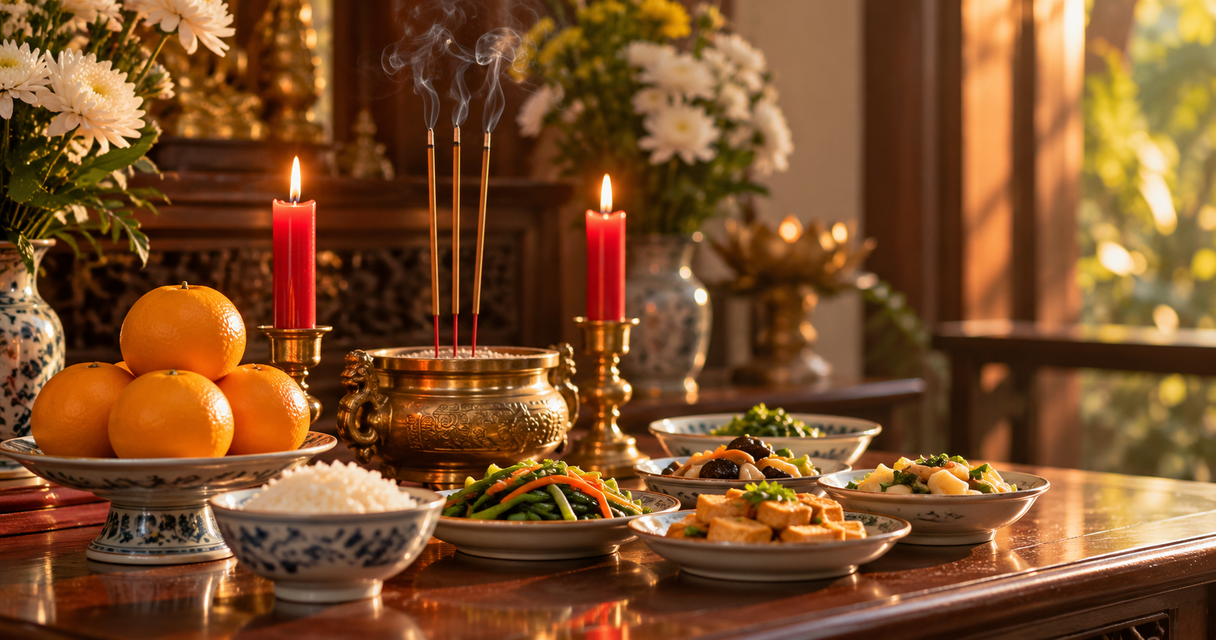
- Two weeks before. Order offerings: food, fruit, flowers, and paper items if your faith uses them. Check if the venue allows burning.
- One week before. Tell relatives the time and place. Arrange transport for older family members.
- On the day. Arrive early to set up the altar and photo of the person.
A funeral provider that ran the wake already knows the family’s faith, the monk you used and where the ashes are. Many providers offer the 100th-day prayers as a separate service, and some include it in a package. If yours did, check the receipt or the package list before you book anything else.
You can read more on what the 100th-day ceremony means if younger relatives ask why it matters.
Keeping the date going after the 100th day
For many families the 100th day marks the end of the formal mourning period. After it, care for the person moves to regular, smaller acts. These include Qing Ming in April, the Hungry Ghost Month in the seventh lunar month, Chongyang in the ninth lunar month and the death anniversary each year.
If the ashes are in a niche, this is a good time to check the niche plaque, photo and any lettering. If you keep an ancestral tablet, check its name and dates at the same visit.
Some families also pick this point to plan the yearly visits. Write down the dates for the coming year, and decide who will bring offerings. That way the care for the person does not fall on one family member alone.
For the yearly prayer at the niche in the ninth lunar month, see our guide to Chongyang prayers at a niche (in Chinese). To arrange the 100th-day prayers or yearly memorial prayers with a provider, contact a funeral provider that arranges memorial prayers.
Frequently Asked Questions
How do you count the 100th day after a death?
Most families count the day of death as day 1, so the 100th day falls 99 days after the death. Some families count from the next day. No Singapore agency sets a rule, so agree the method with your family and temple.
When is the 100th day for a death on 14 September 2026?
Counting 14 September as day 1, the 100th day is Tuesday 22 December 2026. That is also Winter Solstice, so book monks and venues early.
Can we hold 100th-day prayers at a government columbarium?
Simple prayers are fine. NEA’s columbaria terms only allow joss paper, joss sticks and candles to be burned in the metal burners provided in set areas.
Can we pray at the inland ash scattering garden?
Not inside the garden. NEA’s terms ban rites, music and burning in the garden itself. Simple religious rites can be held at the prayer facility near it.
Do we need monks for the 100th-day prayers?
It depends on your faith and family. Buddhist families often invite monks or nuns, and Taoist families invite a priest. Some families hold a simple home prayer with only relatives.
What happens after the 100th day?
Many families treat it as the end of formal mourning. Care then moves to Qing Ming, Chongyang, the Hungry Ghost Month and the yearly death anniversary.