Funeral Process Singapore Step by Step: Your Complete Guide
Death catches families off guard. You face decisions within hours while grief clouds your judgment. Singapore’s funeral customs blend Chinese, Malay, Muslim, and Christian traditions, creating confusion for those unfamiliar with local practices. Understanding what to do when someone passes away in Singapore is critical during these overwhelming moments.
This guide walks you through the funeral process in Singapore step by step, removing uncertainty during your most difficult moments. You’ll learn exactly what happens from the moment of death to final rites, including how to arrange a funeral in Singapore, saving time, money, and emotional stress.
Understanding Death Certification in Singapore
When Death Occurs at Home
You must contact a doctor immediately. The doctor examines the deceased and issues a Medical Certificate of Cause of Death if the death was expected and natural.
Required steps:
- Call the attending physician within 24 hours
- Doctor visits to certify the death
- Receive the death certificate
- Contact funeral director
The doctor cannot issue a certificate if:
- Death was sudden or unexpected
- No medical consultation occurred in the last 14 days
- Circumstances appear suspicious
- Cause remains unclear
When Death Occurs in Hospital
Hospital staff handle initial procedures. The attending doctor certifies the death and completes paperwork automatically.
Hospital protocol:
- Medical team pronounces death
- Doctor completes certification
- Family receives notification
- Body moves to hospital mortuary
- Family collects death certificate from hospital administration
You collect the certificate from the hospital’s administration office. Bring your IC and proof of relationship to the deceased. Once certification is complete, you’ll need to consider funeral packages in Singapore and explore options ranging from affordable vs premium funeral packages in Singapore based on the cost of funeral services in Singapore.
Coroner Cases and Police Reports
Certain deaths require police investigation. The coroner determines the cause before releasing the body, as outlined by the State Courts of Singapore.
Situations requiring coroner involvement:
- Accidents or injuries
- Workplace deaths
- Suicide
- Unknown cause
- No doctor attendance within 14 days
- Sudden infant deaths
- Deaths in custody
The police file a report. The body goes to the mortuary at Health Sciences Authority (HSA). The investigation takes 2-14 days depending on complexity.
Your funeral plans wait until the coroner releases the body. You cannot cremate or bury until receiving official clearance. Once cleared, you’ll make the important decision between cremation vs burial in Singapore, and if choosing cremation, understanding the cremation process in Singapore will help you prepare for what’s ahead.
Selecting a Funeral Director
What Funeral Directors Do
Funeral directors coordinate every aspect of the funeral process Singapore step by step. They handle paperwork, arrange transport, prepare the body, and organize ceremonies.
Core services include:
- Death registration with ICA
- Embalming and body preparation
- Casket or urn selection
- Hearse and transport
- Crematorium or burial booking
- Religious rites coordination
- Flower arrangements
- Obituary notices
Comparing Funeral Service Packages
Prices vary from $2,000 to $30,000 depending on religion, customs, and preferences.
| Package Type | Price Range | What’s Included |
| Basic | $2,000-$4,000 | Simple casket, basic transport, cremation, no frills |
| Standard | $4,000-$8,000 | Mid-range casket, embalming, wake setup, religious rites |
| Premium | $8,000-$15,000 | Quality casket, full wake, extensive flowers, printed materials |
| Luxury | $15,000-$30,000+ | Designer casket, elaborate setup, premium locations, catering |
Questions to Ask Funeral Directors
Get clear answers before signing contracts. Hidden costs appear when you don’t ask specific questions.
Essential questions:
What exact services does this package cover?
Are there additional charges for weekends or public holidays?
What happens if the funeral extends beyond estimated days?
Do you provide itemized quotations?
Can I customize the package?
What’s your refund or cancellation policy?
Do you handle all permits and government paperwork?
Request written quotations from three funeral directors. Compare line by line. The cheapest option often excludes essential services.
Red Flags When Choosing
Watch for these warning signs:
- Pressure tactics or urgency
- Refusing itemized quotes
- No physical office location
- Unclear pricing
- Poor reviews online
- Unlicensed operators
- Cash-only transactions
Check the Consumers Association of Singapore (CASE) for registered complaints. Read Google reviews and Facebook comments from actual customers.
Registering the Death
Documents You Need
Gather these before visiting the Immigration and Checkpoints Authority:
- Original death certificate from doctor or hospital
- Deceased’s NRIC or passport
- Your NRIC as informant
- Marriage certificate (if applicable)
- Birth certificate of deceased (if available)
The Registration Process
Death registration happens at ICA Building at Kallang.
Step by step process:
Visit ICA Death Registration Counter (Level 4)
Submit required documents
Complete death registration form
Verify information accuracy
Receive death certificate
Pay $18 for each death certificate copy
The process takes 30-60 minutes. You can authorize someone else to register if you cannot attend personally. They need a letter of authorization and copies of your IC.
How Many Death Certificates to Get
Order multiple copies during registration. You need certificates for:
- Bank account closures
- Insurance claims
- CPF withdrawals
- Property transfers
- Share transfers
- Utility account closures
- Government benefits claims
Get at least 5-10 certified copies. Each costs $18. Requesting copies later involves more paperwork and delays.
Online Death Registration
ICA offers online registration for straightforward cases. You qualify if:
- Death occurred in Singapore
- Death was certified by a doctor
- Not a coroner’s case
Visit the ICA website and follow the e-registration steps. You still collect physical certificates at ICA after online submission.
Funeral Process Singapore Step by Step: Religious Customs
Buddhist Funerals
Buddhist funerals emphasize spiritual transition and merit accumulation.
Duration: 3-5 days typically
Key elements:
Wake at void deck or funeral parlor
Monks chant sutras morning and evening
Family burns joss paper and incense
White or black clothing for mourners
Vegetarian meals during wake period
Cremation preferred over burial
Daily schedule:
Morning: Monk chanting (7-9 AM)
Afternoon: Family receives visitors
Evening: Monk chanting (7-9 PM)
Night: Family keeps vigil
The eldest son or closest male relative performs key rituals. Women traditionally avoid certain ceremonies during menstruation.
Taoist Funerals
Taoist rites focus on guiding the spirit and appeasing deities.
Duration: 3-7 days depending on age and status
Distinctive practices:
Elaborate altars with food offerings
Taoist priests perform complex rituals
Burning of paper houses, cars, and servants
Specific color codes for mourning clothes
Five periods of chanting throughout the day
Musicians playing traditional instruments
Mourning attire by relationship:
| Relationship | Color | Details |
| Children | Coarse sackcloth | Hood covering head |
| Grandchildren | Blue fabric | Simple head covering |
| Great-grandchildren | Light blue | Minimal covering |
| Other relatives | Black or white | Standard mourning |
Christian Funerals
Christian services emphasize resurrection hope and eternal life.
Duration: 1-3 days
Service structure:
Wake at parlor or home (1-2 days)
Pastor conducts nightly services
Hymns and worship songs
Bible readings and eulogies
Prayers for the family
Funeral service at church or crematorium
Burial or cremation follows
Flowers replace joss sticks and paper offerings. Black clothing remains standard. Some families choose memorial donations instead of wreaths.
Muslim Funerals
Islamic law requires burial within 24 hours when possible.
Key requirements:
Body washed by same-gender Muslims
Wrapped in white kafan cloth
Prayers at mosque (Janazah prayer)
Burial facing Mecca
No embalming unless legally required
Simple wooden casket
Graves unmarked or minimally marked
The process moves quickly:
Death certification: 1-4 hours
Body preparation: 2-3 hours
Mosque prayers: 30 minutes
Burial: Same day or next morning
Muslim funeral directors specialize in halal procedures. They coordinate with mosques and handle religious requirements correctly.
Hindu Funerals
Hindu rites vary by community but share common elements.
Duration: 1-3 days
Essential practices:
Body washed and dressed in new clothes
Sandalwood paste applied
Flowers placed on body
Priest chants mantras
Cremation mandatory
Eldest son lights funeral pyre
Ashes scattered in water
Family observes mourning period (13-16 days)
White clothing symbolizes mourning in Hindu tradition. Avoid leather items during the mourning period.
Body Preparation and Embalming
Do You Need Embalming?
Embalming preserves the body temporarily for viewing. Singapore’s climate accelerates decomposition, making embalming common for multi-day wakes.
When embalming is necessary:
- Wake lasts more than 24 hours
- Hot weather conditions
- Long viewing periods
- Family traveling from overseas
- Cultural preference for open casket
When to skip embalming:
- Immediate cremation planned
- Religious prohibition (Islam)
- Closed casket preference
- Same-day funeral
- Budget constraints
Embalming costs $200-$800 depending on the funeral director and body condition.
The Embalming Process
Professional embalmers work in licensed facilities. The procedure takes 2-4 hours.
Steps involved:
Body cleaned and disinfected
Blood drained through arterial system
Preservative chemicals injected
Facial features set in peaceful expression
Body dressed in chosen clothes
Cosmetics applied if requested
Hair styled
Body placed in casket
Families rarely witness embalming. You select clothing for the deceased beforehand. Avoid synthetic fabrics if cremation follows.
Dressing and Cosmetics
Most families want the deceased to look dignified. Funeral directors apply subtle makeup to restore natural color.
Clothing choices:
- Favorite outfit
- Religious garments
- Traditional dress
- Suits or formal wear
- Cultural-specific attire
Remove jewelry before cremation. Metal melts and damages equipment. You can place jewelry in the casket for burial.
Refrigeration Alternative
Refrigeration preserves bodies without chemicals. Bodies stay in cold storage at 2-4°C.
Advantages:
Lower cost than embalming
No chemical exposure
Suitable for all religions
Preserves body adequately for short periods
Limitations:
Not suitable for extended wakes
Body must stay in mortuary
Limited viewing opportunities
Viewing requires visiting the mortuary
Most funeral parlors and hospitals offer refrigeration services at $50-$150 per day.
Wake Arrangements
Choosing a Wake Location
Your options depend on religion, customs, and budget.
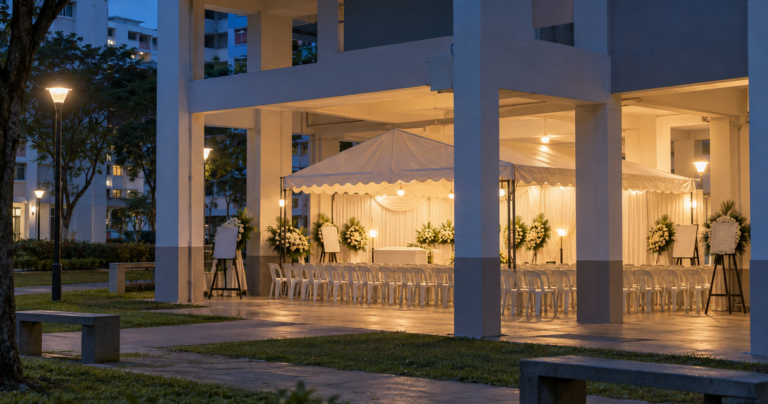
HDB void decks:
- Most common for Chinese funerals
- Free of charge
- Requires Town Council permit
- Limited to 3-5 days
- Basic shelter provided
- Community accessible
Funeral parlors:
- Private controlled environment
- Air-conditioned comfort
- Professional setup
- Parking available
- Costs $500-$3,000 for 3 days
- More privacy
Home wakes:
- Traditional for some families
- Requires space
- Neighbors may object
- Setup challenges
- No additional venue cost
Church halls:
- Christian funerals
- Familiar environment
- Seating for services
- Usually free for members
- Limited availability
Setting Up the Wake
Funeral directors handle physical setup. The arrangement follows religious traditions.
Buddhist/Taoist wake setup:
Altar with photo of deceased
Incense burner
Joss paper burning barrel
White and yellow flowers
Monk/priest area for chanting
Seating for family and visitors
Tables for condolence money
Guest book for signatures
Christian wake setup:
Photo display with flowers
Cross or religious symbols
Seating arranged for services
Music system for hymns
Memorial table
Refreshments area
Wake Etiquette for Visitors
Attending a wake requires sensitivity and cultural awareness.
What to bring:
White envelope with condolence money ($30-$300)
White or pastel-colored flowers (check religion)
Appropriate attire
What to avoid:
Red clothing or bright colors
Loud conversations
Taking photos without permission
Bringing young children to lengthy wakes
Eating at Taoist/Buddhist wakes unless offered
How to behave:
Sign the guest book
Offer condolences to family
Bow or pay respects at casket
Keep visit brief (15-30 minutes)
Observe religious customs
Leave quietly
Wake Duration
| Religion | Typical Duration | Reason |
| Buddhist | 3-5 days | Merit accumulation, chanting completion |
| Taoist | 3-7 days | Status of deceased, ritual requirements |
| Christian | 1-3 days | Simple mourning period |
| Muslim | Less than 24 hours | Religious mandate |
| Hindu | 1-3 days | Quick cremation preferred |
Longer wakes cost more due to venue rental, additional services, and daily monk/priest fees.
Funeral Process Singapore Step by Step: Cremation
Booking Cremation Slots
Singapore has two government crematoriums:
Mandai Crematorium
- 7 Mandai Crematorium Road
- Operates daily 7 AM to 5 PM
- Modern facilities
- Parking available
Mount Vernon Crematorium
- 99 Mt Vernon Road
- Same operating hours
- Older facility
Your funeral director books slots through the National Environment Agency (NEA) system. Peak periods (weekends, auspicious dates) fill quickly.
Booking timeline:
Submit application minimum 24 hours before
Cremation slots available every 1-2 hours
Wait 2-4 hours for cremation completion
Peak times may require 3-7 day wait
Cremation Costs
| Service | Cost |
| Adult cremation | $225-$350 |
| Child cremation (below 12) | $135-$210 |
| Weekend/public holiday surcharge | $75 additional |
| Urn rental | $10 per month |
| Scattering at sea | $200 |
Prices from NEA are standard. Funeral directors may charge service fees for handling bookings and arrangements.
What Happens During Cremation
Families can attend cremation or wait at the parlor.
The cremation process:
Deceased transported to crematorium
Final viewing in holding area
Religious rites performed
Body placed in cremation chamber
Cremation takes 2-4 hours
Ashes cooled and processed
Family collects ashes or chooses scattering
Buddhist and Taoist families often watch the casket enter the cremator. This provides closure and confirms the correct body was cremated.
Collecting Ashes
You collect ashes 2-4 hours after cremation begins. Bring the cremation receipt.
Ash options:
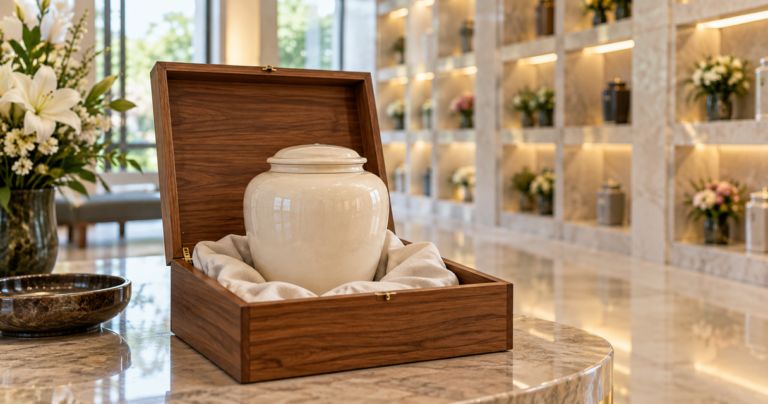
Keep in urn at home (temporary)
Place in columbarium
Scatter at Garden of Peace
Scatter at sea
Divide among family members
The government discourages keeping ashes at home permanently. You must find a final resting place within a reasonable period.
Scattering Services
Garden of Peace at Mandai:
- Free scattering ground
- Peaceful landscaped area
- No marking allowed
- Open daily
- No ceremony restrictions
Sea scattering:
- NEA provides boat service
- $200 per session
- 3 nautical miles from shore
- Biodegradable urn required
- Advance booking necessary
Some families scatter ashes privately at meaningful locations. Check local regulations before scattering on private or public land.
Burial in Singapore
Limited Burial Options
Singapore’s land scarcity restricts burial availability. Most cemeteries stopped accepting new burials.
Active burial grounds:
Chua Chu Kang Cemetery (Christian)
Pusara Aman Muslim Cemetery
Pusara Abadi Muslim Cemetery
Jewish Cemetery (Pek San Theng)
Hokkien Huay Kuan Cemetery (limited)
Burial Plot Costs
Burial costs significantly exceed cremation.
| Cemetery Type | Plot Cost | Annual Maintenance |
| Christian burial plot | $1,800-$4,000 | Included for 15 years |
| Muslim burial plot | Free for citizens | N/A |
| Private cemetery plot | $10,000-$50,000 | $200-$500 annually |
Burial plots come with 15-year leases. After expiration, remains must be exhumed and cremated unless you renew the lease.
The Burial Process
Burial follows certification and religious preparation.
Steps for burial:
Book burial plot through NEA
Purchase casket suitable for burial
Transport body to cemetery
Conduct graveside service
Lower casket into plot
Backfill grave
Mark with headstone (if allowed)
Burials must occur during cemetery operating hours (7 AM to 5 PM daily). Weekend and holiday burials incur surcharges.
Exhumation Requirements
All burial plots except Muslim ones require eventual exhumation. The 15-year lease reflects Singapore’s land constraints.
Exhumation process:
NEA sends notice before lease expiry
Family decides to renew or exhume
If exhuming, pay $1,150 fee
Cemetery workers carefully remove remains
Remains cremated at government facility
Family collects ashes
Lease renewal costs $1,100-$2,500 depending on the cemetery. Many families choose cremation initially to avoid future exhumation.
Columbariums and Ash Storage
Government Columbariums
NEA operates public columbariums at reasonable rates.
Available locations:
Mandai Columbarium Complex
Choa Chu Kang Columbarium Complex
Yishun Columbarium
Pricing structure:
| Niche Type | Lease Period | Cost |
| Single niche | 10 years | $350-$450 |
| Double niche | 10 years | $700-$900 |
| Single niche | 20 years | $700-$900 |
| Double niche | 20 years | $1,400-$1,800 |
Government columbariums offer basic but dignified storage. Locations can be far from homes, making visits less frequent.
Private Columbariums
Private facilities offer premium environments and services.
Examples:
Kong Meng San Phor Kark See Monastery
Bright Hill Temple
Kwong Wai Siew Peck San Theng
All Saints Church Columbarium
Prices range from $3,000 to $30,000 depending on location, size, and prestige. Premium niches with better positioning cost more.
Private columbarium benefits:
Central locations
Religious environment
Better maintenance
Ancestral tablet services
Prayer facilities nearby
Feng shui considerations
Personalization options
Selecting a Columbarium Niche
Consider these factors when choosing:
Location accessibility:
Can elderly family visit easily?
Public transport options?
Parking availability?
Distance from home?
Religious affiliation:
Does it match family beliefs?
Are religious services available?
Appropriate ritual space?
Position and level:
Eye-level niches cost more
Lower levels cheaper but less convenient
Corner positions more expensive
Wall sections vs. pillar niches
Lease terms:
What happens after lease expiry?
Renewal costs?
Can you transfer to family members?
Refund policy if you change plans?
Visit multiple columbariums before deciding. Check cleanliness, maintenance, and overall atmosphere.
Financial Matters
Funeral Costs Breakdown
Understanding where money goes helps you budget and negotiate.
| Expense Category | Typical Cost Range |
| Funeral director fees | $800-$3,000 |
| Casket or urn | $300-$15,000 |
| Embalming | $200-$800 |
| Wake venue | $0-$3,000 |
| Cremation/burial | $225-$4,000 |
| Religious services | $200-$2,000 |
| Hearse and transport | $300-$1,000 |
| Flowers and decorations | $200-$2,000 |
| Refreshments | $100-$1,500 |
| Obituary notices | $100-$500 |
| Permits and paperwork | $100-$300 |
| Columbarium niche | $350-$30,000 |
Total funerals range from $2,000 for simple cremations to $50,000+ for elaborate traditional ceremonies.
Claiming CPF Savings
CPF allows withdrawal for funeral expenses up to $6,000 per deceased member.
Who can claim:
Immediate family members
Appointed nominee
Person who paid funeral costs
Required documents:
Death certificate
Funeral invoice with GST breakdown
Proof of payment
Your relationship proof
Claimant’s bank details
How to claim:
Submit online through CPF website
Visit CPF Service Centre
Mail documents to CPF Board
Processing takes 5-10 working days. The money goes directly to your bank account.
Insurance Payouts
Life insurance proceeds help cover funeral costs and support surviving family.
Steps to claim:
Contact insurance company immediately
Request claim forms
Gather required documents
Submit complete application
Wait for assessment
The insurance company requires:
- Original death certificate
- Original policy document
- Claimant’s IC
- Medical reports (for some cases)
- Police report (for accidental deaths)
- Coroner’s report (if applicable)
Simple claims process in 2-4 weeks. Complex cases involving investigations take longer. Don’t wait to file claims. Some policies have strict notification deadlines.
Cost-Saving Options
Funerals don’t need to bankrupt families. Save money without compromising respect:
Choose cremation over burial
Saves $2,000-$10,000+ immediately
Select simpler caskets
Rental caskets for cremation save $1,000-$5,000
Limit wake duration
3 days instead of 5 saves venue and service costs
Use void deck instead of parlor
Free vs $1,000-$3,000
Reduce flower arrangements
Simple displays vs elaborate setups saves $500-$1,500
Handle obituaries yourself
Online announcements free vs $300 newspaper ads
Choose government columbarium
$350 vs $5,000-$20,000 private niches
Prepare your own food
Home-cooked vs catered saves $500-$1,000
Total potential savings: $5,000-$20,000 depending on choices made.
Legal and Administrative Tasks
Closing Bank Accounts
Banks freeze deceased accounts upon notification. Accessing funds requires proper documentation.
Documents needed:
Death certificate
Letters of administration or grant of probate
Your IC
Bank account details
Process:
Visit bank branch in person
Submit death certificate
Complete claim forms
Wait for probate if estate exceeds $50,000
Receive funds after clearance
Small estates (under $50,000) use simplified procedures. Larger estates require court-issued probate, which takes 3-6 months.
Canceling Utilities and Services
Stop unnecessary charges by canceling services promptly.
Essential cancellations:
Mobile phone plans
Internet and TV subscriptions
Credit cards
Insurance policies (after claims)
Club memberships
Newspaper deliveries
Medical appointments
Each company requires death certificate copies. Call customer service first to understand specific requirements.
Property and Asset Transfer
Real estate and investments transfer through legal processes.
HDB flats:
Surviving spouse often retains flat
Children may need to transfer ownership
HDB requires death certificate and probate
Apply for transfer within 3 months
Consult HDB for specific case
Private property:
Value determines probate requirements
Lawyer handles transfer paperwork
Property tax continues during transfer
Consider holding costs
Shares and investments:
Contact CDP and financial institutions
Transfer to beneficiaries
May need probate for large holdings
Financial advisors help navigate process
Vehicle Ownership Transfer
LTA handles vehicle ownership changes.
Required steps:
Obtain death certificate
Visit LTA if transferring to family
Sell vehicle if no one wants it
Cancel insurance
Complete transfer forms
Pay transfer fees
Vehicles cannot remain in a deceased person’s name indefinitely. Handle transfers within 3 months to avoid complications.
Common Mistakes to Avoid
Signing Contracts Under Pressure
Grief makes you vulnerable. Funeral directors know this.
Protect yourself:
Never sign on the spot
Take contracts home to review
Consult family members
Compare at least 3 quotes
Read all fine print
Question unclear charges
The deceased isn’t going anywhere. Take time to make informed decisions.
Overspending on Unnecessary Items
Guilt drives expensive choices. Expensive caskets burn the same as cheap ones.
Common unnecessary expenses:
Designer caskets for cremation ($5,000-$15,000 wasted)
Excessive flower arrangements
Elaborate catering for visitors
Premium obituary placements
Expensive urns that sit in columbariums
Remember the deceased through your actions and memories, not through spending money you don’t have.
Forgetting to Notify Organizations
Missing notifications creates problems months later.
Don’t forget to inform:
Employer and HR department
CPF Board
IRAS (tax department)
Insurance companies
Banks and financial institutions
Property management
Utility companies
Professional associations
Government agencies (HDB, LTA, etc)
Create a checklist and mark off each notification. Keep copies of all correspondence.
Neglecting Your Own Grief
Administrative tasks distract from mourning. You need time to process loss.
Take care of yourself:
Accept help from family and friends
Don’t rush major decisions
Seek counseling if struggling
Join support groups
Take time off work
Maintain basic self-care
Allow yourself to grieve
Funerals end, but grief continues. Give yourself permission to mourn while handling practical matters.
Funeral Process Singapore Step by Step: Quick Reference Timeline
First 24 Hours
- Obtain death certificate from doctor or hospital
- Contact funeral director for initial consultation
- Begin notifying immediate family and close friends
- Make preliminary decisions on burial vs cremation
- Secure deceased’s home and valuables
Days 1-2
- Register death with ICA
- Purchase multiple death certificate copies
- Finalize funeral director contract
- Select wake location and book venue
- Choose casket or urn
- Arrange embalming if needed
- Plan religious ceremonies
- Draft obituary notice
- Order flowers
- Inform extended family and friends
Days 2-5 (Wake Period)
- Set up wake venue
- Receive visitors and condolences
- Conduct religious rites and chanting
- Coordinate with monks, priests, or pastors
- Manage guest book and condolence money
- Prepare for funeral or cremation ceremony
Day of Funeral/Cremation
- Final viewing
- Transport to crematorium, church, or cemetery
- Conduct funeral service
- Cremation or burial
- Collect ashes (if cremating)
- Post-ceremony gathering (optional)
First Week After
- Thank visitors and helpers
- Count and record condolence money
- Begin closing financial accounts
- File insurance claims
- Submit CPF claims
- Choose columbarium niche
- Make ash placement arrangements
First Month
- Complete death registration follow-ups
- Cancel utilities and subscriptions
- Notify all relevant organizations
- Begin probate process if needed
- Transfer property and assets
- Organize important documents
- Consider grief counseling
Ongoing
- Visit columbarium regularly
- Perform annual remembrance rituals
- Renew columbarium lease when needed
- Complete probate and asset distribution
- Update your own estate planning
Finding Support
Grief Counseling Services
Professional support helps you process loss.
Available resources:
Singapore Association for Mental Health
Counseling hotlines (1800-221-4444)
Hospital grief counseling programs
Religious organization support groups
Private therapists specializing in bereavement
Most services offer free or subsidized rates. Don’t hesitate to seek help. Grief affects everyone differently.
Community Support Groups
Connecting with others who understand helps tremendously.
Support group options:
Hospital-based bereavement groups
Religious community groups
Online forums and Facebook groups
Befrienders (volunteer listeners)
Senior activity centers
Sharing experiences with people who’ve been through similar losses provides comfort and practical advice.
Legal Aid and Financial Assistance
If costs overwhelm you, help exists.
Financial support:
ComCare funeral assistance
Community Development Council grants
Religious organization assistance
Family Service Centres
Legal Aid Bureau (for probate help)
Don’t suffer in silence. Singapore offers safety nets for those struggling with funeral costs.
Final Thoughts
The funeral process Singapore step by step involves multiple decisions during your most vulnerable time. This guide provides the roadmap you need to navigate customs, paperwork, and choices with confidence.
Start by securing death certification and registering with ICA. Choose a funeral director carefully by comparing quotes and asking specific questions. Select burial or cremation based on religious beliefs, costs, and personal preference. Arrange appropriate wake ceremonies that honor the deceased while staying within budget.
Handle financial claims promptly through CPF and insurance channels. Close accounts and transfer assets systematically to avoid future complications. Most importantly, allow yourself time to grieve while managing these practical necessities.
Death visits every family eventually. Understanding the process beforehand removes uncertainty and helps you make better decisions. Share this information with family members so everyone knows what to expect.
What preparations have you made for your own family’s future needs?